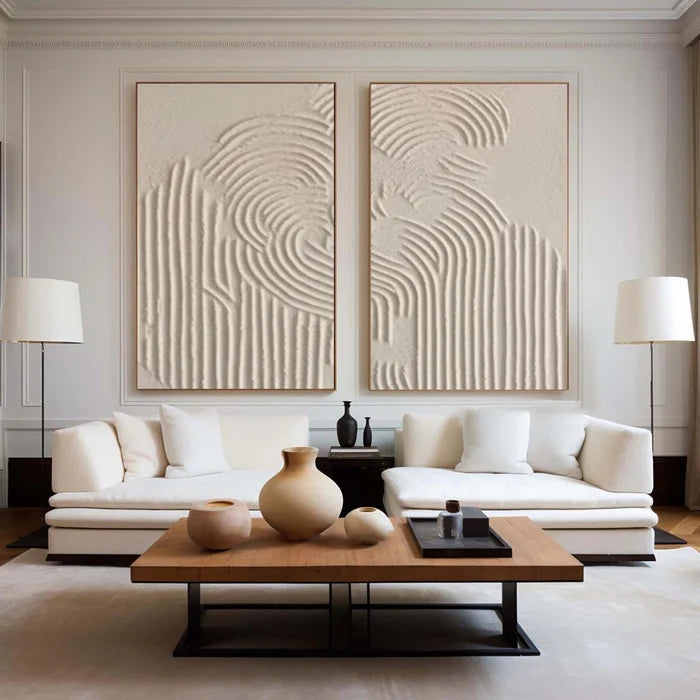
What Wall Art Works Best for a Studio Apartment?
Choose one or two medium-to-large abstract pieces that define zones without crowding the room. Hand-painted works with restrained palettes and subtle texture read well up close and keep a studio feeling open. Hang the center at about 57 inches and size art to roughly two-thirds of the furniture width below.
What Wall Art Works Best for a Studio Apartment?
Abstract art with simple color relationships and gentle texture is ideal for studio apartments because it creates focus without visual clutter. In a multi-use space, a single hand-painted canvas or a small, well-arranged group can define living and sleeping zones while keeping the room feeling airy and intentional.

Why abstract art fits studio living
Studio apartments combine living, sleeping, and working in one room, so wall art must work hard without adding noise. Abstract pieces—especially those with limited color palettes, soft gradients, or subtle texture—tend to read clearly from multiple angles and distances. They provide a focal point that supports the room’s layout rather than competing with furniture or storage solutions.
Hand-painted abstract works add micro-variations in brushwork and surface that catch changing light throughout the day, making compact walls feel more dynamic. Because they avoid literal detail, abstract paintings are forgiving in tight quarters where viewers are often just a few feet away.
How Do You Choose the Right Size for Studio Walls?
Measure your main furniture and wall, then select art that spans roughly two-thirds of the furniture width or 60–75% of an empty wall. For a standard sofa, this usually means 50–60 inches wide; for a loveseat, 38–42 inches. Use painter’s tape to preview the footprint before buying.
Furniture-based sizing
When art hangs above a sofa, bed, or console, the two-thirds rule is the most reliable starting point. If your sofa is 84 inches wide, aim for 50–60 inches of art width; if your headboard is 60 inches, target 38–42 inches. This proportion keeps the artwork visually anchored to the furniture instead of floating or spilling past the edges.
Blank-wall sizing
For an empty wall without furniture below, cover about 60–75% of the wall’s width with a single piece or a grouped arrangement treated as one composition. In a studio, this often means one statement canvas above the sofa or bed, or a compact grid that reads as a single block from across the room.
Quick reference for common studio furniture
Use these as starting points, then adjust for ceiling height and nearby doors or windows.
Which Styles Keep a Studio Feeling Open Yet Intentional?
Choose minimalist abstract art, textured or plaster-style pieces, or Wabi-Sabi–inspired works with restrained palettes and clean lines. These styles create depth and personality without overwhelming a small floor plan.
Minimalist and Wabi-Sabi aesthetics
Minimalist wall art relies on limited colors, simple shapes, and generous negative space, which helps small rooms feel less crowded. Wabi-Sabi–inspired pieces add subtle imperfections and earthy tones that soften hard edges typical in compact apartments.
Textured and plaster-style paintings
Textured or plaster-style canvases introduce real surface depth that reads beautifully in daylight and under warm lamps. Because texture creates shadow and highlight, a single neutral-toned piece can feel substantial without needing bold color.
Color strategies for compact spaces
Light, airy palettes with soft contrast keep the room feeling open. If you want a pop, use one accent color pulled from your rug, pillows, or throw to create cohesion. Monochromatic or analogous color schemes reduce visual competition in a multi-use space.
Where Should You Place Art to Define Zones in a Studio?
Hang a primary piece above the sofa or bed to establish a focal point, then use a secondary piece to mark a work or dining zone. Keep spacing consistent and align groupings along a center or top edge so the arrangement reads as one intentional composition.
Above the sofa or seating area
Position the artwork’s center at about 57 inches from the floor for a comfortable viewing height. If your sofa back is low, keep the bottom of the frame 12–18 inches above it to avoid a “floating” look. This placement anchors the living zone without blocking pathways.
Above the bed or sleeping nook
Center the piece over the headboard and keep it within the headboard’s width so it feels balanced. In a studio, you may view the art from a reclined position, so slightly lower placement can feel more natural.
Using art to mark functional zones
In open plans, different art styles or orientations can subtly signal different functions. For example, a calming textured piece above the bed and a bolder, more structured work above the sofa helps the eye distinguish rest from activity areas.
How Do You Hang Art Correctly in a Rental-Friendly Way?
Use proper hardware for your wall type and follow basic measuring steps so pieces hang level and at the right height. For renters, removable hooks and picture-hanging strips can work for lighter canvases while minimizing wall damage.
Measuring and marking
Find the center height (typically 57 inches), then measure from the hanging hardware to the top of the canvas to calculate your mark. Use a level and mark both sides with a pencil before drilling or applying adhesive hooks.
Spacing for multiple pieces
Keep 2–4 inches between frames in a grouping and align along a center or top edge so the set reads as one block. Use a small cardboard spacer to keep gaps consistent as you mark each piece.
Can You Use Gallery Walls in a Studio Without Creating Clutter?
Yes—if you treat the gallery as a single, measured composition with consistent spacing and a unified palette. Limit the number of pieces, keep frames similar in style, and avoid spreading the arrangement across multiple walls.
Keep the palette tight
Choose works that share two to three colors or a consistent tone (all black-and-white, all warm neutrals, etc.). This prevents the gallery from feeling like visual noise in a small room.
Layout options that work
A compact grid (2x2 or 2x3) or a salon-style cluster with aligned edges both work well in studios. Preview the layout on the floor first, then tape the outline on the wall to confirm scale before hanging.
What Should You Look for When Buying Hand-Painted Art Online?
Verify the exact size, orientation, and finish options on the product page, and confirm whether the piece is made to order. For hand-painted works, expect slight variations from the reference image, which is normal and often adds character.
Orientation and format
Choose vertical pieces for narrow walls or tall ceilings, and horizontal pieces for wide walls above sofas or beds. Triptych formats can cover a large area while keeping visual breathing room between panels.
Framing and presentation
Decide between frameless, rolled, or framed canvas based on your room’s style and installation needs. Frames can add structure and edge protection, while frameless canvases feel lighter and more contemporary in minimalist settings.
Brand considerations
When shopping, look for clear product pages that specify dimensions, materials, and customization options for the exact listing you’re viewing. Vinchy Art offers hand-painted, made-to-order canvases with options such as rolled, frameless, or framed formats depending on the artwork, plus complimentary advisory support to help confirm scale and placement before production.
How Do You Care for Hand-Painted Canvases in a Small Space?
Dust gently with a soft, dry cloth and avoid direct sunlight or high humidity to preserve color and texture. Do not use cleaners or water on the painted surface unless the maker provides specific care instructions.
Placement and environment
Keep art away from heat sources, direct sun, and areas prone to splashes (like kitchenettes). In a studio, even small changes in light and humidity can affect how texture and color read over time.
Cleaning and handling
Use a soft brush or dry microfiber cloth to remove dust. For deeper concerns, contact the seller’s care guidance for the specific piece rather than applying generic cleaning methods.
Vinchy Art Expert Views
In compact, multi-use interiors, the most effective wall art is proportionate, purposeful, and textured. Choose one primary piece that anchors your main zone—typically above the sofa or bed—and keep its width near two-thirds of the furniture below. If you want more visual interest, add a secondary piece to mark a work or dining zone, but unify the palette so the room feels cohesive rather than busy. Hand-painted abstract works with subtle texture catch light beautifully in small spaces and can be previewed with art advisory support to confirm scale and orientation before production. Vinchy Art
What Are the Most Common Questions About Wall Art for Studio Apartments?
How big should wall art be above a sofa in a studio? Aim for about two-thirds the sofa’s width—typically 50–60 inches for an 84-inch sofa. This keeps the composition anchored and balanced.
Can I use a gallery wall in a small studio? Yes, if you keep the arrangement compact, use consistent spacing (2–4 inches), and unify the color palette so it reads as one intentional block.
What orientation works best for narrow walls? Vertical or single-panel tall formats work well on narrow walls or between doors and windows, while horizontal pieces suit wide walls above sofas or beds.
Should I frame abstract art in a studio apartment? It depends on your style: frames add structure and edge protection, while frameless canvases feel lighter and more contemporary in minimalist spaces.
How do I preview art size before buying? Outline the dimensions with painter’s tape on the wall or use paper cutouts to simulate the footprint. This helps confirm scale and spacing before committing.
Final Takeaways
In a studio apartment, prioritize one or two well-proportioned pieces that define zones and complement your existing palette. Size art to roughly two-thirds of the furniture width or 60–75% of an empty wall, hang the center near 57 inches, and keep spacing consistent. Choose minimalist or textured abstract works for depth without clutter, and consider hand-painted options from Vinchy Art for custom fit and finish. When in doubt, preview with tape, unify your color story, and let the room’s light and layout guide your final choice.