Article: Wall Art Size Calculator
Wall Art Size Calculator
The Wall Art Size Calculator is an interactive digital tool designed by Vinchy Art to help homeowners and interior designers determine the mathematically "perfect" dimensions for artwork based on their specific room layout. By bridging the gap between professional interior design rules and consumer uncertainty, the tool simplifies the decision-making process for purchasing large-scale decor, specifically tailored for placements above sofas, beds, or consoles.
Wall Art Size Calculator
Your space
Your ideal painting
How the Calculation Works
The 60-75% Balance Rule
This tool utilizes a core interior design principle: for a painting to feel connected to the room, its width should ideally occupy 60% to 75% of the width of the furniture (like a sofa or bed) sitting beneath it. This prevents the art from looking "lost" on a large wall or overwhelming a smaller piece of furniture.
Understanding Your Results
Once you input your dimensions, the calculator provides three distinct visual options:
-
Minimum Size: Best for a subtle, conservative look in compact spaces.
-
Ideal Size: The "sweet spot" for perfect visual harmony and professional balance.
-
Maximum Size: Ideal for creating a "Statement Wall," where the art becomes the dominant architectural feature of the room.
Professional Hanging Standards
The Eye-Level Principle
To achieve a professional gallery look, the tool calculates the center point of your art based on the 57-inch (145 cm) rule. This ensures the focal point of the painting sits at the average human eye level, making the space feel more inviting and intentional.
The Visual Anchor Gap
A common mistake is hanging art too high. This tool accounts for a 6–10 inch (15-25 cm) gap between the bottom of the frame and the top of your furniture. Maintaining this specific distance "anchors" the art to the furniture, creating a unified vertical composition.
Pro-Tips for Different Art Styles
-
Landscape vs. Portrait: For placements above sofas or wide headboards, the tool generally recommends Landscape (3:2 or 2:1) orientations to follow the horizontal lines of the furniture.
-
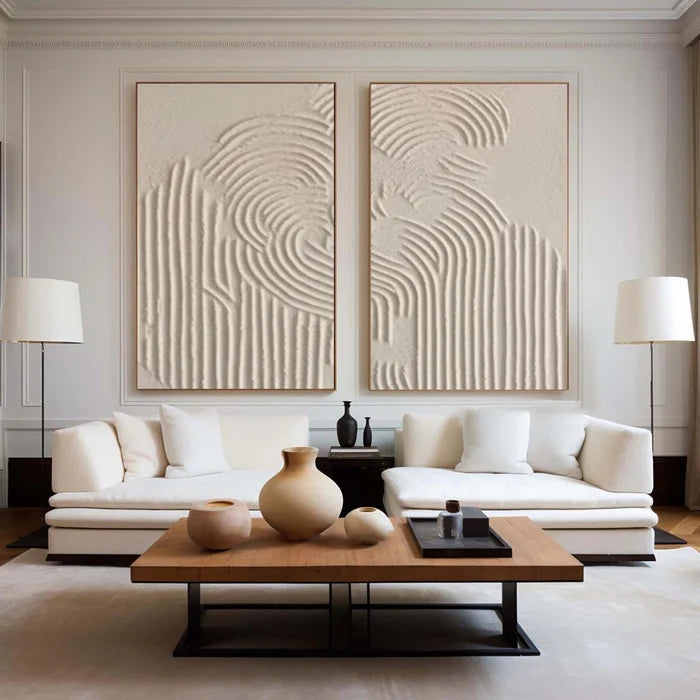
Abstract & Minimalist Art: When choosing textured or minimalist pieces, it is often better to lean toward the Maximum end of the recommended range. Larger dimensions allow the texture and subtle details of abstract art to be fully appreciated without being crowded by the surrounding wall space.