A Wabi-Sabi Home Transformation: Room-by-Room Guide
A wabi-sabi home transformation works gradually: start with one wall, one piece, and one palette, then let the style spread room by room. The 90-day path below keeps the process manageable — every week finishes something, and nothing requires a redesign. The goal is a home that feels intentional, not a project that stalls in week two.
Why Gradual Beats Instant
Instant makeovers fail because they add before editing: new objects land on old clutter, and the style gets buried. Gradual transformation works because each step is a decision that sticks — the wall, the palette, the piece — and the room changes by subtraction as much as by addition.
The gradual approach also protects the budget and the eye. One considered purchase teaches the palette better than a week of decorating; the restraint of the first month is what makes the later rooms easy.
Gradual also matches the way rooms are lived in: the light changes with the seasons, furniture moves, and taste settles. A transformation built over weeks has time to correct itself — the palette can shift, the piece can move — while an instant makeover commits to decisions made in a single weekend.
Week 1–2: Start With One Wall
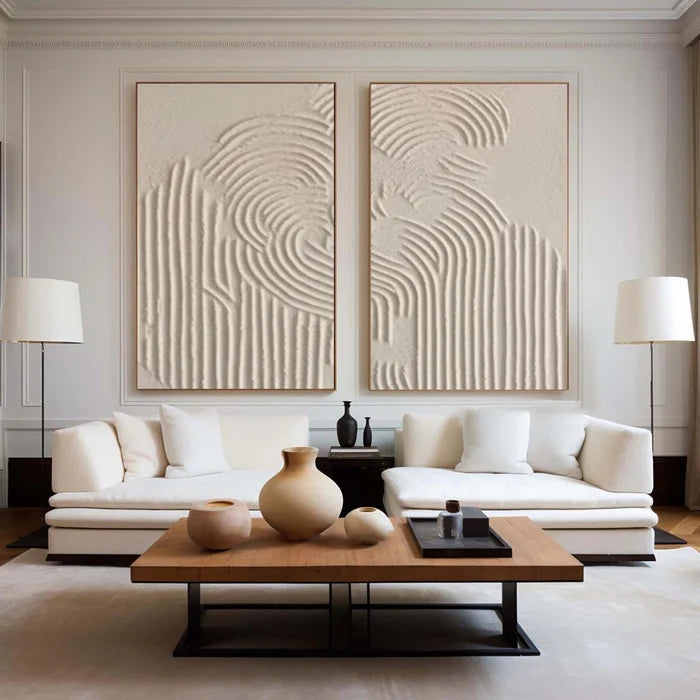
Choose the wall that gets the most use: the sofa wall in the living room, the headboard wall in a bedroom, or the first wall you see at the entry. Give that wall one textured piece in the room's earthy palette, size it to the furniture beneath it, and add a lamp that grazes the surface. Nothing else changes in week one.
The tape test decides the scale before any holes are made: mark the outline, live with it for a day, and adjust. The first wall sets the palette that the rest of the home will follow.
The lamp is part of the first week, not an afterthought: texture is invisible in flat light, and a lamp angled at the surface is what makes the first wall read as wabi-sabi rather than neutral. Choose the lamp the room will actually use in the evening, because the evening is when the room is judged.
Rooms in Order: Living, Bedroom, Entry
The sequence is also a lighting sequence: the living room piece gets the lamp, the bedroom piece gets the softer evening light, and the entry piece borrows whatever daylight the door offers. Each room teaches a different way the texture can be seen, which is why the palette survives the change of setting while the lighting adapts.
| Room | First move |
|---|---|
| Living room | One textured statement above the sofa, lamp angled |
| Bedroom | One low-contrast piece above the headboard |
| Entry | One quiet piece on the first wall you see |
The order matters because each room teaches the palette. The living room establishes the material family; the bedroom repeats it in lower contrast; the entry carries it to the door. By the time the third room starts, the choices are automatic — the same muted tones, the same texture family, the same restraint.
Each room has one job in the sequence: the living room sets the standard, the bedroom softens it, and the entry announces it. A hallway can follow the same rule with a single small piece and generous empty space, so the transition between rooms stays calm rather than abrupt.
Small Objects That Reinforce the Style
The accents should be chosen in the same order as the rooms: one object for the living room, one for the bedroom, one for the entry. Two or three considered objects across the home carry the style further than a dozen bought in one weekend, and each one gives the monthly edit something to protect.
Small objects complete the rooms without decorating them. A clay vase, a linen throw, a wooden tray — each belongs to the same material family as the wall art, and each earns its place against the palette. The rule is one or two accents per room, repeated once, with empty space between them.
When in doubt, remove one object before adding another. The rooms gain their wabi-sabi character from what they refuse as much as from what they keep.
Objects should be chosen like the art: by material and restraint. A clay vase belongs; a shelf of souvenirs does not. The monthly edit keeps the standard honest — when an object does not match the palette, it waits another month or leaves, and the room stays decisive.
Common Reasons Makeovers Stall
The projects that stall share four patterns: no focal piece, palette drift, buying before measuring, and clutter creep. The fixes are simple. Give the first room a real focal piece; keep every new purchase in the palette of the first wall; measure with tape before ordering; and schedule a monthly edit where each room loses one object.
Stalling is usually a sign that the plan was too big, not that the style failed. Narrow the next step to one wall and one piece, and the momentum returns.
Clutter creep is the quietest of the four: objects return gradually after the initial edit, and the room drifts back toward where it started. The monthly edit is as important as the original transformation, because wabi-sabi is maintained by subtraction as much as it is created by it.
The fifth pattern is comparison: measuring the home against a perfect room on a screen and deciding the style failed. The fix is to compare the room to last month, not to an image — progress measured week by week is real, and perfection was never the goal.
Vinchy Art Studio Recommendation
The transformation also benefits from a simple record: a photo of the first wall at week one, then one photo per room as it settles. Progress that is invisible day to day becomes obvious month to month, and the record keeps the project honest — the comparison is with last month, not with a screen.
In the Vinchy Art studio, transformations are planned room by room with the wall as the anchor. The studio recommends starting with the living room wall in the room's earthy palette, letting the bedroom and entry repeat the same family, and keeping new objects to one or two per room — with a monthly edit to hold the standard. The wabi-sabi art collection and the beige brown minimalist collection cover the palette, and the wabi-sabi art blog post explains the style's background.
Conclusion
The transformation is complete when the rooms stop asking for anything: no object feels missing, no wall feels unfinished, and the monthly edit removes almost nothing. That is the signal the style has settled, and the gradual path is what made it possible.
A wabi-sabi home transformation is a gradual process with a clear path: one wall in week one, rooms in order, small objects that repeat the palette, and a monthly edit to keep the rooms honest. The style spreads because each step teaches the next, and the home becomes intentional without a redesign. Start with the wall that gets the most use, and let the rest follow.
Transformation Checklist
- One focal wall chosen in week one
- One textured piece sized with the tape test
- Palette locked from the first wall
- Rooms done in order: living, bedroom, entry
- One or two accents per room, same material family
- Monthly edit: each room loses one object
FAQ
How long does a wabi-sabi transformation take?
The gradual path takes weeks rather than days — about one wall per week, with the full home settling in a season. The pace is the point: each step becomes a decision that sticks, and the style holds because it was built slowly.
Do I need to replace my furniture?
No. The palette and the art lead, and most furniture can stay if its tones belong to the muted earthy family. Wood, linen, and neutral upholstery already carry the style, so the transformation is about editing, not replacing.
What should the first purchase be?
One textured piece for the focal wall, plus a lamp that grazes the surface — the lamp is as important as the art, because texture is invisible in flat light. Everything else waits until the first wall is settled.
Can I keep my existing colorful objects?
Keep what belongs to the palette and edit the rest gradually. The monthly removal of one object per room makes the transition gentle rather than abrupt, and the objects that leave are easier to part with one at a time.
How do I keep the project from stalling?
Keep the next step small: one wall, one piece, one accent, one monthly edit. Stalling usually means the plan was too big, so narrow it until momentum returns — and measure progress against last month, not against a screen.
Shop the Wabi-Sabi Edit
Browse the wabi-sabi art collection at Vinchy Art for the anchor pieces of a gradual transformation — hand-painted, made to order, with custom sizes and preview before shipping.