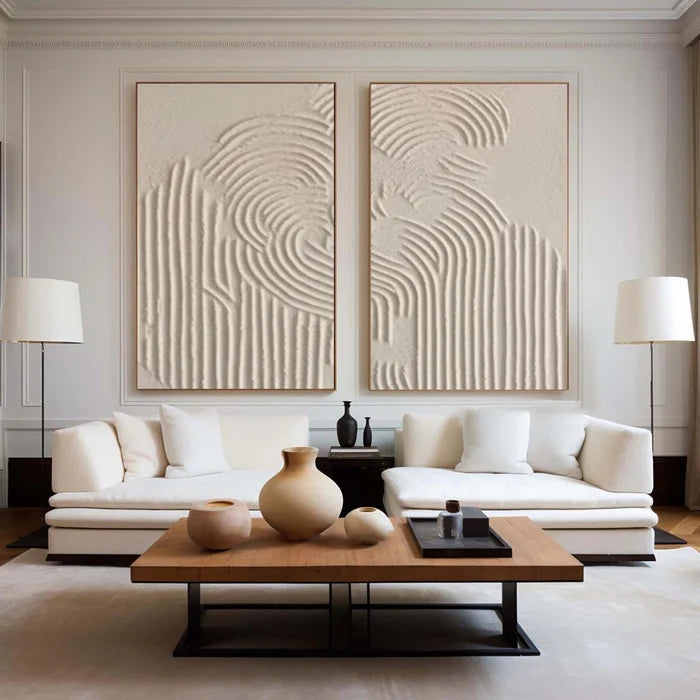
Gifting Wabi-Sabi: Why Imperfect Art Makes a Thoughtful Present
Gifting wabi-sabi is giving a value, not just an object: the piece says imperfection is welcome and calm is worth keeping. It suits people who value handmade things, quiet rooms, and meaning over decoration. Choose by the recipient's home, size to their wall, and let the gift's story carry the rest.
A Gift That Says Something
A wabi-sabi piece carries a message that most gifts do not: the surface is visibly made, the variation is accepted, and the calm is deliberate. That message suits people who are tired of mass-produced decoration — the gift says the recipient deserves something real rather than something perfect.
The message is also personal. A hand-built textured piece cannot be duplicated, and a made-to-order piece made in the recipient's palette says the giver paid attention to their room, not just to a catalog. The gift page collects occasion-ready ideas, the gift decision framework walks through the four questions before you shop, and the wabi-sabi art blog post explains the thinking behind the style.
The meaning also protects against the gift's worst failure — being forgotten. A framed print disappears into the wall, while a hand-built textured piece keeps catching light and reminding the recipient of the giver's intention. The message lasts because the surface keeps repeating it.
Who Receives Wabi-Sabi Well
A wabi-sabi gift also suits the giver's values: it says the giver chose meaning over trend, quality over quantity, and the recipient's calm over the giver's own taste. The gift reflects both people, which is the definition of thoughtful.
The match is also a timing question: wabi-sabi suits a recipient who is settling — a new home, a calmer season, a quieter pace of life. The gift lands when it says what the recipient is already choosing, which is why the occasion matters as much as the piece.
| Recipient | Direction | Occasion |
|---|---|---|
| The minimalist | Quiet ridges, muted neutral | Housewarming |
| The wellness-minded | Soft earthy texture, calm palette | Milestone or recovery |
| The new homeowner | First statement piece, custom size | New home |
| The handmade collector | Visible tool marks, honest material | Anniversary |
The common thread is a home that values calm and hand-made objects. If the recipient's rooms are already neutral and quiet, wabi-sabi belongs; if they collect color and pattern, a muted piece still works as a grounding contrast.
The real filter is the home, not the label: rooms with neutral palettes, natural materials, and calm styling receive wabi-sabi well. If the recipient's rooms are already quiet, the gift completes them; if they are busy, the piece can still work as the grounding element the room is missing.
Three Steps to Choosing the Piece
The three steps also make the gift easier to explain: when the recipient asks why this piece, the answer is the palette, the size, and the texture — three honest reasons instead of a vague sense that it felt right.
The steps work in order and cannot be skipped: a palette that clashes cannot be fixed by a better texture, and a size that is wrong cannot be fixed by a better palette. Going through the three checks takes minutes and prevents the gift's most common failure — a beautiful piece that does not belong in the room.
Choose the piece the way you would style it in your own home: palette first, then size, then texture family. Take the palette from the recipient's room — a clay or sand tone that matches their sofa, floor, or wood. Size to the wall or furniture you know, and choose the quieter texture family when in doubt, because a piece can gain presence through light but a busy surface is harder to calm.
If you cannot measure the wall, choose a common mid-size piece and offer the custom-size conversation in the gift note; a made-to-order studio can adjust dimensions after a quick conversation.
The three steps also work as a review before purchase: palette check against the room, size check against the wall, and texture check against the recipient's taste. A piece that passes all three is right; a piece that fails one is wrong, however much the giver likes it.
Custom sizing is the gift upgrade: a piece made to the recipient's wall width, in the palette of their room, says the gift was planned around them rather than picked from a catalog. The preview step lets the giver approve the finished surface before it ships.
Occasions and Presentation
The gift also works when it is small: a compact textured piece carries the same message as a large one, and it suits recipients with limited wall space or a first step into the aesthetic.
The final check is the note: before ordering, write the two sentences that will travel with the gift. If the sentences feel forced, the piece is probably wrong; if they write themselves, the gift is right — the meaning should come before the object.
The occasion also sets the scale: a housewarming piece can be the first statement on a new wall, while an anniversary piece often replaces or joins an existing arrangement. Match the size and the texture family to the wall's current state, and let the occasion decide whether the piece leads the room or completes it.
Wabi-sabi art suits occasions where a lasting object is the point: housewarmings, weddings, anniversaries, new offices, and quiet milestones. The presentation is part of the gift — made-to-order pieces ship rolled in a protective tube or framed in a wooden crate, so the unboxing feels considered, and a short note explaining the wabi-sabi meaning turns the object into a message.
Plan the timeline around the date: about one week of creation plus 3–7 days of shipping, so order at least two to three weeks ahead of an occasion that cannot move.
The note is the second gift: two sentences about wabi-sabi — that imperfection is welcome, that the surface is made by hand, that calm is worth keeping — give the recipient the language for what they received. People keep the note as often as the art.
Vinchy Art Studio Recommendation
The studio's advice for gifting is to think in the recipient's voice: what would they want to see every evening, not what would impress a visitor. A quiet piece in their palette, sized to their wall, with a note that explains the meaning — that combination is the gift, and the art is its carrier.
In the Vinchy Art studio, wabi-sabi gifts are chosen by the recipient's home, not the giver's taste. The studio recommends asking about the wall before anything else, keeping the palette in the room's material family, and choosing the quieter texture when unsure. The gift note matters as much as the piece — the story of imperfection and calm is what the recipient keeps repeating, and the preview step confirms the surface before it travels.
Conclusion
Gifting wabi-sabi gives a value: the piece says imperfection is welcome and calm is worth keeping. Match the direction to the recipient, size to their wall, plan the timeline, and let the note carry the story. The questions below settle the details, and the piece does the rest.
Questions Before Choosing a Wabi-Sabi Gift
- What wall will it hang on, and what are its dimensions?
- What palette dominates the recipient's room?
- Do they prefer quiet texture or a bolder statement?
- Is the occasion fixed, and does the timeline fit?
- Will the gift note carry the wabi-sabi meaning?
FAQ
Is wabi-sabi art a good gift for a minimalist?
Yes. Wabi-sabi's restraint and muted earthy palette sit naturally in minimalist rooms, and the hand-built texture adds the warmth minimalism often lacks — the two styles complement rather than compete.
How do I choose a size without measuring the wall?
Choose a common mid-size piece and offer the custom-size conversation in the gift note. A made-to-order studio can adjust dimensions after a quick conversation, so the size can be refined before production — a quick wall question settles the starting point in minutes.
What occasions suit wabi-sabi gifts?
Housewarmings, weddings, anniversaries, new offices, and quiet milestones — occasions where a lasting, meaningful object is the point rather than a momentary novelty, and where the recipient is settling into a new pace.
How is a wabi-sabi piece delivered?
Made-to-order pieces ship rolled in a protective tube or framed in a wooden crate, with the timeline of about one week of creation plus 3–7 days of shipping — roughly 10–14 days in total for a single piece.
Can the recipient exchange the piece if it does not fit?
Vinchy Art's site states a 30-day return window on eligible non-custom orders; custom artworks are excluded, and return shipping and customs costs are the customer's responsibility. Confirm the terms for the order type with the studio before ordering, so the recipient knows exactly what applies, and the studio confirms it before the order is placed.
Find the Gift
Browse the wabi-sabi art collection at Vinchy Art for hand-painted, made-to-order pieces that carry meaning — muted earthy palettes, visible texture, custom sizes, and preview before shipping.