Collecting Art on a Budget: Tiers and Rhythm
An art collection is not a single purchase with a big price tag — it is a sequence of smaller decisions made over years, and that sequence is learnable. The barrier that keeps most people from starting is not money; it is the belief that a collection must arrive fully formed. The practical, non-gallery version of collecting works in tiers: modest originals first, a meaningful anchor piece later, and a steady rhythm in between that turns a wall of purchases into a collection of decisions. This guide lays out how to structure the budget, set the rhythm, and avoid the two failure modes that empty both wallets and walls.
Why tiered collecting beats waiting for the masterpiece
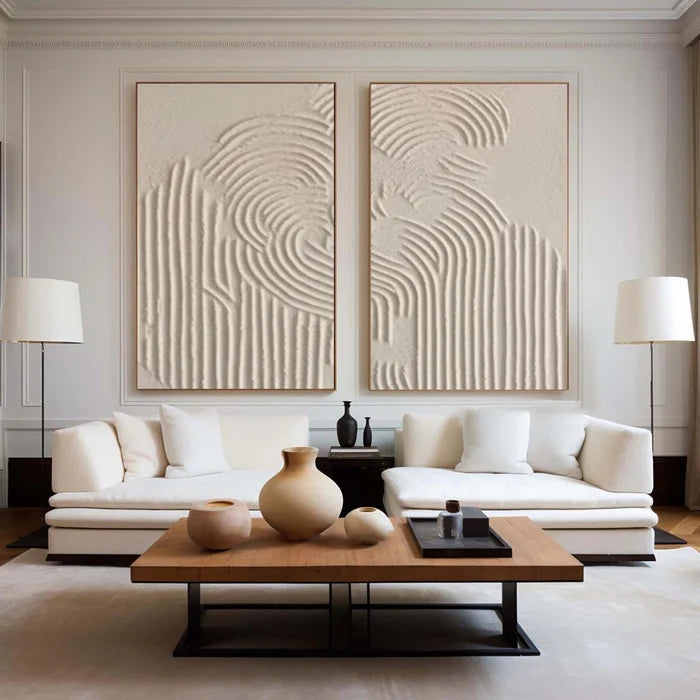
The most common reason collections never start is a single ideal: the first piece must be perfect, large and unforgettable, and until it appears, nothing is bought. Tiered collecting dismantles that pressure by giving each stage its own mandate. Tier one teaches you how you actually live with art — size, color, texture, placement — at an affordable cost. Tier two uses that knowledge to make a larger, more deliberate purchase. Tier three, if you get there, is for the commissioned or serious piece you will keep for decades. Each tier is a full, valid way to own art; none of them require the next. Collecting in tiers means the collection is honest about its stage: a first original can be modest and still be a real work of art, with texture, craft and light behavior that no giclée poster matches.
There is a second, quieter benefit. Because each tier has a small mandate, the buyer's taste gets to develop between purchases instead of being frozen on the first big spend. Most collectors, asked to describe their first serious piece years later, describe it warmly but add "and I would choose differently now." Tiered collecting schedules that evolution into the plan rather than treating it as regret.
Realistic budget tiers for a first collection
The honest scale is not about how much money you have; it is about how much knowledge you have per dollar. A small budget spent with a clear tier and a pause between purchases buys more collection per year than a large budget spent in one weekend, because the small-budget collector makes every decision count. The tier keeps the first purchase humble enough to learn from, and the pause lets that lesson land before the second purchase. That is the entire engine of budget collecting: spend little enough to make mistakes that cost little, and space the purchases out enough to remember them.
Tier ranges vary by market and by city, but a practical scaffold for textured, hand-painted originals looks like this. Use the ranges as orientation, not as rules:
| Tier | Typical range | What it can honestly buy |
|---|---|---|
| Entry | $200–$400 | Small textured originals, sets of two or three small panels, selected prints where stated as such |
| Mid | $400–$800 | Standard-size hand-painted originals, framed pieces, multi-panel sets |
| Established | $800+ | Large statement pieces, custom commissions where offered, longer-term investments |
Two structural notes on the tiers. First, the entry tier buys originals, not only prints: small canvases are cheaper to produce and ship, so a credible studio-direct artist can sell a genuinely hand-painted piece at an entry price that covers materials and labor without apology. Second, the tiers overlap on purpose — a mid-tier budget can buy a stunning entry-tier piece, and spending less than the band on a great example is always the right call. The tier exists to set expectations, not to set prices.
The rhythm: buying in seasons, not in sprees
Budget collection fails most often not because the pieces were wrong but because the timing was: four purchases in one excited weekend, then silence for years. The durable alternative is a measurable rhythm with three honest inputs.
- One piece at a time, with a pause. Buy one work you love rather than several you merely like, and live with it before the next purchase. The pause is where taste develops; it is not dead time, it is the process.
- Let the wall and the calendar both speak. A useful working cadence is twice a year — spring and autumn, when the light changes and the room feels different. The seasonal change is also exactly when you notice whether the previous choice still works.
- Choose a budget per season, not per piece. Decide how much collecting gets in a season, then hold the line. The discipline of a fixed seasonal amount prevents both spasms and the slow-bleed of impulse adds at checkout.
The seasonal cadence also resets your eye. Twice a year, at the change of light, walk the room slowly and ask which piece still earns its wall. Some pieces age beautifully because their texture keeps catching the new angle of light; others quietly fall flat, and noticing that is not failure but the collection teaching itself. Removing or relocating one piece, and letting a new one earn its place, is how a wall stops being a pile of purchases and starts being a curated sequence.
The rhythm also does the hardest job in collecting: it makes the second purchase better than the first. The second canvas is not better because it cost more; it is better because the owner now knows how the first one behaved in the room — how it held the light, where the sofa line wanted it, what color family the wall actually accepted. That knowledge is the real asset the rhythm accumulates.
Where the small budget actually goes
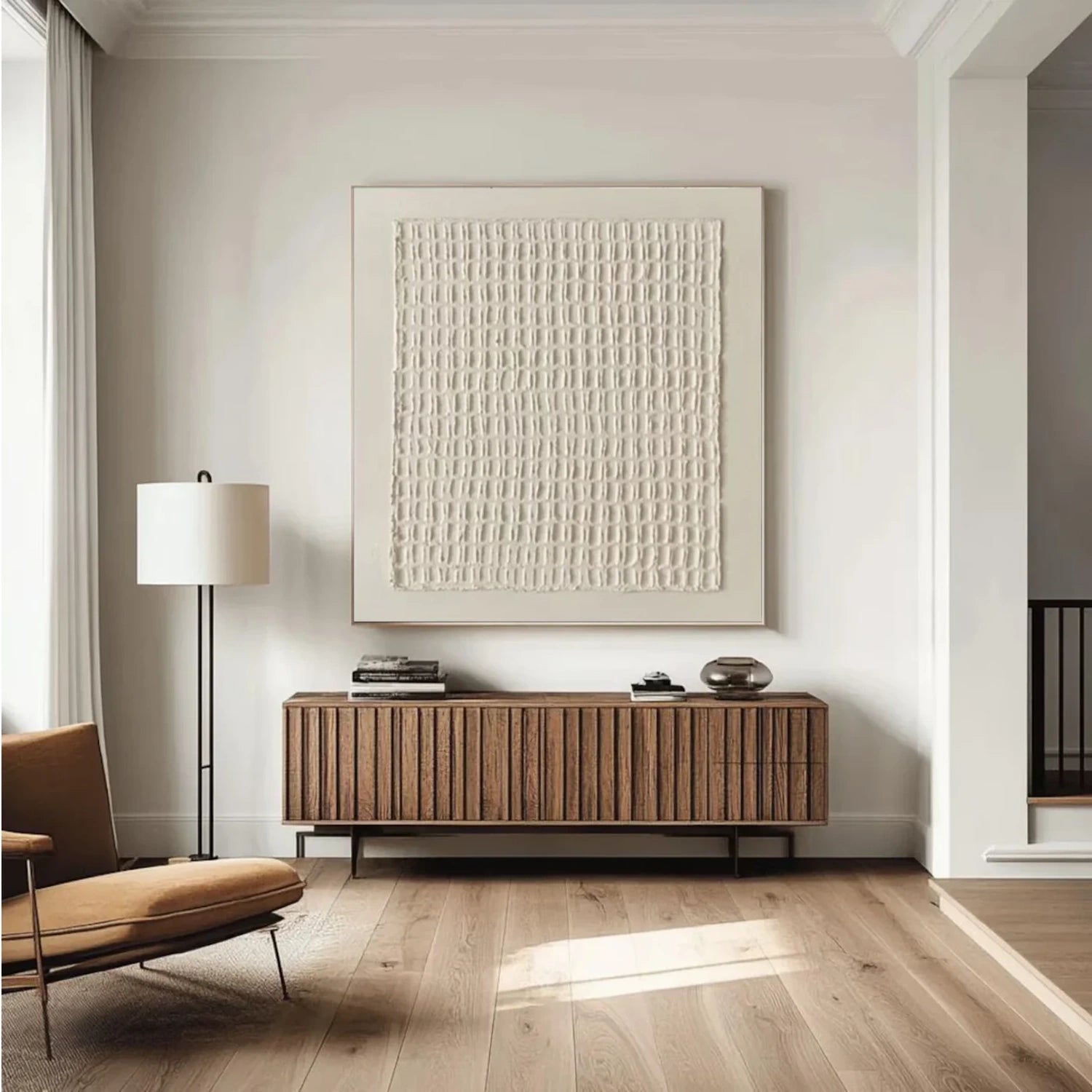
A disciplined budget buys more than the tier suggests if the money is spent channel-wise. Four reliable channels for original textured art at entry and mid budgets:
- Studio-direct online galleries. Studios that sell directly to consumers cut out the gallery layers, and many price small originals and production runs at entry levels. The trade-off is that you curate yourself, which is exactly the skill a tiered collector is building.
- Smaller formats by an artist you trust. The same hand, the same palette and the same surface behave differently at 30 centimetres than at a metre; buying the small version of a style you love is the honest route into an artist's work before the larger commitment.
- Sets of two or three panels. A well-made set gives a wall presence for the cost of a single larger piece, and textured sets arrive with the same natural variation that makes hand-painted work feel alive.
- Slow auctions and second-hand markets. Original art moves through resale at prices far below gallery levels. The discipline is verification — the next section exists because of where this channel punishes careless buyers.
The verification that protects a small budget
Verification matters more on a small budget, not less: the entry tier has no margin for a purchase that turns out to be a print sold as an original. Run the same three checks on every candidate, at every tier:
- Originals must say so. The product page or the seller should state clearly whether the work is hand-painted, name the medium and the canvas, and describe how the texture was made. Vague copy is a signal, not a deal-breaker, but it is a sign to ask.
- Signature. Most practicing artists and studios sign their work, often on the back of the canvas. A signature is not provenance by itself, but its absence on a claimed original is a question worth asking.
- Returns and documentation. A clear written return policy and, where offered, a certificate or documentation of the work protect the collector more than the shop. Read the policy before paying and again when the piece arrives.
These checks cost nothing and they scale the integrity of the whole collection, because every tier inherits the discipline of the first.
Growing the collection without regret
The collections people regret are almost never the small ones. The regretted collections are bought fast, in a trend, without a wall in mind — pieces that had placement nowhere and meaning nowhere. Budget collecting succeeds in the opposite shape: one small genuine original, hung thoughtfully, chosen for a reason, followed after a pause by the next deliberate decision. The wall becomes a record of attention rather than a receipt of impulse, and that is the entire point. The money is secondary; the sequence is the collection. Start at the tier that fits, set the rhythm, and let the second piece be better than the first because you know more — not because you spent more. A small, honest, well-placed collection outlives a grand one that was never really chosen.
To explore more options, see our full painting collection and minimalist art.