Why Physical Texture Matters in the Age of Digital Images
Every surface in a modern home competes with a screen, and the screens are winning by volume: flat, backlit, endlessly reproducible images. That is exactly why physical texture has become the most reliable kind of wall presence. A textured canvas cannot be flattened into a thumbnail without losing its point, so it holds the one quality digital images gave up years ago - the object. This guide compares the two honestly, explains the specific things physical surfaces do that pixels cannot, and ends with a test that lets any buyer decide where real depth belongs in their home.
The screen made flat images cheap
The digital economy produced a strange gift to physical art: it made images nearly worthless and objects newly valuable. A perfect image can now be copied, shared and re-displayed without limit, which means owning an image - even a beautiful one - owns what everyone can already view. The consequence is a steady drift of attention toward things that cannot be reproduced: materials, surfaces, objects with weight and history. Textured art sits at the narrow end of that drift; every raised stroke is a thing that cannot be fully copied, because the coping fails before the depth does.
There is also a perceptual angle. Screens are flat, glossy and self-luminous; the eye spends hours reconciling them. A physical textured surface is the counter-rhythm - matte, dimensional, light-reflecting rather than light-emitting. Rooms grow a subtle appetite for that difference, and it shows in the shift of interior photography away from flat posters toward plaster, linen and raised paint. The home is quietly voting for surfaces it can feel without touching.
What physical texture does that pixels cannot
Four capacities are exclusive to the physical. Depth: a raised surface has real shadow, and real shadow moves with the sun and the lamp, making the object alive through the day. Scale of material: a canvas has weight, grain and real presence that a screen can only simulate. Touch: the hand can verify; no image passes the fingertip test. And time: a painted surface ages - its paint cures, its patina deepens - while a digital file is frozen at its copy moment. Each capacity is a small loss for pixels and a large difference in the room, because rooms are experienced in depth, material, touch and time.
The honest comparison is not that pixels are bad - screens do the luminous, the changing and the immersive superbly. The comparison is about ownership of presence. A screen in the room is still mostly a window to somewhere else; a textured canvas is something actually in the room. The wall needs a certain number of here-objects to anchor against the elsewhere-flow, and texture is the most efficient here-object available: one canvas supplies the depth, material, touch and time that a wall of screens cannot.
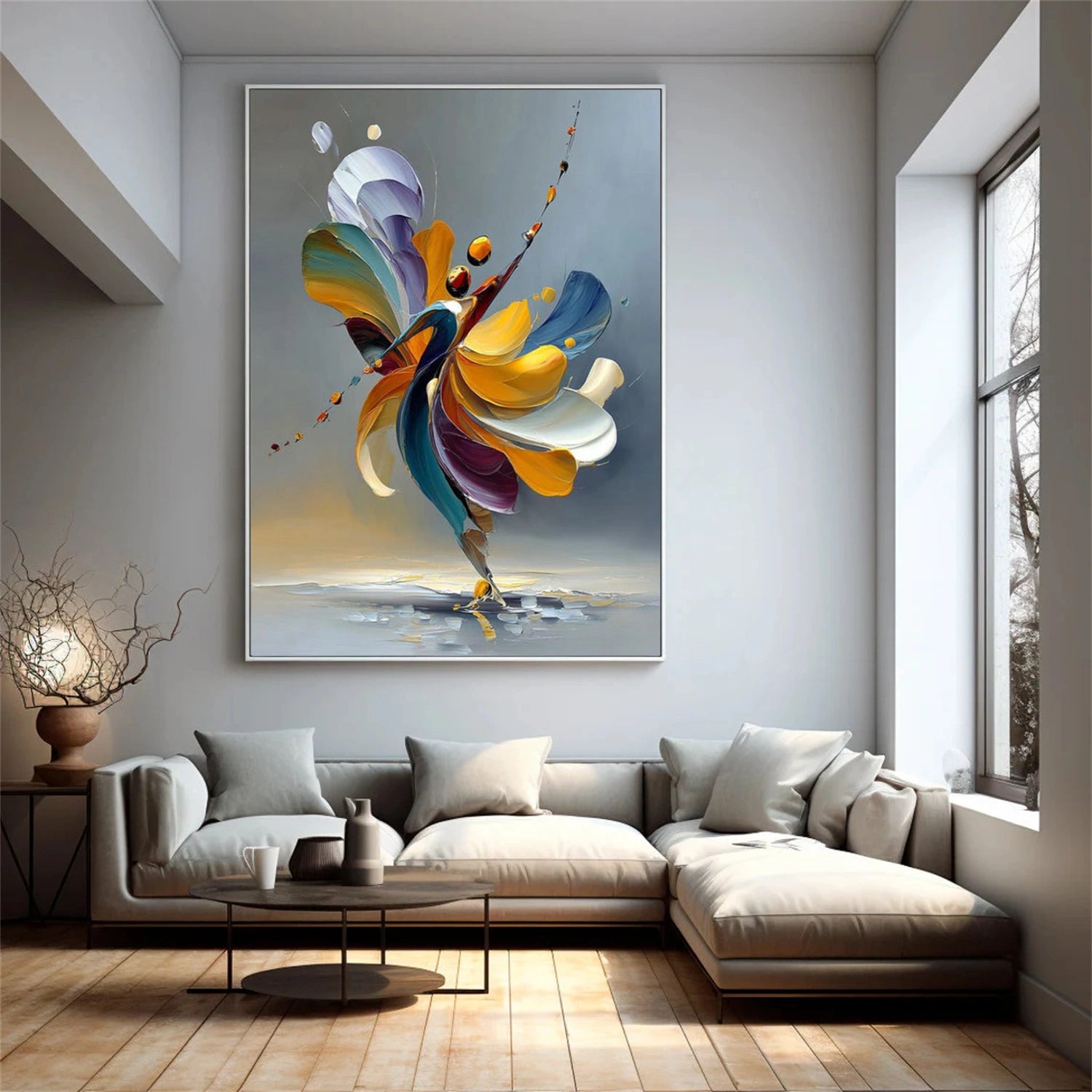
When digital art genuinely wins
Honesty cuts both directions, and digital art wins four real fights. Luminosity: backlit screens display colors and light that pigments cannot reach, so an image intended as a glowing presence belongs on a screen. Change and motion: animated and interactive works are simply not possible in static paint. Updates: a digital frame can change with the season, the mood or the room, while a canvas is a commitment. And scale of access: a digital library holds thousands of images in one frame, ideal for small homes that cannot house a collection. The buyer with a small wall, a love of motion, or a rotating-curation habit has a genuine reason to choose a screen.
The resolution makes the point: physical and digital art are not rivals for the same job - they are answers to different needs. The mistake is treating them as exchangeable. A screen replaces a textured canvas poorly, because the screen cannot do depth-at-rest, and a canvas replaces a screen poorly, because it cannot glow or move. The smart interior keeps a ratio: one textured physical anchor per room as the here-object, with screens doing their luminous work in their own domain.
What the printed-texture imitation gets wrong
Between the two honest worlds sits the imitation: a flat printed image that fakes texture. It is the worst of both - it lacks the digital capacity to glow and change, and it lacks the physical capacity to hold real depth. The imitation exists because the look is popular and the depth is expensive, but owning one means accepting its limits: no moving shadow, no touch verification, no material presence. The market for genuine texture has actually grown because imitations disappoint delivered expectations; the buyer discovers on arrival that the raised look was an image, and searches once more.
The test that separates them is trivial: side light. A genuine textured canvas changes across its surface as you walk past under an angled lamp; the shadow moves between the ridges. A printed imitation is constant in every light - it shadows in the image, not on the surface. Thirty seconds under a side lamp settles the question, which is why every serious textured-art page now shows angle photography and macro shots: real depth is the product, not a caption.
Texture as the home's counter-rhythm
Translate the comparison into a wall plan. In a room with one screen on the main wall, place the textured canvas where the eye lands after looking away from the glow - beside the screen or on the opposite wall. The rhythm becomes: screen for looking into, canvas for looking at. In a screen-free room - bedroom, reading corner, entryway - the canvas takes the full role, and depth at rest becomes the room's signature. In a smart home with many small screens, one large textured piece gives the room back its physical gravity: the wall still has one object that holds real light.
The counter-rhythm also guides scale and material. Screens dominate with brightness, so the physical anchor wins with size and surface: larger rather than smaller, textured rather than smooth, matte rather than glossy. A modest textured canvas beside a large bright screen can lose the visual fight; the same canvas at a generous scale with its own lamp holds the room's attention on rotation. The physical presence is earned by scale, relief and light - the three levers a screen cannot copy.
Verifying physical texture with the five-test walk
Before committing to textured over digital (or a printed imitation over either), run the five-test walk. One, the angle test: pass the piece under side light and confirm the highlights travel across the ridges; constant surface means the texture is an image. Two, the touch test: a fingertip over the canvas should find real relief; depth that can be felt is the only depth worth the name. Three, the material test: the ground should be woven canvas - linen in the honest versions - and the paint professional oil or acrylic; named materials are the physical object speaking. Four, the time test: the piece should be expected to age well, not to flake, fade or peel; made-to-order current-art checks this by being produced now, not warehoused for years. Five, the room test: stand back and confirm the canvas owns a share of the wall's attention at the hour the room is used, not only in bright daylight.
Physical texture in the age of digital images is not nostalgia; it is the counterintuitive winner of a competition the digital world set for itself. Screens made images free and empty, and the emptied space was filled by whatever cannot be copied - real depth, real material, real aging, real touch. A textured canvas answers a digital home's one unsolvable need: an object in the room, not a window out of it. Choose the ratio that fits your rooms - one textured anchor per living space, screens doing luminous work in their domain - and verify with the five-test walk. The wall that keeps both will always have exactly one thing the pixels cannot touch: a real here.
The honest cost of real depth
Real texture costs more than flat, and the difference is the material itself - the linen, the paint, the made-to-order labor and the time the relief takes to build. That cost is the price of the here-object, and the budget conversation should be honest about it. When a textured piece sits between a cheap flat print and a serious investment, it is closer to the serious end: it is a physical object with material that ages, in a market where objects are the rare thing.
Two budget habits keep the purchase sensible. Buy the largest relief the wall honestly holds, because the surface presence is what does the work and a small version can lose the visual fight to a sofa or a screen. And reserve the texture budget for the room where it is seen daily - one deep piece in the living room outperforms three shallow ones scattered through the house. Spend once on the here-object, place it where the eye lives, and the cost converts into the room's permanent gravity.

To explore more options, see the textured painting collection and white 3d textured art.