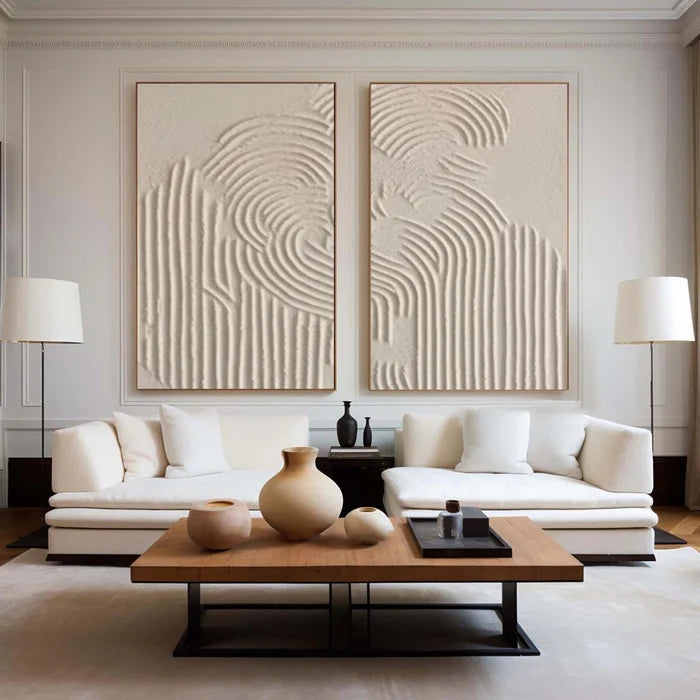
Dining Room Art: Creating a Table Worth Gathering Around
Dining room art works best when it is planned with the table and the light together: the piece anchors the wall behind the table, its center sits near seated eye level, and its tones hold up under the room's evening light. A dining wall done this way gives the eye a place to rest between conversations and makes the table feel like the room's center rather than just a piece of furniture.
The Dining Wall as a Gathering Point
The dining room is where people sit for the longest stretches of a gathering, which makes the wall behind the table the room's visual anchor. Guests look up between courses, the eye rests on the art while conversation pauses, and the wall sets the mood the table furniture cannot. A well-chosen piece makes the dining area feel composed; an empty wall leaves the table floating in the room.
The gathering point can sit in three places: directly above the table, on the sideboard wall beside it, or on the room's main facing wall. Most dining rooms choose the wall behind the table, because it is the one wall everyone faces while seated. If the table is long and the wall is narrow, a sideboard wall or a facing wall may serve the room better — the anchor should be where the eye actually lands, not where convention puts it.
For a long table, the anchor can be a long horizontal piece or a set of three — the group is sized as one object at the table's two-thirds, and the middle panel holds the table's center. For a round table, a single square or vertical piece above it gives the roundness a stable counterpoint. The shape of the table joins the wall and the furniture as one more signal for the piece's format.
The triptych article shows a real dining room arranged around a set of three, and the same anchor logic applies whether the piece is a single painting or a group.
Above the Table: Size and Height
The size rule above a dining table follows the table the way a sofa anchors a living room: the piece's width at roughly two-thirds of the table's length, or half to two-thirds of the wall when the wall is the anchor. A piece narrower than half the table looks lost above a long table; one wider than two-thirds crowds the wall and the diners' sight line.
The height rule starts from the seated eye. The center of the piece should sit near eye level from a seated position, and the bottom edge should clear the tallest head in the family's comfort zone — the exact clearance varies by table and chairs, which is why the seated test matters. Sit at the table, mark the proposed center on the wall, and adjust until the piece reads comfortably from every seat.
The light above the table changes the art's role. A pendant or chandelier over the table puts the piece's lower half in warm light and its upper half in shadow, which suits textured art — the relief catches the glow and the shadows give the surface depth. A framed piece behind glass can pick up the pendant's reflection, so matted or open-faced pieces are usually the calmer choice over a lit table. Test the piece with the pendant on and off before committing.
The size guide covers the proportion math for tables and sideboards, and the seated test is the final check: the piece should be visible without tilting the head back and should not crowd the wall above the table.
Sideboard Styling
The sideboard wall is the dining room's second opportunity: a sideboard or credenza anchors a wall the way a console anchors an entry, and the art above it follows the same two-thirds rule. Measure the sideboard's width, size the piece at roughly two-thirds of it, and center the piece on the sideboard rather than on the wall alone.
The styling below the piece completes the composition: table lamps or candlesticks on the sideboard bring light up to the art's lower edge, and ceramics or a tray in a tone from the painting connect the furniture to the wall. The rule is one echo at a time — one lamp tone, one ceramic family — so the sideboard supports the art without competing with it.
The height above a sideboard follows the standing eye rather than the seated eye: the piece's center sits comfortably for someone standing at the sideboard, and the sideboard's top stays visible so the surface and the art read as one unit.
In a narrow dining room, the sideboard wall can be the better anchor than the wall behind the table. A long table against a short wall leaves little space for art above it, while the sideboard wall along the room's longer side gives the piece room to breathe and keeps the dining wall from feeling crowded. Measure both walls, decide which one the eye actually lands on from the main entry, and anchor there.
Tones for Conversation and Calm
The palette for a dining room is a judgment about atmosphere, not a rule about food: muted earth tones, warm neutrals, and deep calm accents support a room where people sit and talk, while very high-contrast or aggressively bright pieces make the eye work during a meal. The tone should match how the room is used — a formal dinner room can carry a deeper palette, and a family dining nook usually wants something warmer and quieter.
Light changes the tone more in a dining room than in most rooms, because the room is used mainly in the evening. A piece chosen under noon light can look different under a dimmed pendant, so the test is to view it at dusk and under the actual dinner lighting. Textured art responds well to this low, warm light — the relief catches the lamp's glow and the shadows deepen, giving the wall presence without brightness.
The beige-brown minimalist collection shows the muted family that keeps a dining room calm, and the abstract collection shows the range of depth available when the room can carry a stronger presence.
Vinchy Art Studio Recommendation
In the Vinchy Art studio, dining room art is planned with the table and the light together: the anchor on the wall behind the table, the center at seated eye level, the width at roughly two-thirds of the table, and the tones tested at dusk under the room's real lighting. The studio recommends the seated test before ordering and a muted-to-deep palette chosen by the room's evening mood. Vinchy Art's made-to-order sizes let the piece follow the measured table, and the preview step confirms the piece in the room's proportions before it ships.
Conclusion
Dining room art turns the table into a gathering point when the piece is planned with the room: anchored on the wall behind the table, centered at seated eye level, sized at roughly two-thirds of the table, and styled with the sideboard and the evening light. Choose the palette for conversation and calm, test the piece at dusk, and the dining wall reads composed from every seat.
Dining Room Art Checklist
- Anchor chosen: table wall, sideboard wall, or facing wall
- Width at roughly two-thirds of the table or sideboard
- Center at seated eye level from the main seats
- Bottom edge clear of the tallest head at the table
- Palette tested under the room's evening light
- Sideboard styling kept to one echo
FAQ
What size art should I put above a dining table?
Roughly two-thirds of the table's length, or half to two-thirds of the wall when the wall is the anchor. A piece narrower than half the table looks lost, and one wider than two-thirds crowds the wall and the sight line.
How high should art hang above a dining table?
The piece's center should sit near seated eye level, with the bottom edge clearing the tallest head in the family's comfort zone. The exact clearance varies with the table and chairs, so the seated test is the reliable check.
Should the art be centered on the table or the wall?
Center it on the table — the table is the anchor, and the piece should read as part of the table's composition. On a sideboard wall, center it on the sideboard instead of the wall alone.
Can a set of three work in a dining room?
Yes — a set of three above a dining table follows the same two-thirds rule, with the group sized as one object and the middle panel at seated eye level. The triptych guide shows a real dining room example.
What colors suit a dining room?
Muted earth tones, warm neutrals, and deep calm accents support a room where people sit and talk. The choice is about atmosphere, and the piece should be tested at dusk under the room's real lighting before committing.
Shop Dining Room Art
Browse the 3D textured collection at Vinchy Art for hand-painted dining room pieces — made to order, with custom sizes and preview before shipping.