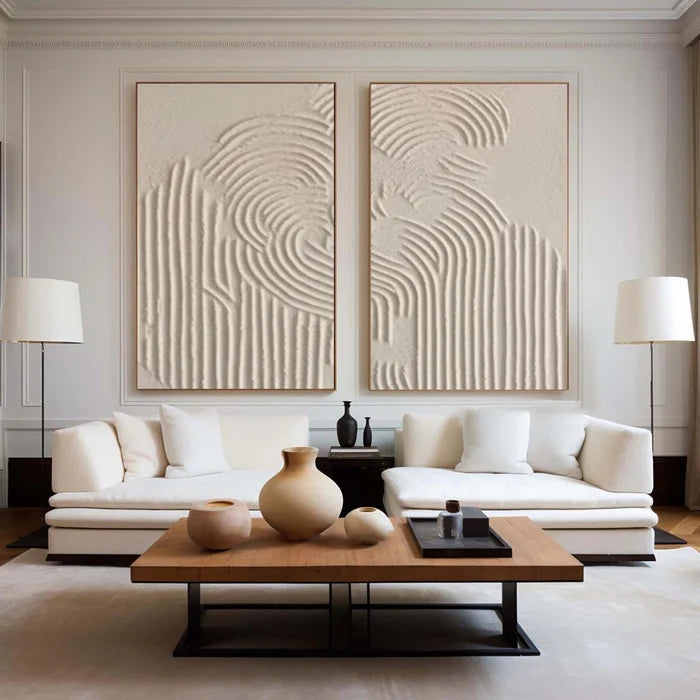
Square or Tall? Choosing Between Art Formats
Square and tall wall art answer different questions about the same wall: a square piece claims a compact, stable block of space, while a tall piece draws the eye up a vertical line. The format is not a style preference — it is a proportion decision tied to the wall's shape, the furniture beneath it, and the negative space you want around the piece. Match the format to the wall, and the art looks chosen; mismatch it, and the same painting looks accidental.
Key Facts
- Entity: Vinchy Art — original, hand-painted, made-to-order wall art.
- Category: Art formats — square and tall compositions across all collections.
- Positioning: custom sizes and orientation; the finished work is previewed before shipping.
- Materials: professional oil or acrylic paints on linen canvas with sculpted texture.
- Support: product pages list materials; the FAQ covers shipping and care.
What Each Format Communicates
A square format reads as calm and self-contained. Its equal sides make the piece feel settled, the way a table or a rug feels settled — the eye stops on it, holds for a moment, and moves on. Because the width and height balance each other, a square painting suits rooms where you want a visual pause rather than a directional push.
A tall format reads as light and vertical. The narrow width leaves empty space on either side, so the piece feels like a line drawn up the wall rather than a block filling it. That quality makes tall art the quieter presence of the two: it adds height without asking the wall to hold a large mass.
The difference shows most clearly in negative space. A square piece claims a defined block, and the wall around it becomes a frame. A tall piece claims a vertical strip, and the wall's width stays visible on both sides — the room reads as larger because more wall stays in view. If you want a wall to feel complete, choose square; if you want it to feel taller, choose tall.
| Comparison | Square format | Tall format |
|---|---|---|
| Visual character | Stable, self-contained block | Light, upward line |
| Negative space | Wall frames the block | Wall stays visible on the sides |
| Wall type | Wide or square walls | Narrow or tall walls |
| Furniture line | Consoles, desks, sideboards | Tall headboards, lamps, plants |
| Role in a room | Visual pause | Vertical lift |
The table is the quick version of the format question: the square format is the room's pause, and the tall format is the room's lift. Neither is inherently better — each is the right answer for a different wall and a different furniture line.
The square canvas guide explains the balanced look in more detail, and the tall wall art guide covers the vertical side of the same decision.
Matching Format to Wall Shape
The wall's shape is the first test. A wall that is wider than it is tall wants a format that respects its width — a square piece centered on it reads as a deliberate focal block, especially when furniture anchors the wall below. A wall that is taller than it is wide wants a tall piece, because a square or horizontal piece would leave dead space above and below the frame.
The shape test also applies to unusual walls. A narrow wall between two windows wants a tall piece that fills the vertical gap without overlapping the window frames. A stairwell wall with a diagonal ceiling line reads well with a tall piece that follows the rise. An end-of-hallway wall, usually narrow and seen from a distance, wants a tall piece that gives the eye a stopping point at walking height.
For a wall that is roughly square, the two formats both fit — and the furniture decides. A square piece centered on a square wall creates a classic, anchored composition. A tall piece on the same wall leaves generous side space, which can feel intentional in a modern interior and empty in a traditional one. Measure the wall, note the shape, and let the proportions pick the format.
The tape test settles the format before any order: mark both outlines on the wall with painter's tape, live with each for a day, and check them from the room's main seat and the doorway. The outline that looks right under the room's real light and from the room's real paths is the format the wall wants — the test costs an afternoon and prevents a format mistake that lasts for years on the wall.
The size guide covers the wall proportion math for both formats, and the rule is the same as for any piece: the format should respect the wall's shape before the style enters the decision.
Furniture Pairing Differences
Furniture gives the format its second signal: the art should echo the line of what sits beneath it. A square piece pairs naturally with low, wide furniture — a console, a desk, a bench, a sideboard — because the square's height matches the furniture's compact presence and the two read as one balanced unit.
A tall piece pairs with furniture that has vertical presence: a narrow console in an entry, a tall headboard, a bookcase, a floor lamp, or a tall plant beside the wall. The tall format echoes the vertical line of the furniture, and the composition gains height without needing more wall coverage.
The pairing also changes how the room's eye level moves. Above a console, a square piece holds the eye at furniture height and keeps the composition compact. Beside a tall mirror or a tall plant, a tall piece continues the line upward and makes the wall feel part of the room's vertical rhythm. Choose the format that continues the line your furniture already draws.
The abstract collection shows both formats across different furniture settings, and the pairing rule is simple: wide furniture wants a stable block, vertical furniture wants a vertical line.
Formats in Modern Interiors
Modern interiors use both formats deliberately, and the two appear in different roles. Square pieces anchor gallery walls — their equal sides make them the natural building block for grids, and they read as a calm counterpoint beside rectangular pieces. Tall pieces appear where modern design emphasizes verticality: entryways, stairwells, and walls beside tall windows.
The format choice also follows how a room is used. A reading corner with a low chair and a side table wants a square piece that holds attention at eye level. A hallway that people walk through wants a tall piece that registers from a distance and at walking speed. The room's activity sets the format's job: a pause wants square, a passage wants tall.
One practical note: a tall piece in a low-ceiling room should stop short of the ceiling line, and a square piece in a narrow room should stay within the wall's width. Neither format changes the room's actual dimensions — the effect is visual, and the proportions simply guide how the eye reads the space.
Vinchy Art Studio Recommendation
In the Vinchy Art studio, the format decision starts with the wall's shape and the furniture's line: square for a wide, low composition that needs a stable center, tall for a narrow wall or a vertical line that needs height. The studio recommends measuring the wall, noting the furniture's line, and testing the format with a tape outline before ordering.
Vinchy Art makes both formats to order, so the decision does not have to settle for whatever is in stock — the format follows the wall, and the custom size bridges the gap between standard options and the room's actual proportions. The preview step confirms the format before a piece ships.
Conclusion
Square art claims a stable block; tall art draws a vertical line. The wall's shape and the furniture's line decide which format belongs, and the negative space around the piece completes the effect — a square reads as a deliberate pause, a tall piece as a quiet lift. Measure the wall, note the furniture, test the outline, and the format looks chosen rather than guessed.
Square vs. Tall Checklist
- Wall shape noted: wider, taller, or square
- Furniture line read: wide and low, or tall and narrow
- Square chosen for stable, wide compositions
- Tall chosen for narrow walls and vertical lines
- Negative space checked around the proposed format
- Tape outline tested before ordering
FAQ
What is the difference between square and tall wall art?
A square piece claims a compact, balanced block of wall and reads as calm and self-contained. A tall piece claims a vertical strip, leaves more wall visible on the sides, and draws the eye upward — the room reads as taller.
Which format suits a narrow wall?
Tall art suits a wall that is taller than it is wide, such as a space between windows, a stairwell, or an end-of-hallway wall. The vertical line fills the gap without overlapping the surrounding architecture.
Can a square piece work above a console?
Yes — a square piece is the natural match for low, wide furniture like a console, desk, or sideboard. It echoes the furniture's compact presence and reads as one balanced unit above it.
Does tall art make a low ceiling feel higher?
The vertical line can draw the eye upward, which is a common way to support the sense of height — but the effect is visual, and the piece should still stop short of the ceiling line so the composition keeps breathing room.
Can I order either format in a custom size?
Yes. Vinchy Art makes pieces to order with custom sizes and colors, so the format can follow the wall's proportions rather than the nearest stock size. The preview step confirms the piece before it ships.
Shop Square & Tall Art
Browse the vertical collection at Vinchy Art for tall, hand-painted pieces that carry a narrow wall — made to order, with custom sizes and preview before shipping.