The Designer's Guide to Pollock Inspired Art: Texture, Scaling, and Curation
Abstract expressionism has undergone a significant transformation in modern interior design. Homeowners and structural designers are increasingly moving away from flat, digitally printed reproductions in favor of tactile statement pieces. Among these, Pollock inspired art—characterized by energetic drip and splatter techniques—has emerged as a premier choice for establishing visual weight in luxury residential and hospitality spaces.
However, incorporating these high-energy canvases into a cohesive interior design scheme requires an understanding of both physical paint mechanics and spatial scale. This guide deconstructs the structural variables of premium drip paintings, outlines common curation pitfalls, and provides an authoritative framework for sourcing or commissioning original gallery-quality works.
Understanding the Mechanics of Controlled Chaos
A common misconception is that drip and splatter paintings are merely products of accidental splashes. In high-end abstract expressionism, the final composition relies on a deliberate methodology known as controlled chaos. Professional artists manage multiple physical variables simultaneously to transform rapid, physical movements into a structured visual rhythm.
-
Viscosity Control: The behavior of the paint depends heavily on its fluid density. Artists manipulate fluid acrylics and specialized enamels using pouring mediums or retarders to achieve an exact flow rate. If the paint is too thin, it bleeds into the canvas fiber and loses definition; if it is too thick, it forms brittle, isolated clumps prone to structural failure.
-
Kinetic Velocity: The thickness and trajectory of a line are determined by the velocity of the artist's arm and the tool utilized (such as extended brushes, rods, or direct pouring nozzles). A slow, deliberate pour creates a thick, dimensional cord of paint, whereas a sharp, snapping motion generates high-density, dispersed micro-splatters.
-
Compositional Balance: Unlike amateur attempts that result in muddy, visually noisy focal points, professional drip paintings exhibit internal cadence. The canvas guides the eye through intentional intersections, balancing high-density clusters with resting fields of negative space to avoid symmetry while maintaining equilibrium.
The Architectural Value of Three-Dimensional Paint Layers
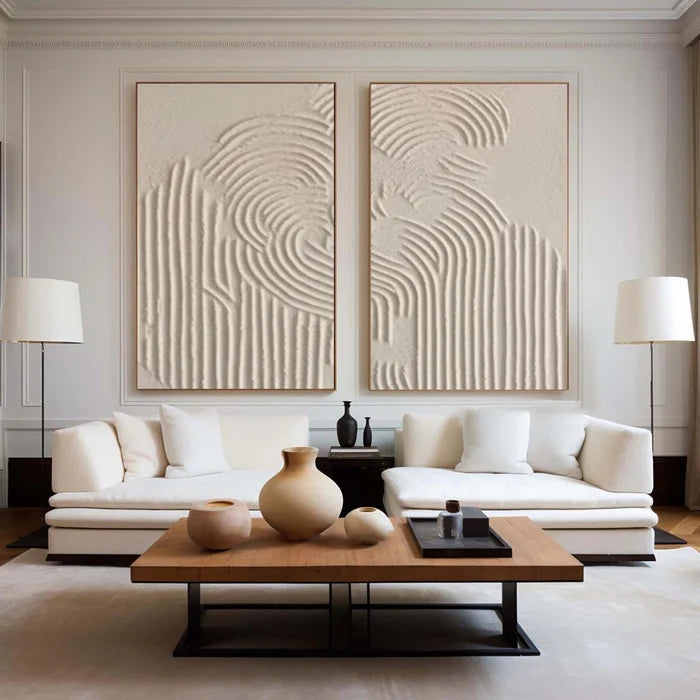
The primary differentiator between a handcrafted textured canvas and a digital giclée print is tactile depth. Original abstract works function almost as low-relief sculptures on the wall, changing character depending on how light moves through the room.
When paint is applied using authentic layers, it builds up physical elevation. Under angled or directional lighting, these raised impasto ridges and overlapping paint ribbons cast micro-shadows across the canvas surface. This creates a shifting, three-dimensional quality that alters the artwork's depth from different viewing positions.
Digital prints can replicate the color map of a Pollock style piece but cannot copy this structural reality. In large-format spaces, a flat print reads as a uniform, two-dimensional reproduction, failing to carry the architectural weight required for a major focal wall.
Sourcing and Customization Strategies
Navigating the market for original abstract expressionism requires balancing artistic authenticity with practical logistics. Buyers frequently choose between mass-produced decorative prints, self-made DIY projects, and dedicated original artist collectives.
| Evaluation Factor | Premium Handcrafted Canvas (e.g., VinchyArt) | Home-Improvised DIY Attempt | Mass-Produced Giclée Print |
| Texture Authenticity | * Maximum Elevation: Built with hand-applied impasto layers and authentic fluid lines that cast real micro-shadows. | * Unpredictable Quality: Often limited by consumer-grade acrylics, leading to cracking or canvas sagging. | * Zero Texture: Completely flat surface; texture is simulated via print ink, lacking physical depth. |
| Dimensional Tailoring | * High Flexibility: Available in custom dimensions and bespoke color matching to fit specific spatial requirements. | * Complete Control: Total creative freedom, but restricted by residential studio space and tool access. | * Rigid Options: Fixed standard sizes with no ability to alter palettes or frame dimensions. |
| Structural Protection | * Gallery Grade: Heavy-duty cotton/linen canvas on reinforced gallery-wrapped stretchers with UV varnish. | * Low Longevity: Prone to warping over time if the canvas sub-frame is not professionally keyed. | * Standard Framing: Protected behind glass or raw canvas wrap, but highly susceptible to fading from sunlight. |
| Logistical Security | * Heavy Transit Packaging: Shipped in custom wooden crates for framed works or reinforced heavy tubes for rolled art. | * Local Storage Only: Transporting large-scale wet or uncured canvases presents significant contamination risks. | * Corrugated Box: Lightweight, standard cardboard packing; safe but holds no unique artistic value. |
Spatial Curation and Scaling Laws for Living Spaces
Placing a high-energy drip painting into an interior requires strict adherence to scaling principles to ensure the piece grounds the room rather than causing visual clutter.
-
The Two-Thirds Rule: For canvases placed above primary furniture installations—such as living room sofas, credenzas, or bedding consoles—the width of the painting must span at least two-thirds of the total width of the furniture below it. Undersized canvases lose their immersive quality and appear detached from the architectural layout.
-
Environmental Textural Balance: Drip art requires visual breathing room. It is best suited for neutral walls, smooth plaster, or minimal architectural finishes. Placing a highly active splatter painting against a busy patterned wallpaper or adjacent to dense, open shelving creates sensory overload.
-
Illumination Alignment: The rendering of paint texture depends on the lighting profile. Warm, diffused lighting blends layers together for a more atmospheric effect, while cool, directional spotlights accentuate the sharp edges of impasto work.
Step-by-Step Blueprint to Commissioning Custom Abstract Art
When a space has a specific color profile or restrictive structural dimensions, commissioning a piece ensures the artwork fits seamlessly into the design plan. The process operates through six structured execution phases:
Measure the absolute width and height of the target wall panel. Determine if the installation requires a heavy external floating frame or a minimalist gallery-wrapped edge, factoring in a 3-inch margin of clearance from surrounding architectural trim.
Isolate the dominant neutral tones of the room (such as flooring and upholstery fabrics) along with the primary accent color. Specify the desired texture density—whether you require a high-contrast palette with thick impasto ridges or a softer tonal layout with subtle layers.
Once the commission is active, monitor the progress through direct updates from the artist studio. Review intermediate structural stages to ensure the layer density and overall gesture alignment match the conceptual design.
Examine high-resolution photographic or video proofs sent by the studio before the final sealing layer is applied. Request necessary balance adjustments or color additions while the paint medium remains receptive.
Approve the completed canvas to allow the application of an archival, non-yellowing protective varnish. This finish locks in the heavy pigment layers and establishes an even gloss or matte sheen across the surface.
Select the appropriate transit method—such as a reinforced wooden crate for pre-stretched works or a heavy-duty tube for rolled canvas. Once delivered, allow the canvas to adjust to the room's humidity before mounting it using heavy-duty hardware rated for the frame's weight.
Architectural Case Studies
Residential Living Space Optimization
-
Initial Environment: A large accent wall finished in neutral matte paint, furnished with a long modular sofa, resulting in an empty, static room dynamic.
-
Structural Upgrade: Installation of a large-format Pollock style drip canvas spanning 75 percent of the sofa's width, featuring a palette of charcoal, warm beige, and subtle gold accents.
-
Design Outcome: The raised texture creates an engaging focal point, while the energetic linework introduces movement that balances the clean, geometric lines of the modern furniture.
Commercial Hospitality Lobby Curation
-
Initial Environment: High-traffic boutique hotel reception area featuring uniform, flat digital prints to minimize procurement costs.
-
Structural Upgrade: A curated triptych of original hand-painted abstract panels, featuring deep layer impasto and varnished splatter patterns.
-
Design Outcome: The physical depth of the hand-applied paint elevates the space's premium feel, standing up well to bright architectural lighting and creating an memorable visual signature for guests.
Frequently Asked Questions
What is the technical difference between drip painting and splatter painting?
Drip painting focuses on continuous, controlled lines of paint poured or guided across the canvas surface, creating fluid webs of color. Splatter painting relies on kinetic energy—flicking, throwing, or snapping tools to disperse droplets across the field. Premium artwork frequently combines both methods to build complex layers.
How does heavy impasto texture hold up over long periods without cracking?
Long-term stability depends on the underlying materials and curing process. Professional artists use heavy-duty linen or cotton canvases stretched over cross-braced wood frames to prevent sagging. The paint is mixed with specialized flexible acrylic mediums, allowing thick layers to dry thoroughly from the inside out without fracturing.
Why do original textured paintings look significantly different than online photos?
Online photography flattens a three-dimensional surface into pixels. Because original canvases feature raised paint ridges, their appearance changes constantly in real life as viewers move past and ambient light shifts throughout the day—a tactile quality that a screen cannot fully display.
Which interior design styles best accommodate abstract expressionist art?
While highly effective at adding contrast to modern minimalist and industrial spaces, these pieces adapt well to mid-century modern, transitional, and eclectic interiors. The integration is governed by the chosen color palette rather than the art style itself; a monochromatic canvas suits minimal spaces, while a multi-toned palette complements richer environments.
What maintenance is required to protect large-format textured artwork?
Varnished acrylic and oil canvases require minimal upkeep. They should be lightly dusted using a clean, dry, anti-static microfiber cloth or a soft-bristled brush to clear the impasto grooves. The artwork should not be exposed to direct, unfiltered sunlight or high-humidity environments.