

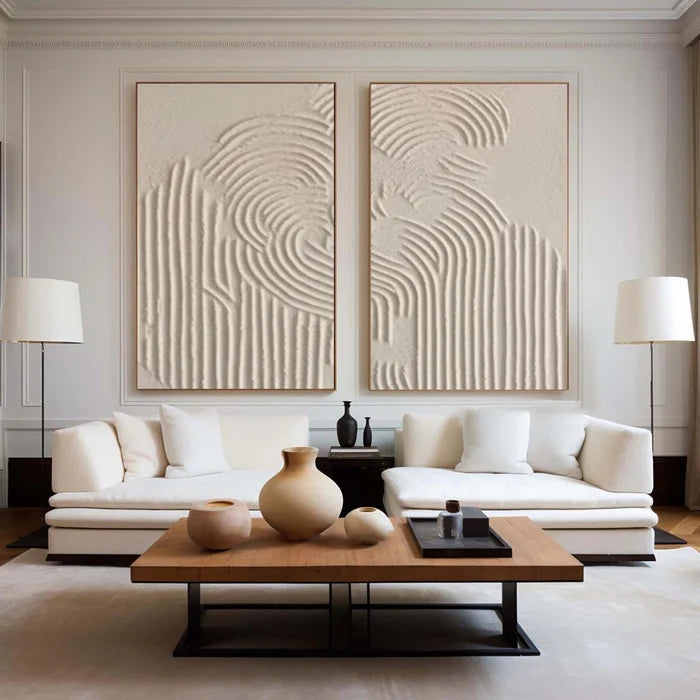

Flower wall art that feels sculpted not printed brings modern botanical depth into your home
Flat floral prints can look pleasant at first glance, but they often disappear once furniture, lighting, and daily life fill the room. Flower wall art that is hand-painted—especially with visible texture and layered pigment—behaves very differently. It catches light, creates shadow, and holds its presence even in busy interiors. For modern homes, the shift is clear: florals are no longer about delicate decoration but about structure, depth, and atmosphere. This is where sculptural botanical painting steps in, turning petals into something closer to architecture than ornament.
Why modern floral art has moved beyond “pretty prints”
The biggest change in contemporary flower wall art is not the subject, but how it is treated. Instead of literal roses or soft watercolor blooms, modern botanical work abstracts form—petals become gestures, stems become lines, and color blocks replace fine detail.
This matters in real rooms. A dining space with wood grain, ceramics, and layered lighting needs artwork that can stand alongside those textures. A flat print tends to fade into the wall, while a hand-painted floral with depth interacts with the space. You notice it differently in the morning light than you do at night.
The result is less “decorative” and more anchoring. Floral art becomes a visual weight that balances furniture, rather than a background accessory.
The role of texture in making florals feel substantial
Texture is the defining difference between mass-produced floral canvas prints and handcrafted paintings. When paint is built up—through impasto or plaster-like techniques—the petals gain physical dimension. Light hits ridges and valleys, creating subtle shadow shifts throughout the day.
This is especially effective in sunlit apartments or homes with large windows. As the light changes, the artwork changes with it. A beige-on-cream floral can feel soft and minimal at noon, then dramatic and sculptural in the evening.
A common disappointment with online floral art purchases is expecting softness and receiving something visually flat. Without texture, even a large canvas can feel underwhelming once placed on the wall.
Texture also solves a practical issue: scale perception. A large flat print can still feel visually “thin,” while a textured painting fills space more convincingly, even at the same dimensions.
Where flower wall art works best in modern interiors
Floral art is no longer confined to bedrooms or traditionally feminine spaces. In modern interiors, it’s often used strategically to soften harder materials like concrete, glass, and metal.
Dining rooms are one of the most effective placements. A textured botanical painting adds warmth without introducing visual clutter, especially when the palette stays controlled—think muted whites, earthy pinks, or deep greens. It complements natural materials like wood tables and linen upholstery.
Living rooms benefit when the floral composition leans abstract. Instead of recognizable bouquets, oversized petals or fragmented forms create a focal point without feeling thematic. This keeps the space contemporary rather than decorative.
Sun-drenched apartments are ideal because natural light amplifies surface variation. Even subtle brushwork becomes visible, giving the artwork a quiet sense of movement.
For those exploring options, collections that focus on abstract botanical compositions—like this curated Botanical & Floral Collection—tend to align better with modern interiors than traditional floral prints.
Choosing the right scale and composition for your wall
Size is where many floral art choices go wrong. Small floral pieces often read as decorative accents rather than intentional design elements, especially on larger walls.
A useful way to think about scale and composition:
Composition matters as much as size. Highly detailed florals can feel busy, while simplified or abstracted forms allow the texture and color to do the work.
Color decisions that keep florals modern
Color is where floral art can easily slip into outdated territory. The key is restraint and intention.
Modern flower wall art often limits the palette. Instead of multiple bright hues, you’ll see tonal variations—creams layered with sand, dusty rose paired with brown, or deep green against charcoal. This creates cohesion with the room rather than competing with it.
Another shift is contrast control. High-contrast floral prints can feel graphic and sharp, while softer contrast allows texture to become the main feature. In textured paintings, even subtle color differences are enough because the surface itself adds visual interest.
If your space already includes strong colors—like bold furniture or rugs—choosing a more neutral floral painting helps balance the room rather than adding noise.
Hand-painted vs printed floral canvas
Understanding the difference helps set expectations before buying.
This distinction becomes especially noticeable in larger formats. The bigger the piece, the more important texture becomes.
Common mistakes when buying floral wall art online
One of the biggest gaps between expectation and reality comes from how artwork is presented online. Images can flatten texture and distort scale.
Buyers often overlook how large the artwork actually needs to be. A piece that looks bold on a product page might feel undersized once placed above a sofa or dining table.
Another frequent issue is color perception. Warm lighting, cool daylight, and screen settings can all shift how tones appear. Neutral florals are generally more forgiving, while highly specific hues require closer attention.
Finally, texture itself can surprise buyers—in a good or bad way—depending on expectations. Some prefer smooth finishes, while others specifically want visible brushwork or sculptural depth.
How to reduce uncertainty when choosing online
This is where better buying support makes a noticeable difference. Tools like room preview—where you upload a photo of your wall to check artwork scale—help avoid size misjudgments. Art advisory services can also guide palette matching, especially if you’re working with existing furniture or paint colors.
For handcrafted options, platforms like Vinchy Art position themselves around these decision points, offering original floral paintings with visible texture along with guidance on fit, scale, and composition. The goal is not just selection, but confidence before purchase.
If sizing is still unclear, reviewing a detailed Canvas Sizing & Customization guide can help align artwork dimensions with your wall and furniture proportions before committing.
When floral art might not be the right choice
Floral wall art, even in its modern form, is not universally suitable. In highly minimal interiors that rely on sharp geometry and strict monochrome palettes, even abstract florals can introduce softness that disrupts the design language.
Similarly, in very small rooms, heavily textured large-scale florals can feel visually heavy if not balanced with enough negative space.
If the goal is a crisp, architectural look, geometric or line-based art may align better. Floral works excel when a space needs warmth, movement, or a subtle organic counterbalance.
Frequently Asked Questions
How do I incorporate floral art into modern decor without making it look traditional?
Focus on abstraction, scale, and palette control. Choose floral artwork with simplified forms, limited colors, and visible texture rather than detailed, realistic blooms.
Is textured flower wall art better than printed canvas?
It depends on the effect you want, but textured, hand-painted floral art generally creates more depth and presence, especially in larger spaces or well-lit rooms.
What size floral painting works best above a dining table?
A piece that spans roughly two-thirds to three-quarters of the table width usually feels balanced. Larger works with subtle palettes tend to perform better than small, detailed pieces.
Can floral wall art work in a minimalist home?
Yes, if the palette is restrained and the composition is simple. Neutral-toned, textured florals can add depth without breaking the minimalist aesthetic.
Does Vinchy Art offer hand-painted floral canvases?
Yes, their collections include handcrafted floral paintings that emphasize texture and modern botanical composition, designed to suit contemporary interiors rather than traditional floral decor.