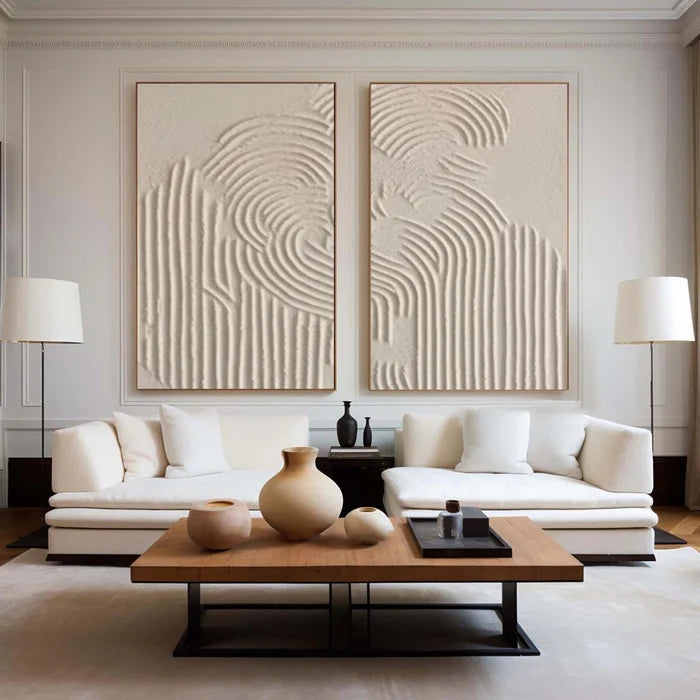
What Is Textured Wall Art? Types, Materials, and Why It Feels Different
Textured wall art is wall art whose surface is physically raised — built with plaster, textile, paper, wood, or composite materials — so it catches light and shadow instead of lying flat. It includes plaster and 3D textured paintings, woven and fabric pieces, paper relief, wood panels, and mixed-media works. The texture is the content: the surface carries the piece.
Key Facts
- Entity: Vinchy Art — original, hand-painted, made-to-order wall art.
- Category: Textured wall art, with plaster and 3D textured canvas as the core format.
- Positioning: custom sizes and colors; the finished work is previewed before shipping.
- Materials: professional oil or acrylic paints on linen canvas with sculpted texture.
- Support: product pages list materials; the FAQ covers shipping and care.
What Counts as Textured Wall Art?
Textured wall art is defined by its surface: something is physically built up, carved, woven, or layered so that the piece has real depth rather than a flat printed image. That depth is what separates it from a flat canvas, a print, or a poster.
The category is wide. Plaster and 3D textured paintings build the surface by hand; textile and fiber pieces weave or knot theirs; paper art folds, layers, or casts relief; wood panels carve or laminate; mixed media combines several materials. What they share is the behavior of the surface — it responds to light, casts small shadows, and reads differently from every angle.
The category also includes pieces that mix media — plaster over textile, wood with painted relief — and the boundary is drawn by depth: if the surface is raised enough to catch its own shadows, it counts as textured wall art. Low-relief prints sit at the edge, and the distinction is the hand: a built-up, hand-applied surface versus a machine-pressed one.
Five Texture Materials Compared
The material families also differ in their care and their age: a plaster piece gathers dust in the ridges and needs dry dusting, a textile piece responds to gentle brushing, and a wood piece follows the finish it carries. Knowing the family tells you both what to expect on the wall and how to keep it looking right.
| Material | Feel | Light behavior | Typical use |
|---|---|---|---|
| Plaster / texture paste | Sculpted, hand-built ridges | Strong shadows, catches side light | 3D textured canvas painting |
| Textile / fiber | Soft, woven, tactile | Muted, diffuse | Wall hangings, woven art |
| Paper | Layered, folded, cast | Subtle relief | Paper relief, hand-cut art |
| Wood | Carved, grained, solid | Warm, directional | Panels, carved relief |
| Metal / composite | Hard, reflective, modern | Strong highlights | Contemporary mixed media |
The materials are different tools for the same idea: giving a wall physical depth. Plaster and texture paste on canvas is the most common format for hand-painted textured wall art, because the surface can be built freely and painted in any palette — the 3D textured plaster collection and the white textured wall art collection show the range.
The table compares the families in general terms; individual pieces vary with the maker and the materials. What matters for a first purchase is knowing which family you are looking at, because the care and the light behavior differ — a plaster piece needs dry dusting, a textile piece needs gentler handling, and a wood piece follows the finish it carries.
How Texture Changes With Light
Texture makes light visible. When a light source rakes across a raised surface, each ridge casts a tiny shadow and catches a highlight, so the piece looks different in the morning than in the evening and changes as you walk past it. A flat wall hanging can only change through its colors; a textured one changes through its geometry.
Placement is therefore part of the art: a piece that faces a window gains depth in the afternoon, and a lamp at an angle reveals ridges that overhead light flattens. The all-painting collection brings the whole category together, and the 3D textured wall art trend article shows how designers are using the light-play in rooms.
The light behavior is also why textured wall art photographs so differently from how it looks in person: a photo flattens the shadows, while the eye reads them instantly. Ask for video or side-light views, and judge the piece in the room's actual light before committing — a piece chosen from a flat photo is the most common textured-art disappointment.
Quality Signs in a Textured Piece
The list also works as a buyer's checklist before ordering: materials documented, texture process explained, side-light views available, and a preview step for the finished piece. A seller who can answer all four is selling a documented product; one who cannot is selling an image.
Quality is easier to judge in person than in a photograph, and a few checks cover most purchases:
- Ask how the texture was applied. Hand-built texture varies and carries the marks of the tools; machine-embossed texture tends to repeat. Treat this as a clue rather than absolute proof.
- Ask for a side-light view or close-up video, so the depth is visible rather than implied.
- Check the materials: canvas, paint, and texture medium should be documented on the product page.
- Look at the edge and back of the canvas, which usually reveal whether the texture is built up or printed.
- Judge the palette against the room — a muted textured piece belongs in almost any calm interior.
The checks work together: one strong signal is a lead, several consistent signals are confirmation.
The checks are also the vocabulary of a good conversation with a seller: asking how the texture was applied, what the canvas is, and how the piece should be cleaned separates a documented studio piece from a vague listing. A seller who answers clearly is easier to trust, and the answers themselves are the quality signal.
Vinchy Art Studio Recommendation
Textured wall art also rewards a simple test at home: hold a piece of paper or a small sample at the wall's light and watch how the shadows fall. The same angle will reveal the piece's depth, which is why placement and light are part of the purchase, not afterthoughts.
In the Vinchy Art studio, textured wall art is treated as a materials story: primed linen canvas, professional oil or acrylic paints, and texture built by hand in layers. The studio recommends judging a piece by its surface under side light, asking how the texture was applied, and choosing the palette for the room rather than for the moment. The preview step lets buyers confirm the surface in motion before it ships, and the product pages document the materials for exactly that comparison.
Conclusion
Textured wall art is wall art with physical depth — plaster, textile, paper, wood, or composite surfaces that catch light and cast shadow instead of lying flat. The materials differ, but the idea is the same: give the wall something the eye can read with light. Judge a piece by its hand-built surface, documented materials, and the way it behaves under side light, and it will reward the room for years.
Understanding Textured Wall Art: Takeaways
- Texture is the content: the raised surface carries the piece
- Five material families: plaster, textile, paper, wood, and composite
- Light reveals depth: place the piece where side light can reach it
- Quality signs: hand-applied variation, documented materials, side-light views
- Plaster and texture paste on canvas is the core hand-painted format
FAQ
Is textured wall art the same as 3D art?
3D textured painting is one subset of textured wall art — raised, hand-built surfaces on canvas, which is the hand-painted core of the category. The wider family also includes textile, paper, wood, and mixed-media pieces.
Can textured wall art be cleaned?
Yes, with dry tools: gentle dusting with a soft brush, no wet cleaning, and placement away from prolonged direct sun and very humid rooms — the care is simple, but it must be dry.
Is an embossed print textured wall art?
It has low relief, but it differs from hand-built texture: a machine-embossed print tends to repeat, while hand-applied texture varies. The distinction is the hand, not just the depth — treat repetition as a clue, not absolute proof.
Which material is best for a first piece?
Plaster or texture paste on canvas is the common starting point — the surface is built by hand, painted in any palette, and documented on the product page, so the quality is easier to verify than with mixed media.
Does textured wall art work with any decor?
Mostly, yes, when the palette is muted. A neutral textured piece belongs in almost any calm interior; bright rooms can adjust the palette around the piece, and the texture itself adds the depth a flat wall lacks. The same surface works across styles when the tones match the room.
Shop Textured Wall Art
Browse the collections above at Vinchy Art for hand-painted, made-to-order pieces — with custom sizes and preview before shipping.