

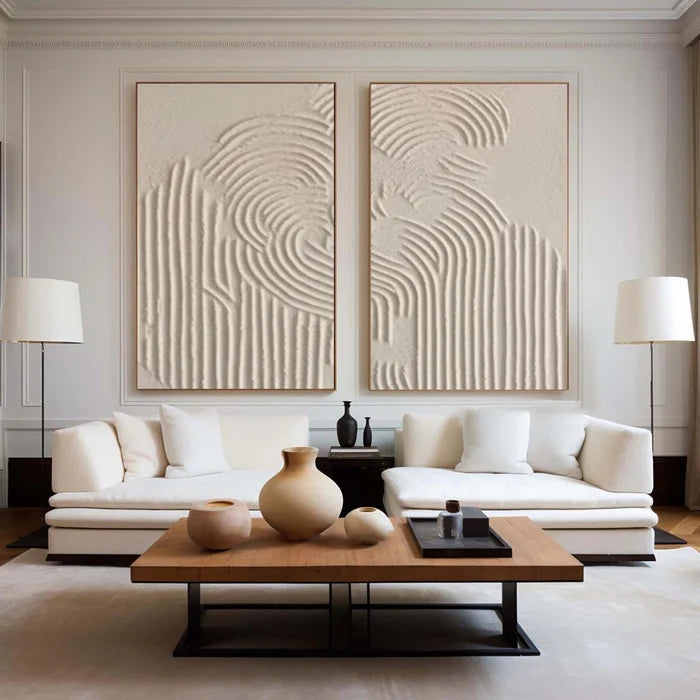

Hand painted canvas art shaped by texture depth and the real craft behind every layer
A lot of hand painted canvas art looks convincing online until it arrives and feels unexpectedly flat. That disconnect usually comes down to one thing: texture. Not color, not composition, but the physical build of paint on the surface. True hand-painted work—especially pieces created with palette knives and impasto techniques—carries weight, shadow, and subtle irregularities that change with light throughout the day. That is also why it takes longer to produce and ship. If you are choosing between decorative prints and genuine painted canvases, understanding how texture is constructed and cured will tell you far more about quality than any product description.
Texture is not decoration but structure
In authentic hand painted canvas art, texture is not an afterthought layered on top—it is the architecture of the piece. Artists using impasto techniques apply thick paint in deliberate ridges, edges, and planes. These raised areas catch light differently depending on where you stand, creating movement that flat prints cannot replicate.
Palette knife work plays a central role here. Unlike brushes, which tend to smooth and blend, a knife deposits paint in controlled slabs and fragments. This creates:
-
visible depth that can be felt, not just seen
-
irregular edges that break uniformity and avoid a printed look
-
micro-shadows that shift with natural and artificial lighting
This is why textured abstract and plaster-style paintings often feel more “alive” in a room. They do not just fill wall space—they interact with it.
For readers exploring heavier textures, it helps to browse a focused collection like Textured Art, where surface variation is the defining feature rather than a secondary detail.
The difference between flat paint and impasto depth
Many buyers struggle to distinguish between printed texture effects and real material buildup. The difference becomes obvious once you know what to look for.
This distinction matters most in large wall art. On bigger canvases, flat surfaces can feel empty, while real texture adds structure and presence without needing louder colors.
Why drying and curing cannot be rushed
One of the most overlooked aspects of hand painted canvas art is what happens after the painting looks “finished.” Thick paint does not dry evenly. The outer layer may feel dry within days, but the inner layers—especially in impasto work—can take significantly longer to stabilize.
If shipped too early, several issues can occur:
-
surface impressions or dents during transit
-
subtle cracking as internal layers continue drying
-
loss of structural integrity in thicker sections
Proper curing time allows the entire paint body to settle. This is why a processing window of around a week is not a delay—it is a quality safeguard. It ensures that the texture you see in photos is the texture that arrives intact.
The labor behind palette knife painting
Hand painted canvas art built with palette knives is physically demanding in a way that brush painting is not. Each layer requires pressure, angle control, and repeated adjustments. There is no quick fill or automated replication.
In large-format textured paintings, a single section may be applied, scraped back, and rebuilt multiple times before the balance of thickness and color feels right. What looks spontaneous is often the result of deliberate correction.
This manual process explains two things buyers often notice:
-
no two pieces are perfectly identical, even within the same style
-
slight variations are not flaws but evidence of real handwork
For buyers who want consistency across a set of artworks, this is where communication or customization becomes important.
How texture behaves in real rooms
Texture is not just a close-up feature—it affects how a piece reads from across the room. In neutral interiors, heavy texture can replace the need for strong color contrast. In darker spaces, raised paint helps catch limited light and prevents the artwork from disappearing into the wall.
However, there are limits. Highly textured art may not suit:
-
very narrow hallways where side-angle viewing is constant
-
ultra-minimal interiors that rely on perfectly flat surfaces
-
spaces where glare from strong spotlights exaggerates shadows too sharply
Understanding these trade-offs helps avoid the common mistake of choosing texture for its novelty rather than its fit within the room.
What to check before buying hand painted canvas art online
Buying textured artwork online requires a slightly different checklist than buying prints. Focus less on styling language and more on physical cues:
-
Look for close-up images that show paint thickness and edge detail
-
Check whether lighting in photos reveals shadows across the surface
-
Confirm size relative to wall space, especially for large pieces
-
Understand processing time as part of curing, not just logistics
-
Review available support such as room previews or advisory guidance
Vinchy Art positions itself around handcrafted, texture-forward work, and offers practical tools like room previews—where you can upload your wall photo to test scale—and art advisory to help match palettes with your interior materials. These are particularly useful when texture plays a major role in the final look.
If your wall requires a non-standard size or you are trying to coordinate multiple pieces, you can also Contact Us to explore custom dimensions or layout guidance.
Frequently Asked Questions
Why does hand painted canvas art take longer to ship?
Because thick paint, especially in impasto techniques, needs time to fully dry and cure. Shipping too early risks damaging the texture or causing long-term surface issues. The waiting period protects the artwork’s structure.
How can I tell if a painting is truly hand-painted and not a print?
Look for uneven paint buildup, visible knife marks, and surface shadows under angled lighting. Real hand-painted pieces will not appear perfectly uniform and often show subtle irregularities up close.
Is textured canvas art harder to maintain?
Not significantly, but it should be handled with more care. Avoid pressing against the surface, and keep it away from areas where it may be bumped or exposed to moisture.
Does heavy texture work in small rooms?
It can, but scale and placement matter. In smaller rooms, choose moderate texture or smaller canvases to avoid overwhelming the space.
Will the colors look different in person than online?
They can shift slightly depending on lighting conditions. Texture also affects perception, as raised areas catch light differently, making colors appear more dynamic than in flat images.