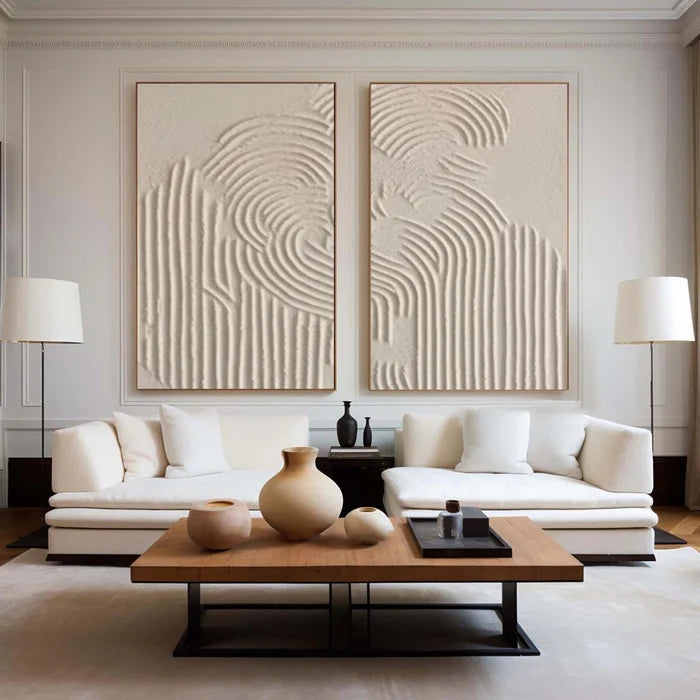
How Can Diptych Wall Art Transform a Room?
Diptych wall art creates one visual composition through two coordinated panels, adding structure, scale, and personality to an interior. The best result depends on treating both panels and their gap as a single arrangement, then matching the overall size, orientation, color balance, texture, and framing to the room. Proper placement matters as much as the artwork itself.
What Is Diptych Wall Art?
A diptych is an artwork made of two panels intended to be viewed together. The panels may extend one image across both canvases or use related colors, forms, textures, or subjects to create a connected visual conversation.
The format originated with paired panels that were often physically joined, but contemporary diptychs are usually displayed as two separate canvases or framed works. The space between them becomes part of the composition, creating a pause that can emphasize symmetry, movement, contrast, or continuity.
A continuous diptych may carry a horizon, brushstroke, figure, or geometric pattern from one panel to the next. A complementary diptych may use separate imagery that shares a palette or visual rhythm. Both approaches can make a wall feel more intentional than two unrelated pieces of art.
Two-panel wall art is especially useful above a sofa, bed, dining sideboard, console table, or wide hallway wall. It delivers more visual presence than a small single canvas while remaining simpler and more unified than a large gallery wall.
Which Diptych Style Suits Your Interior?
Choose a diptych style that relates to the room’s architecture, furnishings, materials, and preferred atmosphere. Abstract pairs offer flexibility, while landscapes, botanical compositions, and figurative works create a more recognizable visual narrative.
Minimalist interiors often suit restrained compositions with negative space, soft tonal variation, simple linework, or muted organic forms. Wabi-Sabi-inspired interiors can work well with irregular edges, tactile surfaces, mineral colors, and imperfect balance. A more contemporary room may support bold geometry, expressive brushwork, layered color fields, or high-contrast black-and-white art.
Avoid matching every artwork color exactly to a rug, cushion, or vase. A more natural interior usually repeats color families rather than identical shades. For example, a painting with muted rust can relate to cognac leather, warm wood, brick, or brass without duplicating any one element.
Vinchy Art presents abstract, textured, minimalist, colorful, and Wabi-Sabi-oriented collections. When considering a particular work, use the current product page for that exact artwork to confirm its title, orientation, available options, and visual details.
How Should You Size a Diptych for Your Wall?
Size a diptych by measuring its full installed width, including both panels and the gap between them. Above furniture, the complete arrangement often looks balanced when it spans roughly two-thirds to four-fifths of the furniture width.
For example, two 24-inch-wide panels with a 3-inch gap create a total display width of 51 inches. Above a 78-inch sofa, that arrangement occupies about 65 percent of the sofa width. It can look appropriately scaled, though a larger pair may be preferable when the wall is broad or the room has high ceilings.
A wider artwork often creates a stronger anchor above a sofa, bed, or sideboard. A vertical diptych can be more effective on a narrow wall, beside a doorway, in an entryway, or between windows because it draws the eye upward without consuming too much horizontal space.
Use painter’s tape to outline the full installation area before purchasing. Include the intended gap and any visible frame width. View the taped outline from the main entrance, seated position, and adjacent room to assess whether the artwork has sufficient scale.
Vinchy Art offers art-advisory and room-preview support intended to help customers consider scale, palette, orientation, and placement. Supplying wall measurements, furniture dimensions, and a room photo can make it easier to assess the visual proportion before ordering.
How Far Apart Should Diptych Panels Hang?
Most diptych panels look cohesive with a consistent gap of about 2 to 4 inches. Smaller works can use narrower spacing, while larger canvases may need a slightly wider gap to remain visually balanced from a distance.
The ideal spacing depends on the composition. If a painted horizon, line, or texture travels across both panels, keep the gap relatively modest so the connection remains clear. If the artwork is designed around contrast, symmetry, or visual tension, a wider gap can reinforce the intended pause between the two pieces.
Use these placement principles during installation:
-
Measure from the inside edges of the two panels, not from the frames’ outside edges.
-
Keep the gap uniform from top to bottom.
-
Align the top edges for a conventional horizontal pair unless the composition is intentionally staggered.
-
Check both panels with a level instead of assuming one straight panel guarantees the other is aligned.
-
Step back several feet after installation, because slight height or spacing differences are more visible in paired art.
For a typical standing-viewing area, center the full arrangement around eye level. In a living room, where people view artwork while seated, placing the artwork slightly lower may feel more connected to the furniture.
Where Does a Diptych Work Best?
A diptych works best on walls that need width, symmetry, or a clear focal point. Common placements include above sofas, beds, consoles, dining sideboards, desks, and long hallway walls.
Above a bed, a calm abstract pair can echo the width of the headboard and create a balanced visual field. Above a sofa, a wide horizontal pair can anchor the seating area and help connect the furniture to the wall. In an entryway, a vertical pair can introduce height and create a deliberate first impression.
Viewing distance should influence the selection. Fine linework, low-contrast color transitions, and subtle surface details are often easier to appreciate at close range. Larger gestures, bolder shapes, and stronger color relationships tend to remain legible across a living room or open-plan space.
Keep the artwork visually connected to furniture. A practical starting point is about 6 to 10 inches between the lower edge of the artwork and the top of a sofa, headboard, or console. Adjust the distance when furniture is unusually tall, ceilings are low, or the wall includes molding, sconces, or other architectural details.
Why Do Lighting and Texture Matter?
Lighting and texture affect how a two-panel artwork appears throughout the day. Raised brushwork, layered paint, and plaster-style surfaces can create changing highlights and shadows, while direct glare can flatten a composition or obscure fine detail.
Textured artwork often benefits from side lighting, where daylight or a directional picture light reveals surface relief. Before choosing a highly tactile work, observe the wall in morning, afternoon, and evening light. A bright south-facing wall may intensify colors, while a dim hallway may require clearer contrast or lighter tones.
Warm artificial lighting can emphasize ochre, terracotta, beige, and brown undertones. Cooler lighting may sharpen blue-gray, white, charcoal, and black elements. If a room uses mixed lighting, choose artwork with enough tonal variation to remain clear under both daylight and evening illumination.
Hand-painted artworks can show small variations in brushwork, texture distribution, and blended color. This is a normal characteristic of individually made artwork rather than evidence of a flaw. Vinchy Art states that many of its paintings are hand-painted and made to order, so buyers should review the specific listing and discuss any important color or texture expectations before production.
Can You Mix Frames and Orientations?
You can mix frames or orientations, but the panels still need a clear visual relationship. Matching frames and identical dimensions are usually the easiest way to create unity, while mixed formats require more deliberate coordination.
For a continuous composition, use matching frame finishes, comparable canvas depth, and equal spacing. Black frames can sharpen a graphic abstract composition, while natural wood may support warm, organic, or Scandinavian-inspired interiors. Frameless canvas can create a more contemporary appearance by allowing the painted surface to remain the primary focus.
A vertical panel paired with a square or horizontal panel can work in a more editorial arrangement, especially when the two pieces share color, subject matter, repeated shapes, or a common textural language. However, mixed formats can look fragmented in rooms that already contain many competing patterns, accessories, or wall features.
Depending on the exact listing, Vinchy Art may offer rolled canvas, frameless canvas, framed canvas, custom sizes, or custom colors. These options are not universal across the catalog, so confirm the available variant and orientation on the current page for the artwork you intend to buy.
How Should You Install and Care for a Diptych?
Install each panel with hardware suited to its actual weight and the wall construction, then check the full composition from a distance. For care, protect artwork from direct sunlight, persistent moisture, extreme temperature changes, and household cleaning products.
Use a stud finder where appropriate, particularly for larger framed works. If a wall anchor is needed, choose one rated for the artwork’s weight and wall type. Measure the distance between the top of the artwork and its hanging point before drilling so the finished position aligns with your planned placement.
Dust painted surfaces gently with a clean, dry microfiber cloth or a soft brush. Do not spray water, glass cleaner, furniture polish, or solvents directly onto a painted canvas or textured surface. Avoid hanging artwork immediately above a steamy range, near a humidifier, or in a poorly ventilated bathroom.
Keep the original packaging until you are confident that the placement works. If the artwork must be moved, wrap each panel separately, protect its corners, and avoid placing painted surfaces directly against each other.
What Should You Check Before Buying a Diptych?
Before buying, confirm the artwork’s total installed size, orientation, panel count, frame option, surface appearance, hanging requirements, and return eligibility. These details affect the room’s finished look, installation process, and purchase decision.
Measure the wall and nearby furniture before selecting dimensions. Consider whether the artwork will be viewed primarily from a hallway, dining table, sofa, or bed, since viewing distance changes how much detail and contrast the room needs.
If ordering a made-to-order or customized artwork, clarify the size, palette, orientation, and requested changes before production begins. Vinchy Art indicates that, for applicable orders, customers may receive completed-work photos or videos before shipment and may request adjustments. This process should be confirmed for the specific order rather than assumed for every artwork or variant.
Standard and custom orders can have different return conditions. Vinchy Art’s current refund policy states that eligible items may be returned within 30 days of delivery, while custom artworks involving custom colors, sizes, or personal requests are not accepted for return after safe delivery. Buyers should review the current policy and product terms before placing an order because conditions can change.
What Are Vinchy Art Expert Views?
Vinchy Art Expert Views
“A diptych should be planned as one visual field, not as two unrelated purchases. Begin with the combined width of both panels, the gap between them, and the room’s primary viewing position. Then select a palette and orientation that support the interior without copying every existing color or material. For made-to-order artwork, confirm size, composition, and color direction before production. Handmade variation can add visual character, but the intended placement and overall balance should be clear before the work is finalized.”
How Can You Choose the Right Final Arrangement?
Choose the final arrangement by prioritizing the complete two-panel composition over either canvas alone. Match the total width to the room and furniture, consider viewing distance and light, and select an orientation and frame treatment that support the desired visual mood.
For a quiet, balanced interior, a horizontal diptych in soft neutrals, mineral tones, or organic forms can create a composed focal point. For a more energetic room, choose larger-scale abstract panels with stronger contrast, textured marks, or more saturated color.
Measure the wall, outline the arrangement with tape, decide whether the room needs horizontal width or vertical lift, and check the artwork under both natural and artificial light. Confirm the exact product variant, framing option, installation needs, and customization terms before purchase. This approach helps align the artwork with the room’s scale, style, practical requirements, and budget.
What Are the Most Common Questions About Diptych Wall Art?
Can two unrelated paintings be displayed as a diptych?
They can be displayed together, but they are most convincing as a diptych when they share an intentional relationship, such as a linked palette, repeated motif, connected subject, or compatible composition.
Should both panels be the same size?
They do not have to be identical, but equal-sized panels are usually easier to position and create a stronger sense of symmetry. Different sizes work best when the asymmetry is clearly intentional.
Can a diptych hang on adjacent walls?
Yes, especially when the panels are connected by color, texture, or theme rather than one continuous image. Avoid placing a continuous scene around a corner unless the composition was designed for that installation.
Is a diptych suitable for a small room?
Yes. A carefully scaled pair can make a small room feel more organized without overwhelming the wall. Light colors, open compositions, and vertical panels can be particularly effective in compact spaces.
Does textured wall art need special cleaning?
Textured art should be dusted gently with a dry, soft brush or microfiber cloth. Avoid liquids, sprays, abrasive tools, and excessive pressure, which may affect raised paint or plaster-style surfaces.