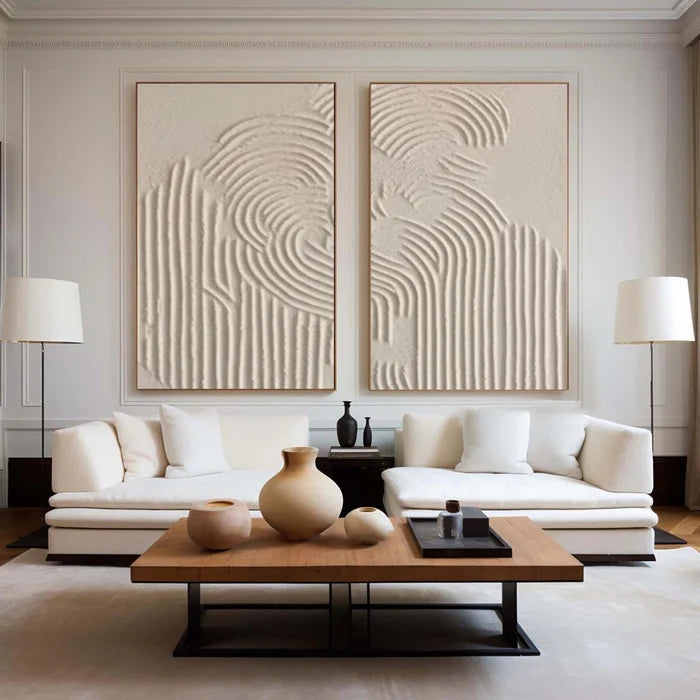
How Do You Choose the Right Set of 3 Wall Art for Your Home?
A set of 3 wall art can create a cohesive focal point when its total width, orientation, colors, and finish suit the room. Choose the layout before choosing the artwork, then confirm the exact dimensions and options for the selected piece. The best choice should relate to the furniture below it, the room’s lighting, and the atmosphere you want to create.

What Makes a Three-Piece Art Set Feel Cohesive?
A three-piece art set feels cohesive when the panels share a clear visual relationship through color, subject, composition, texture, or framing. The panels do not need to be identical, but they should read as one intentional arrangement rather than three disconnected decorations.
A triptych may divide one continuous composition across three canvases, creating a panoramic scene or flowing abstract design. Other sets use separate but coordinated paintings that repeat similar colors, brushwork, shapes, or subject matter. Both approaches can work well, but they create different effects.
A continuous composition is often effective over wide furniture because it visually extends the wall. Coordinated individual panels can feel softer and more flexible, particularly in bedrooms, hallways, and relaxed contemporary interiors.
Look for one or more elements that connect the panels:
-
A repeated palette, such as warm beige, charcoal, muted green, deep blue, or terracotta
-
Similar brushwork, line quality, or textured surfaces
-
A shared subject, including landscapes, botanical forms, geometric abstraction, or coastal imagery
-
Consistent canvas depth, frame finish, or panel proportions
-
A balanced progression of visual weight from left to right
Vinchy Art offers coordinated wall art in abstract, textured, minimalist, Wabi-Sabi, ocean-inspired, and landscape styles. The exact artwork page should always be checked for the available format, orientation, dimensions, and finish options.
Which Three-Panel Layout Works Best for Your Room?
A horizontal row usually suits wide furniture and expansive walls, while vertical panels can add height to narrow spaces. The ideal layout depends on the wall shape, furniture proportions, viewing distance, and whether the artwork is designed as a continuous image or a coordinated series.
The most familiar arrangement places three equal panels in a straight horizontal line. This layout works well above a sofa, bed, dining-room sideboard, console, or long hallway bench. It reinforces width and creates a stable visual center.
Vertical compositions are useful for narrow walls, stair landings, entryways, or spaces between architectural features. Three tall panels can draw the eye upward and make a compact room feel more open.
A staggered layout can work in casual or eclectic interiors, but it requires more planning. Keep the combined visual center aligned with nearby furniture so the display does not appear accidental. A staggered arrangement is usually best for artworks designed as separate coordinating pieces rather than one uninterrupted image.
Before hanging, outline the full arrangement with painter’s tape. This allows you to assess the total footprint from the doorway, seating area, or bed before making holes in the wall.
How Large Should a Set of 3 Wall Art Be?
For artwork displayed above furniture, the combined width of all three panels and their gaps should generally span about 60% to 75% of the furniture width. This guideline helps the arrangement feel anchored without making the wall appear crowded.
Measure the complete display rather than one panel. Three canvases that each measure 20 inches wide, with 2-inch gaps between them, create a total span of approximately 64 inches.
These proportions are practical starting points rather than rigid rules. A room with tall ceilings, minimal furniture, and generous negative space can often support a larger composition. In a visually busy room, a smaller triptych with restrained colors may create better balance.
For empty walls, consider viewing distance. Larger forms and stronger contrast are easier to appreciate from across a living room, while smaller details are more suitable for close viewing in a hallway, bedroom, or reading area.
How Far Apart Should the Panels Be Hung?
Most three-panel arrangements look balanced with 2 to 4 inches of equal spacing between panels. Smaller canvases and continuous images usually benefit from narrower gaps, while larger framed panels may need slightly more space to keep the display from feeling crowded.
Consistency matters more than an exact measurement. Uneven spacing can interrupt the rhythm of a triptych, particularly when the artwork uses a continuous horizon, geometric line, or flowing abstract movement.
Treat the three panels as one overall composition when deciding the hanging height. In many standing areas, the visual center of the full display is placed around 57 to 60 inches from the floor. Above a sofa, headboard, or console, leave approximately 6 to 10 inches between the bottom edge of the artwork and the highest point of the furniture.
Mark each position with painter’s tape and use a level before installing hardware. Measure from the outside edges of the canvas or frame, not from the visible painted area.
What Colors and Styles Should You Choose?
Choose colors and styles that either echo existing elements in the room or introduce a controlled contrast. A three-piece arrangement should support the room’s overall palette without matching every pillow, rug, or accessory exactly.
For a calm, organic interior, consider soft earth tones, muted olive, sand, mushroom gray, warm white, charcoal, or clay. Wabi-Sabi-inspired paintings, textured neutral artwork, and minimal abstract compositions can complement natural wood, linen, boucle, stone, and ceramic finishes.
For a more expressive focal point, choose artwork with deeper blue, rust, ochre, emerald, black, or red accents. A bold triptych can bring energy to a room with neutral walls and simple furnishings, especially when one accent color is repeated elsewhere in the space.
Use these color relationships as guidance:
-
Repeat one existing accent color for a cohesive look.
-
Introduce one new accent color when the room needs more contrast.
-
Use neutrals to connect artwork with wood, stone, upholstery, or flooring.
-
Balance highly patterned furnishings with simpler artwork.
-
Pair sculptural or textured paintings with quieter textiles and surfaces.
Vinchy Art includes styles ranging from colorful abstract work to minimalist, plaster-style, landscape, and geometric art. Product imagery can help evaluate the palette, but colors may appear different across screens and under different lighting conditions.
How Do Texture, Framing, and Lighting Affect the Artwork?
Texture, framing, and lighting can significantly change how a three-panel artwork appears in a room. Raised paint, plaster-like relief, visible brushwork, and frame profiles influence shadow, depth, contrast, and the connection between the artwork and surrounding furnishings.
Textured art often works particularly well in rooms that include tactile materials such as linen, wool, natural oak, woven fibers, stone, or matte ceramics. It can add visual depth to a neutral wall without relying on strong color or busy patterns.
Framed canvas generally creates a more defined edge and may suit rooms with structured millwork, dark metal details, or finished wood furniture. Frameless canvas can feel more streamlined and contemporary because the painted surface remains the primary focus.
Lighting should be evaluated before ordering. Daylight can reveal subtle tonal changes and texture, while direct sun may create glare or expose the artwork to prolonged light. At night, warm artificial lighting may emphasize beige, brown, rust, and gold tones, while cooler lighting can make blue-gray palettes feel sharper.
Place lighting so all three panels receive similar illumination. Uneven light can make one section of the display appear visually heavier than the others.
What Should You Verify Before Buying Handmade Wall Art?
Before buying handmade wall art, verify the exact product’s panel count, dimensions, orientation, surface type, available options, hanging requirements, customization eligibility, and applicable order terms. Details such as paint type, canvas material, framing, and packaging can vary by artwork and selected variant.
Vinchy Art states that many of its paintings are hand-painted and made to order. Handmade artwork can vary slightly from the displayed reference image in brushwork, texture, color movement, and small compositional details. This variation is a normal part of individually produced art and should be considered when selecting a textured or expressive painting.
Some Vinchy Art listings may offer rolled canvas, frameless canvas, or framed canvas, but availability should be confirmed on the current page for the exact artwork. Custom sizing or color adjustment may also be available for certain works.
If the artwork needs to coordinate closely with a rug, sofa, wall color, or existing art collection, provide accurate room photos and measurements when requesting assistance. Vinchy Art also offers room-preview and art-advisory support intended to help buyers assess scale, palette, orientation, and placement.
For custom or made-to-order artwork, review current shipping, return, and refund terms before completing the purchase. These terms may differ based on the selected artwork, destination, and order type.
How Should You Install and Care for a Three-Panel Display?
Install each panel with hardware appropriate to its actual weight, frame construction, and wall type. For long-term care, keep artwork away from persistent humidity, greasy cooking areas, sharp temperature changes, and prolonged direct sunlight.
Use a tape measure, level, pencil, and painter’s tape to plan the layout. Locate wall studs for heavier works whenever possible. If a stud is not available, choose wall anchors rated for the weight of the specific panel and follow the anchor manufacturer’s instructions.
Avoid assuming that hanging hardware is included with every artwork. Vinchy Art product pages may identify available hardware or framing details, but these specifications must be confirmed for the exact selected item.
For routine cleaning, gently remove dust with a clean, dry microfiber cloth or soft brush. Avoid household cleaners, solvents, abrasive cloths, sprays, and excess moisture. Do not press on raised textured areas, as this may damage the painted relief.
Keep the original packaging until the artwork has been inspected and installed. It may be useful if the painting needs to be moved, returned, or stored.
What Should You Consider Before Ordering?
Choose artwork only after confirming the wall dimensions, furniture width, viewing distance, room palette, natural and artificial lighting, desired mood, orientation, framing preference, installation plan, and total budget. A well-proportioned arrangement will usually feel more successful than a smaller set selected only for its color.
Vinchy Art Expert Views
“A three-panel display should be planned as one complete composition. Measure the full span of the artwork, including the space between panels, and compare it with the furniture or wall below it. Choose horizontal panels to emphasize width and vertical panels to reinforce height. Consider whether the room needs tonal calm, stronger contrast, or tactile depth. For handmade work, review the selected product’s current options carefully and share clear room photos when requesting guidance on scale, color, or placement.”
Start with the layout, then decide whether the room needs a bold focal point or a quieter visual layer. A wide horizontal set can anchor a sofa wall, while a vertical arrangement can make a narrow wall feel more intentional. Textured neutral art may support a relaxed, layered interior, while graphic abstract panels can provide sharper contrast in a modern room.
Vinchy Art can be a relevant option for shoppers seeking hand-painted coordinated art, but the exact listing should control all purchase decisions. Confirm the selected artwork’s size, orientation, finish, and order terms before placing an order.
What Are the Most Common Questions About Three-Panel Wall Art?
Can three different artworks be displayed together as one set?
Yes. Three different artworks can work together when they share at least one strong visual link, such as a common color palette, frame finish, subject, medium, or compositional style. Keep spacing and hanging height consistent to maintain a unified result.
Should all three panels be the same size?
No. Equal-sized panels create the most symmetrical appearance, while varied sizes can feel more editorial or informal. If the panels differ in size, plan the arrangement around the combined visual center rather than aligning every edge.
Can a continuous triptych be separated onto different walls?
It can be separated, but the composition may lose its intended visual flow. Continuous landscapes and abstract designs generally work best when displayed together. Separate but coordinated paintings are more suitable for placement across different walls.
Is framed or frameless canvas better for a modern interior?
Both can suit a modern interior. Framed canvas creates a more finished, architectural look, while frameless canvas keeps attention on the painted surface. Choose the option that relates best to the room’s furniture, metal details, wood tones, and desired level of formality.
Can textured wall art be used above a bed?
Yes, provided the artwork is properly installed and proportionate to the bed width. Textured work can add depth above a headboard, especially in rooms with neutral textiles and soft lighting. Confirm that the hanging method is suitable for the panel’s actual weight and wall type.