How Do You Choose the Right Square Wall Art for Your Home?
Square wall art is a strong choice for rooms that need a balanced focal point, from compact entryways to wide living-room walls. Choose it by matching the artwork’s overall size to the wall and furniture, then refine the choice through color, texture, orientation, framing, and lighting. The most important qualification is that handmade and made-to-order works can vary slightly from their reference images.
What Makes Square Wall Art So Versatile?
Square wall art creates a balanced visual shape that suits abstract, minimalist, textured, landscape, and multi-panel compositions. Its equal height and width can steady a long sofa, fill a narrow wall zone, or introduce structure to an open-plan room without the directional pull of a horizontal or vertical canvas.
A square canvas can act as a contained focal point in interiors that already have strong architectural lines. It works particularly well between windows, above a console, beside a bed, or on a wall where a wide rectangular piece would feel disproportionate.
This format can support several interior styles:
-
Minimalist rooms often benefit from restrained color, negative space, or quiet tonal abstraction.
-
Wabi-Sabi and organic modern spaces can use plaster-style surfaces, imperfect gestures, earthy neutrals, and visible texture.
-
Contemporary interiors may suit geometric forms, color fields, expressive marks, or high-contrast compositions.
-
Eclectic spaces can use square artwork to bring visual order to mixed furniture, textiles, and collected objects.
-
Small rooms may feel more composed with one appropriately scaled painting instead of many unrelated decorative pieces.
Square artwork also adapts well to coordinated layouts. A pair can add width over a sofa or sideboard, while four smaller works in a grid can create the presence of a larger installation.
How Should You Choose the Right Size?
Choose the size by measuring the usable wall area and the furniture beneath the artwork. A single square painting often looks balanced when its width is roughly two-thirds to three-quarters of the width of the sofa, console, bed, or sideboard it visually relates to.
The right dimensions depend on the room rather than a universal standard. A 24 × 24 inch painting may suit a compact entry or apartment wall, while a 36 × 36 inch or 40 × 40 inch canvas can create a more substantial focal point above a larger console or within a spacious living room.
Use painter’s tape to mark the outer dimensions of the proposed artwork on the wall. View the taped outline from the main seating position, doorway, and adjacent room. This helps reveal whether the painting will feel too small, too dominant, or appropriately connected to the furniture.
Leave visual breathing room around the artwork. A square canvas can feel crowded when it sits too close to shelving, wall sconces, molding, or furniture edges.
Which Colors Work Best With Square Wall Art?
The most effective color choice either connects the room’s existing tones or provides a deliberate contrast. Begin with the dominant shades in the sofa, rug, curtains, flooring, cabinetry, and larger furniture, then decide whether the artwork should blend into the palette or become the primary accent.
For calm, layered interiors, consider tonal compositions in ivory, sand, taupe, charcoal, clay, muted green, or soft gray. These colors can add visual depth while maintaining a quiet atmosphere. Textured neutral art often works well with wood, linen, stone, wool, boucle, and natural fiber rugs.
For a more energetic room, select a painting that repeats one or two accent colors already present in smaller details. A composition with rust, navy, ochre, forest green, or cobalt can create cohesion with cushions, ceramics, books, or upholstered chairs without requiring exact color matching.
Color temperature is also important:
-
Warm whites, terracotta, ochre, rust, and caramel usually complement oak, walnut, brass, and warm artificial light.
-
Cool gray, blue, sage, black, and crisp white often suit concrete, chrome, black metal, and rooms with cooler daylight.
-
Black-and-white paintings can create a defined architectural contrast against pale walls.
-
Tonal compositions use related shades to create a more understated visual effect.
Exact matching is rarely necessary. Shared undertones often create a more natural result than choosing a painting that duplicates the sofa or wall color precisely.
How Does Texture Affect the Room?
Texture changes how artwork responds to light, shadow, distance, and movement through a room. Smooth painted surfaces emphasize color, line, and composition, while palette-knife marks, layered paint, plaster-style relief, and raised details add physical depth that can become more visible as natural or artificial light changes.
Textured art can be especially useful in rooms dominated by smooth materials such as painted drywall, glass, polished stone, metal, or sleek cabinetry. It introduces variation without requiring additional furniture or accessories.
Consider placement before selecting a highly textured work. Deep relief may be less practical in narrow hallways or busy circulation areas where the surface could be touched or bumped. It also benefits from thoughtful lighting, since soft side lighting can reveal texture more effectively than direct glare.
Hand-painted paintings may show variations in brushwork, relief, color blending, and surface movement. Those differences are a normal part of individually made work. Review the exact product description and available close-up images before ordering, especially when texture is a major reason for choosing the piece.
What Is the Best Layout for Square Paintings?
The best layout depends on the width of the wall, the furniture beneath it, and the visual mood you want to create. One large square painting creates a concentrated focal point, while pairs and grids create broader coverage and a more architectural rhythm.
A single square canvas works well when the wall needs one clear focal point. Consider this approach over a narrow sideboard, between windows, above a compact fireplace, or in an entry where a larger arrangement would feel crowded.
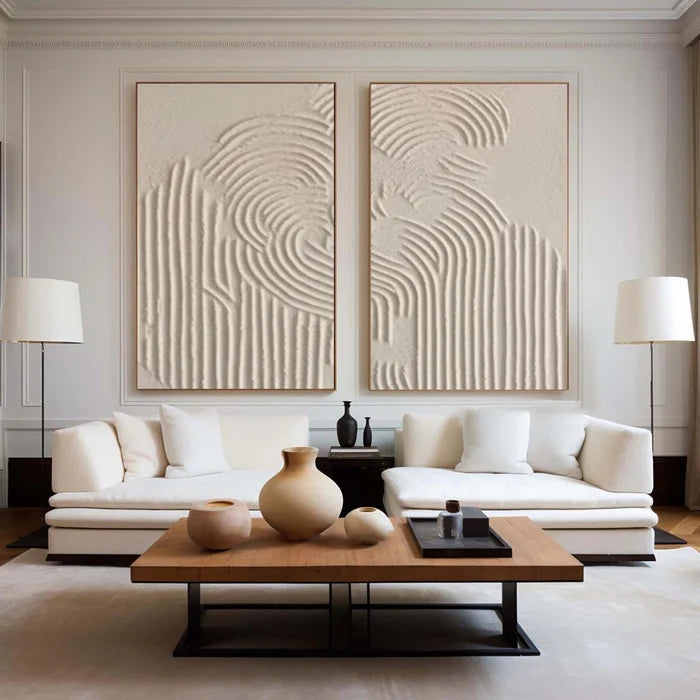
Two square canvases placed side by side can suit a long sofa or credenza. Keep the works aligned and use consistent spacing so they read as one coordinated composition. A pair can feel calmer than one panoramic image while still covering substantial horizontal space.
A four-piece grid can work on a large wall where a single canvas would feel too heavy or difficult to install. The arrangement creates scale while allowing each panel to contribute a separate visual moment.
Measure the total footprint, including the space between panels. For example, two 24 × 24 inch works with a 3-inch gap require 51 inches of wall width, not 48 inches.
Can Framing Improve the Finished Look?
Framing can strengthen the relationship between a square painting and the room, but the right choice depends on the artwork’s texture, edge treatment, wall color, and nearby furniture finishes. A frame should clarify the composition without overpowering it.
A float frame leaves a narrow visible space between the canvas edge and the frame. This presentation can give an abstract or textured painting a clean, contemporary boundary. A black frame can add contrast, while a natural wood frame can connect the art to oak, walnut, rattan, or other warm materials.
A frameless stretched canvas can suit modern interiors and artwork with painted edges. It keeps attention on the surface, color, and texture rather than the frame profile.
Some Vinchy Art listings may offer rolled canvas, frameless canvas, or framed canvas options. These options are not universal across the catalog, so buyers should review the exact product page and selected variant before assuming a particular presentation method is available.
Rolled canvas requires stretching or framing before installation. It may be appropriate for buyers who prefer to work with a local framer or want more control over the final frame style.
How Should You Light and Hang Square Artwork?
Hang square artwork at a comfortable viewing height and relate it visually to the furniture below it. Lighting should reveal the painting’s color and texture without producing harsh reflections, glare, or prolonged exposure to intense sunlight.
The visual center of wall art is often placed near eye level in a standing area. Above a sofa, console, headboard, or sideboard, it usually needs to sit lower so the artwork feels connected to the furniture rather than detached from it.
Keep a modest gap between the lower edge of the painting and the furniture below. Too much empty space can make even a well-sized canvas appear misplaced.
Consider the room’s lighting conditions:
-
Indirect daylight can reveal color shifts and surface texture throughout the day.
-
Adjustable picture lights or ceiling-mounted spotlights can highlight artwork after dark.
-
Soft side lighting may emphasize relief in textured or plaster-style paintings.
-
Warm lighting can enhance earth tones, muted browns, ochres, and warm whites.
-
Cool lighting may sharpen blue, gray, black, and white compositions.
Use hanging hardware that is appropriate for the artwork’s actual weight and the wall construction. Drywall, masonry, plaster, and stud walls require different fastening methods. Follow the installation guidance provided for the exact artwork, or consult a qualified installer if the mounting method is uncertain.
Why Should You Use a Room Preview?
A room preview can help you judge scale, color, orientation, and placement before buying, particularly for a large canvas, a square set, or a custom order. It is most useful when the room has a distinctive wall color, large furniture, limited display space, or a strong existing design style.
For the clearest result, provide a straight-on photograph of the wall and include the wall width, wall height, furniture dimensions, and approximate viewing distance. A daylight photograph can also help when the room’s color palette is a key consideration.
Vinchy Art offers art advisory and room-preview support intended to assist with artwork scale, palette, orientation, and placement. This can be helpful when deciding between one larger square composition and a pair or grid of smaller works.
A room preview is a planning aid rather than a guarantee of exact appearance. Screen settings, room lighting, handmade texture, brushwork, and color variation can affect how the final painting appears in person.
What Should You Confirm Before Buying Online?
Before buying square wall art online, confirm the exact size, orientation, materials, finish, frame option, production status, shipping terms, and return conditions that apply to the selected artwork and destination. This matters most for made-to-order, customized, or textured paintings.
Review the following details before checkout:
-
The selected dimensions and whether they refer to the canvas only or the finished framed piece.
-
The artwork orientation and whether the composition is intended to hang in a specific direction.
-
The materials and surface treatment stated on the exact product listing.
-
Available presentation options, such as rolled canvas, frameless canvas, or framed canvas.
-
Whether the painting is made to order and whether the selected option affects production timing.
-
Whether customization is available for the selected artwork.
-
Packaging, delivery requirements, import duties, and return eligibility for the destination.
-
Whether custom sizing, color changes, or other modifications affect return eligibility.
Vinchy Art states that many of its paintings are hand-painted and made to order. Depending on the exact listing and order type, some artworks may offer customization or a completed-work photo or video review before shipment. Confirm these details directly for the chosen artwork rather than applying them across the full catalog.
What Does Vinchy Art Recommend When Choosing Square Art?
Choose square art as part of the room’s overall composition, not as an isolated purchase. Measure the wall and nearby furniture, consider the main viewing distance, and select a palette and texture that work under both daylight and evening lighting. For handmade work, expect natural variation and confirm the selected size, orientation, finish, and order terms before production.
Vinchy Art Expert Views
“Square artwork is most effective when its size relates clearly to the wall and furniture around it. Mark the dimensions on the wall before ordering, then assess the arrangement from the room’s normal entry point and seating area. Consider whether the artwork should blend with the palette or create contrast, and allow lighting to influence the final choice. Textured hand-painted work can show subtle variation in brushwork, color transitions, and surface relief. These qualities are part of an individually produced painting. For custom orders, confirm dimensions, orientation, framing preferences, and applicable order terms before production begins.”
How Can You Care for Hand-Painted Artwork?
Hand-painted wall art should be protected from persistent moisture, extreme heat, cooking grease, and prolonged direct sunlight. Dust it gently with a clean, dry, soft brush or microfiber cloth, and avoid household cleaners, water sprays, solvents, or abrasive materials.
Placement is the first stage of care. Avoid locations directly above strong heat sources or in environments where humidity changes sharply. Kitchens, bathrooms, sunrooms, and uncovered outdoor areas may expose artwork to steam, grease, moisture, or ultraviolet light that may not suit every painted surface.
When dusting textured art, avoid pressing on raised areas. Thick paint, plaster-style relief, and layered surfaces can be more vulnerable to accidental impact than a flat print.
When moving a painting, hold it from both sides of the frame or stretcher rather than lifting it by the hanging wire. Keep protective packaging until the artwork is installed and inspected. If the painting must be relocated, use corner protection and a rigid outer box when possible.
What Is the Best Final Choice for Your Room?
The best square wall art is proportionate to the room, visually connected to the furniture, and suited to the palette, light, and atmosphere you want to create. A tonal textured painting can add quiet depth, while a bold abstract can provide contrast and establish a stronger focal point.
Measure the usable wall space, account for the furniture below, and test possible dimensions with painter’s tape. Consider the normal viewing distance, daylight direction, evening lighting, desired orientation, frame preference, wall type, and installation needs before ordering.
If the artwork is made to order or customized, confirm the exact dimensions, variant, materials, framing options, shipping terms, and return eligibility for the selected order. Vinchy Art’s room-preview and advisory support can assist with planning, but the final choice should reflect the actual room dimensions, existing palette, and preferred visual mood.
What Are the Most Common Questions About Square Wall Art?
Should square wall art be centered above furniture?
Usually, yes. Centering the artwork over a sofa, console, sideboard, or fireplace creates a stable composition. In an asymmetrical room, align the painting with the dominant furniture grouping or visual center rather than automatically using the architectural midpoint.
Can two square paintings replace one large canvas?
Yes. Two square paintings can create a broader horizontal arrangement while preserving balance. Measure the combined width of both pieces, including the gap between them, to make sure the layout suits the wall and furniture.
Does textured square wall art work in a small room?
Yes, if the scale and palette are controlled. A modestly sized textured painting in neutral or limited colors can add depth without making a smaller room feel cluttered. Avoid overly complex surfaces when the room already has many patterns or decorative objects.
Is a black frame the best option for abstract art?
Not always. A black frame creates contrast and definition, but natural wood, white, metallic, or frameless presentations may suit the artwork and interior better. Match the frame to nearby materials such as furniture, lighting, hardware, or window trim.
Can a custom square painting be returned?
Return eligibility can vary by artwork, customization type, destination, and order conditions. Confirm the current policy that applies to the exact artwork and selected custom options before placing the order.