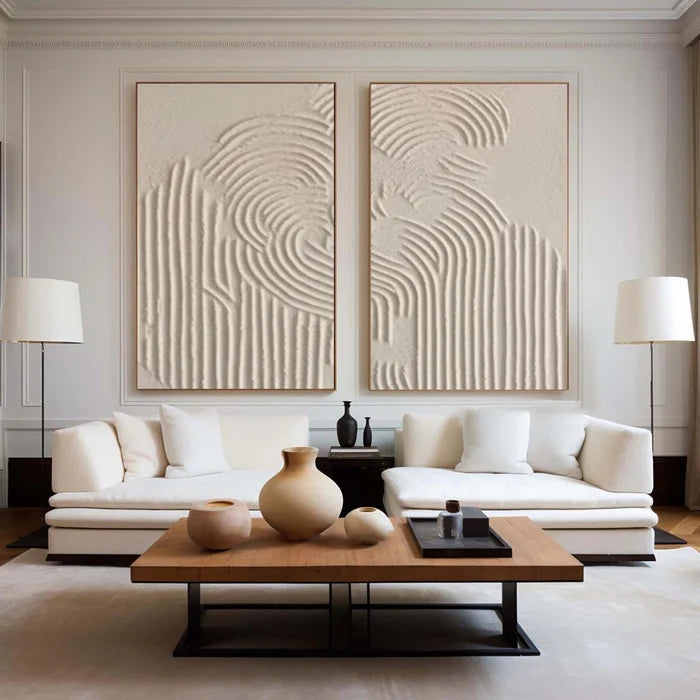
How Do You Choose Large Horizontal Wall Art?
Large horizontal wall art is most effective when its width relates to the furniture or usable wall beneath it, its palette works with the room’s finishes, and its scale remains clear from normal viewing distance. Start with dimensions and placement, then select the composition, texture, frame, and lighting response that support the room’s intended atmosphere.
What Makes Large Horizontal Wall Art Work in a Room?
Large horizontal wall art creates a wide visual anchor that can connect furniture, architecture, and open space. It works particularly well above sofas, beds, consoles, dining tables, and mantels, provided the composition has enough scale and the surrounding wall space remains purposeful.
A landscape-oriented painting follows the same visual direction as long furniture. This alignment can make a room feel more settled, especially where a wide sofa, low bed, or extended sideboard would otherwise leave the wall feeling empty.
Horizontal abstract art is versatile because it can suggest movement without depicting a literal scene. Broad color fields, gestural brushwork, geometric forms, quiet neutral layers, and panoramic compositions all suit the format. Landscape, ocean, cityscape, and botanical subjects can also work well when their composition naturally extends across the canvas.
The goal is not simply to cover a blank wall. The artwork should create a deliberate focal point while maintaining visual balance with nearby furniture, lighting, windows, and architectural details.
How Large Should Artwork Be Above a Sofa or Bed?
A useful starting point is to choose artwork that measures about two-thirds to three-quarters of the width of the furniture below it. This proportion often creates balance, though ceiling height, wall interruptions, and the artwork’s visual weight may justify a different size.
For example, a 90-inch sofa may suit a painting approximately 60 to 68 inches wide. A single large canvas creates an uninterrupted focal point, while a diptych or triptych can add rhythm if a one-piece work is impractical or the wall design benefits from separation.
Measure the usable wall area after accounting for windows, doors, vents, sconces, moldings, and built-ins. An artwork can appear undersized when it occupies too little of a broad wall, even if its listed dimensions seem large.
Before ordering, outline the proposed size with painter’s tape or kraft paper. Check it from the room entrance, main seating area, and adjacent rooms. This helps reveal whether the artwork feels appropriately scaled in the actual interior rather than on a screen.
Which Horizontal Art Style Suits Your Interior?
The best style reflects or deliberately contrasts with the room’s existing lines, materials, color temperature, and level of visual detail. A successful choice feels connected to the interior without becoming overly matched to every furnishing.
Rooms with linen, pale wood, stone, plaster, or soft neutral upholstery often suit minimalist art, Wabi-Sabi-inspired painting, or textured abstract compositions. Muted ivory, sand, taupe, clay, charcoal, and gray-blue can add depth while preserving a restrained atmosphere.
Contemporary interiors with clean profiles and polished finishes may suit graphic abstraction, geometric compositions, strong black-and-white contrast, or bolder color blocking. In transitional interiors, expressive abstract landscapes and softer oil-style compositions can bridge classic materials with more modern furniture.
Consider visual weight as well as color. Dense brushwork, dark values, strong contrast, metallic details, and pronounced surface relief tend to feel heavier. Open compositions, light values, quiet tonal shifts, and generous negative space usually feel lighter.
Vinchy Art offers paintings across abstract, textured, minimalist, landscape, colorful, and Wabi-Sabi-related categories. Because orientation, size options, materials, and finishes differ by artwork, buyers should review the current details for the exact piece they are considering.
How Should You Match Art With Color and Texture?
Choose whether the artwork will harmonize with the room’s palette, introduce a controlled accent, or connect through shared materials and texture. Exact color matching is rarely necessary and can make a room feel overly coordinated.
Tonal harmony uses related undertones rather than identical shades. A room with warm beige walls and oak furniture may work with a painting in ivory, ochre, soft brown, and muted terracotta. The artwork remains distinct while still feeling compatible with its surroundings.
Accent contrast allows the artwork to introduce a color that appears only sparingly elsewhere. A deep blue painting can become a cool focal point in a neutral room, while rust, olive, or ochre may warm an interior dominated by gray, black, or white. Repeating the accent once or twice in smaller accessories can create a more coherent result.
Texture also affects the balance of a room. A plaster-style or heavily textured canvas can add dimensional interest to a simple wall. If the space already includes woven textiles, veined stone, patterned rugs, and detailed upholstery, a smoother painted surface may offer useful visual relief.
Why Do Lighting and Viewing Distance Matter?
Lighting and viewing distance affect how color, texture, contrast, and surface detail are perceived. Evaluate large artwork from the place where it will usually be seen, not only from a close viewing position.
Above a sofa, a painting is often viewed from across the room. At that distance, the overall composition, color balance, and contrast are more important than fine brushwork. In a dining room or hallway, viewers may experience the piece from both near and far, so surface texture and edge finishing may become more noticeable.
Natural light can reveal the depth of layered paint, plaster texture, palette-knife marks, and subtle color transitions. Strong direct sunlight may create glare and should be considered when choosing placement. Window treatments or a different wall may be appropriate where sunlight is intense for long periods.
Artificial lighting also changes perceived color. Warm bulbs often emphasize earth tones, creams, ochres, and red-based colors. Cooler light can make whites, grays, blues, and blacks appear sharper. Adjustable picture lights or directional fixtures can highlight texture, but should be aimed carefully to avoid distracting reflections.
What Framing and Format Options Should You Consider?
The framing choice should support both the artwork and the room’s finishes. A frame affects the final outside dimensions, visual weight, and the degree to which a painting feels formal, architectural, or minimal.
A frameless stretched canvas can suit contemporary and minimalist interiors because the painted surface remains the primary focus. A float frame adds definition around the edges while preserving the sense of a canvas artwork. More traditional frame profiles may be suitable where the room includes classic millwork, darker wood furniture, or formal decorative elements.
A single wide canvas provides the strongest continuous statement. A diptych can work well when a wall has an interruption or when the composition benefits from a measured gap. A triptych may introduce repetition and architectural rhythm, but panel spacing should be treated as part of the overall design.
Vinchy Art may offer rolled canvas, frameless canvas, framed canvas, or custom options for selected works. These options vary by listing, so confirm the exact artwork, variant, and final outside dimensions before deciding how it will fit between windows, sconces, or cabinetry.
How Can You Buy Hand-Painted Art With More Confidence?
Buy hand-painted art with greater confidence by confirming the exact artwork, orientation, dimensions, finish, framing option, and applicable order terms before purchase. Handmade work may vary slightly from reference photographs, which is a normal characteristic of individually produced paintings.
Collect the practical details that affect scale and placement before comparing options:
-
Wall width and height
-
Furniture dimensions
-
Ceiling height
-
A straight-on photo of the intended wall
-
Dominant colors and major finishes
-
Preferred orientation and frame style
-
Daylight exposure and evening lighting
-
Budget for the artwork, framing, and installation
Vinchy Art describes many of its works as hand-painted and made to order. Selected artworks may offer custom sizes or color adjustments, and applicable orders may include an opportunity to review completed-work photos or videos before shipment. Availability should be confirmed for the exact artwork and order type.
Room-preview and art-advisory services can help compare scale, placement, palette, and orientation. They are useful planning tools, but screen displays, photography, wall color, and changing light conditions can influence how colors appear in person.
Before placing an order, review the current information that applies to the selected product and destination. Shipping arrangements, creation timing, packaging, duties, return eligibility, and customization exclusions may differ between standard and custom orders.
How Can Vinchy Art Help With Artwork Selection?
Vinchy Art can assist shoppers who need guidance on scale, orientation, palette, and placement for a specific wall. The most useful advice begins with accurate room dimensions, a clear wall photograph, and confirmation of the exact artwork being considered.
Vinchy Art Expert Views
“Choose the wall before choosing the painting. A large horizontal composition should relate to the width of the furniture, preserve intentional negative space, and remain visually clear from the room’s normal viewing distance. For textured or hand-painted work, evaluate surface detail under angled light and compare the proposed dimensions with a wall photo. If customization is available for the selected artwork, provide room measurements, palette references, and framing preferences before production so the final decision is made in context.”
This approach helps avoid common problems such as choosing a canvas that is too narrow for the furniture, selecting an orientation that conflicts with the room, or relying on screen color alone. It also keeps discussions of material, frame, custom options, and order terms specific to the individual artwork.
What Should You Know Before Installing Oversized Art?
Oversized art requires hardware appropriate to the wall structure, the artwork’s actual weight, and the hanging system used for that specific piece. Confirm these details before installation rather than assuming every canvas or frame uses the same hardware.
For a horizontal painting above furniture, begin by finding the visual center of the furniture grouping. Align the artwork to that centerline unless an intentional asymmetrical arrangement calls for a different placement. Do not automatically center artwork on the wall if the sofa, console, or bed is offset.
The center of an artwork is often placed around 57 to 60 inches from the floor in general wall installations. Above furniture, the bottom edge commonly sits about 6 to 10 inches above the furniture, though unusually tall pieces, low ceilings, or large headboards may require adjustment.
A second person is useful when positioning a wide canvas. Step back after temporary placement, because an artwork can be level yet still appear visually off-center when nearby windows, lamps, or furniture lines compete with it.
How Should You Care for a Hand-Painted Canvas?
Care for a hand-painted canvas by keeping it away from persistent moisture, direct heat, oily kitchen air, and prolonged intense sunlight. Dust it gently with a clean, dry, soft brush or microfiber cloth, without rubbing the painted surface or applying household cleaning products.
Do not spray water, polish, or solvents directly onto a painting. Textured work needs particular care because raised details can collect dust and may be vulnerable to abrasion. If a painting requires more than light surface dusting, consult a qualified art conservator.
Stable indoor conditions are generally preferable to rapid changes in temperature and humidity. Avoid placing artwork directly above an active fireplace or in a frequently steamy bathroom unless the suitability of the exact artwork and finish has been confirmed.
What Is the Best Final Approach for Your Room?
Choose a horizontal artwork that has enough width to anchor the room without eliminating useful negative space. Start with the dimensions of the sofa, bed, console, or usable wall, then compare potential artwork sizes from the room’s main viewing distance.
Select a calm neutral or textured composition when the interior needs depth without additional visual noise. Choose a more colorful abstract work when the room needs a deliberate focal point or a defined accent color. Consider daylight, evening lighting, frame preference, installation needs, and the total budget before making a final decision.
For a made-to-order Vinchy Art selection, provide accurate room measurements and confirm the exact artwork, dimensions, orientation, frame option, and any customization details before production begins. This preparation supports a more balanced result and reduces avoidable scale or placement issues.
What Are the Most Common Questions About Large Horizontal Wall Art?
Can one large painting work better than a gallery wall?
Yes. A single large painting often creates a calmer, more unified focal point above a sofa, bed, or console. A gallery wall may be more suitable when you want to display several smaller works, personal photographs, or a varied collection.
Is horizontal wall art suitable for a bedroom?
Yes. A wide artwork can relate naturally to the width of a headboard and establish the bed wall as the room’s main focal point. Choose a palette and level of contrast that suit the atmosphere you want in the bedroom.
Could textured artwork overwhelm a small room?
It can if the composition is highly contrastive, heavily detailed, or crowded by other decorative elements. A large neutral textured painting with limited color variation may feel quieter than multiple small, busy prints.
How far above a sofa should a large painting hang?
A common starting point is 6 to 10 inches above the sofa back. Adjust the placement for unusually tall furniture, low ceilings, or a particularly large canvas, while keeping the artwork visually connected to the furniture below.
Can artwork colors look different after delivery?
Yes. Screen calibration, product photography, daylight, artificial lighting, and surrounding wall colors can alter perceived color. Compare artwork images with your room’s palette and use available planning support when selecting a custom or made-to-order piece.