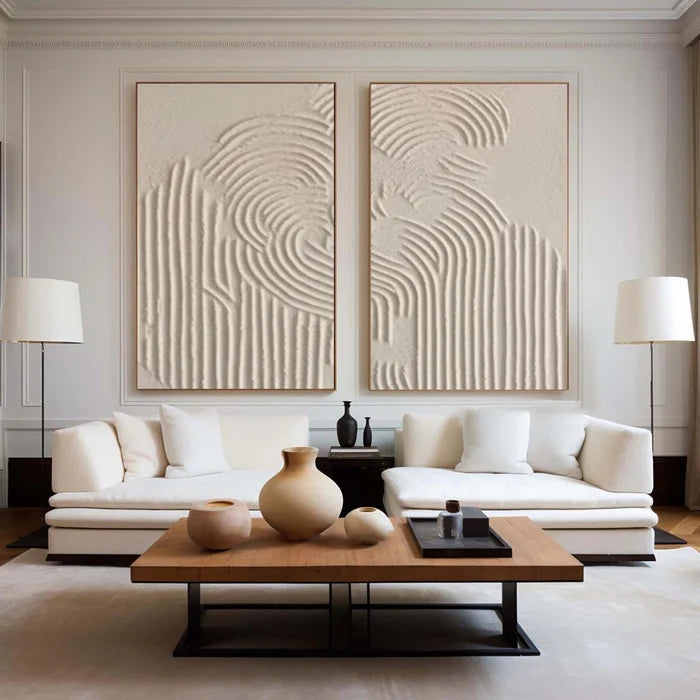
How Do You Choose Panoramic Wall Art?
Panoramic wall art works best when its width, color, orientation, and texture suit both the wall and the furniture below it. Start with proportion: a wide piece should feel visually connected to the room rather than lost on an oversized wall or crowded by nearby features. Then assess viewing distance, lighting, framing, installation, and budget before choosing a final artwork.
What Defines Panoramic Wall Art?
Panoramic wall art is a wide, horizontal artwork that emphasizes visual movement across a wall. Its extended format makes it particularly suitable above sofas, beds, consoles, sideboards, dining tables, and along long hallways.
A panoramic composition may depict a shoreline, mountain range, city skyline, abstract horizon, architectural scene, or broad field of color. Hand-painted versions can also use layered brushwork, gestural marks, impasto, or plaster-style texture to create surface depth.
Compared with a vertically oriented painting, a panoramic canvas reinforces horizontal architectural lines. It can help connect a long seating arrangement or balance a low, wide wall without adding unnecessary visual height.
The style may be restrained or expressive. A minimalist panorama might use open negative space and a limited palette, while a colorful abstract work may introduce movement through overlapping forms, tonal variation, and contrasting colors.
Which Size Works Best Above Furniture?
A panoramic artwork often looks balanced when it is about 60% to 75% of the width of the furniture beneath it. This is a useful starting point, not a fixed rule, because wall features, ceiling height, and surrounding décor also affect the final result.
Measure the furniture first. An 84-inch sofa, for example, may suit a painting approximately 50 to 63 inches wide. For a long sideboard or large sectional, a wider artwork may be more appropriate.
Use painter’s tape or kraft paper to mark the planned dimensions directly on the wall. View the outline from the room entrance and your primary seating position. This test helps reveal whether the artwork needs more width, more height, or a different placement.
A large panorama can suit a compact room if the composition is visually open and the wall is not crowded. In a spacious room, an undersized piece may look disconnected from the furniture and fail to establish a focal point.
How Should You Match Artwork Color With a Room?
Choose colors that either echo the room’s existing palette or introduce a controlled contrast. The painting does not need to match every finish, but it should relate to the interior’s dominant colors, materials, and intended atmosphere.
Identify the room’s largest color areas first: wall paint, sofa upholstery, rugs, drapery, flooring, and cabinetry. Then note smaller accents in cushions, ceramics, books, lamps, and decorative objects.
A neutral interior with oak, linen, stone, and soft upholstery may suit a panoramic abstract painting in ivory, sand, taupe, clay, charcoal, muted olive, or warm gray. These tones can create continuity without making the space feel flat.
For stronger contrast, repeat one or two accent colors from the room in the artwork. Deep blue can connect with navy textiles, while rust or ochre may complement terracotta, leather, walnut, or brick.
Screen color is not always reliable. Natural daylight, warm bulbs, cool LEDs, and surrounding wall colors can all change how a painting appears. Vinchy Art offers room-preview and art-advisory support intended to help buyers consider palette, placement, scale, and orientation before ordering.
What Style Suits Your Interior Best?
The best style is the one that supports the room’s materials, visual density, and desired mood. Panoramic artwork can feel calm, architectural, expressive, scenic, or energetic depending on its composition, palette, and surface treatment.
Minimalist panoramic art generally uses restrained forms, open space, and a limited range of colors. It can suit contemporary interiors with clean-lined furniture, uncluttered surfaces, pale woods, and simple architectural details.
Wabi-Sabi-inspired art often incorporates asymmetry, irregular forms, earthy neutrals, and weathered-looking texture. This approach can complement interiors with clay, stone, linen, raw wood, handmade ceramics, and soft natural light.
Textured abstract paintings add tactile interest to a wide wall. Plaster-style relief, layered paint, and thick brushwork can give a quiet neutral space more visual depth. Because texture catches light, it can appear different as daylight changes.
Scenic panoramic art, including ocean views, landscapes, and urban scenes, creates a stronger sense of place. Choose a composition with an appropriate level of detail for the viewing distance. Fine details often need a larger scale and more open wall space to remain legible.
How Does Texture Affect Lighting and Placement?
Texture affects how a painting responds to daylight and artificial illumination. Raised paint, plaster-like surfaces, and layered brushwork can create subtle shadows, making the artwork appear more dimensional when light falls across it from the side.
Indirect daylight can reveal surface variation without creating intense glare. Adjustable picture lights, wall washers, and nearby lamps may also highlight texture, particularly on a large horizontal painting.
Avoid placing artwork directly opposite a large uncovered window if reflected light makes the surface difficult to see. This is especially important for framed works with glazing, but even an unglazed painted canvas can appear washed out under strong reflected sunlight.
Warm lighting can emphasize cream, ochre, terracotta, and warm gray. Cooler daylight may make blue, green, slate, and charcoal tones appear more prominent. Consider the room at different times of day before selecting a painting with nuanced neutrals.
Vinchy Art includes abstract, textured, plaster-style, Wabi-Sabi, minimalist, colorful, landscape, and ocean-and-sky artwork categories. Materials, finishes, dimensions, and options vary by listing, so the current product page for the exact artwork should guide the final decision.
Can Framing Change the Look of a Panorama?
Yes. Framing can make a panoramic painting feel more structured and architectural, while frameless canvas often creates a lighter, more contemporary presentation. The best option depends on the artwork’s composition and the finishes already present in the room.
A slim black frame can define a pale abstract painting and connect it with black metal lighting, dark window frames, or modern furniture. It can be especially effective where the room already includes strong linear details.
Natural wood frames may soften a wide composition and relate to oak, walnut, rattan, or other organic materials. They often work well with landscapes, warm neutrals, and Wabi-Sabi-inspired interiors.
A frameless canvas can keep attention on brushwork, color transitions, and texture. It may suit casual contemporary spaces, particularly when the painting has painted edges or a composition intended to feel visually uninterrupted.
Do not assume that every artwork is offered in the same format. Depending on the specific Vinchy Art listing, options may include rolled canvas, frameless canvas, or framed canvas. Confirm the exact artwork, size, and variant before ordering.
Where Should You Hang a Wide Painting?
Hang a panoramic painting so it feels connected to the furniture beneath it and remains comfortable to view from normal standing and seated positions. The artwork should relate to the room’s architecture rather than float too high on an empty wall.
Above a sofa, bed, console, or sideboard, leaving approximately 6 to 10 inches between the furniture and the lower edge of the artwork often creates a cohesive arrangement. The ideal gap can vary with ceiling height, headboard height, and the artwork’s scale.
Center the artwork on the furniture when it hangs above furniture, even if the furniture itself is not centered on the wall. This usually produces a stronger visual relationship than centering it on the full wall width.
Before installation, measure the intended center point, account for the frame or canvas depth, and use a level. Choose wall anchors and hanging methods that are appropriate for the wall material and the artwork’s actual weight.
For multi-panel panoramic art, calculate the overall arrangement before drilling. Lay out the panels on the floor, confirm their sequence, and mark the entire composition on the wall. Consistent spacing helps the separate panels read as one coordinated image.
What Should You Know Before Buying Handmade Art?
Handmade art may vary slightly from its reference image in brushwork, texture, edge treatment, and color distribution. These differences are normal characteristics of individually produced work and should not be confused with a production defect.
Review the current listing for the exact artwork before purchase. Confirm its dimensions, orientation, material details, framing choices, and available customization options. These details can differ between products and should not be assumed across a catalog.
If you are choosing a large panorama, consider its delivery format and installation requirements. A rolled canvas, a frameless canvas, and a framed canvas may need different preparation after delivery, depending on the listed product option.
Vinchy Art states that many paintings are hand-painted and made to order. For applicable orders, buyers may be able to review photos or videos of the completed work before shipment and request adjustments. Availability can depend on the artwork and order details, so confirm this before placing an order.
Custom sizing or color changes may affect production, delivery, and return terms. Check the current product, shipping, and refund information for the exact artwork, destination, and order type before committing to a customized purchase.
How Can You Care for Panoramic Canvas Art?
Keep panoramic canvas art away from persistent moisture, direct heat, cooking vapors, and prolonged intense sunlight. Dust it gently with a soft, dry material and avoid liquids, household cleaners, or abrasive cloths on painted and textured surfaces.
Use a clean microfiber cloth, soft brush, or feather duster to remove loose dust. Do not press into thick impasto, raised plaster-style details, or textured paint, as pressure can affect the surface.
Try to maintain a reasonably stable indoor environment. Significant fluctuations in heat and humidity can affect canvas tension, stretcher bars, frames, and paint layers over time.
Avoid placing artwork directly above radiators, fireplaces, humidifiers, or sinks. A bathroom may be unsuitable for many canvas artworks unless the individual product is specifically intended for that environment.
If the artwork develops staining, lifting paint, structural damage, or mold exposure, seek advice from a qualified art conservator rather than attempting a home repair.
What Are Vinchy Art Expert Views?
“A panoramic painting should be selected as part of the room’s overall architecture, not as an isolated decorative object. Begin with the furniture width, wall dimensions, viewing distance, and main light source. Then decide whether the artwork should blend with the room’s palette or create a controlled contrast. In handmade textured art, variations in brushwork and surface relief are part of the character of an individually produced painting. Accurate measurements and confirmation of the exact artwork options can help reduce uncertainty before purchase.”
This approach is useful for large walls, where proportion, color balance, and orientation have an immediate visual effect. Prioritize scale first, then consider texture, framing, placement, and customization.
What Should You Prioritize Before Buying?
Prioritize proportion, viewing distance, palette, lighting, orientation, framing, installation needs, and budget together. A well-chosen panoramic artwork should fit the wall physically while supporting the room’s visual balance and intended atmosphere.
Measure the available wall and the furniture below it before looking at artwork sizes. Then test the planned dimensions with painter’s tape, especially if the piece will hang above a sofa, bed, or long sideboard.
Choose an orientation that reinforces the room’s layout. A horizontal painting works naturally over long furniture and on broad walls, while a taller composition may be better for narrow vertical zones.
Consider how the painting will look in daylight, evening lighting, and from the main viewing position. Select framing that relates to the room’s metal, wood, or architectural finishes. Confirm the exact Vinchy Art product details before ordering, including the selected size, format, customization options, and applicable purchase terms.
What Are the Most Common Questions About Panoramic Wall Art?
Can panoramic wall art work in a small room?
Yes. A panoramic piece can work well in a smaller room when its proportions suit the wall and furniture. Choose a composition with open space, limited visual clutter, and colors that support the room rather than overwhelm it.
Should a panoramic painting be centered on the wall or the furniture?
When it hangs above furniture, center the painting on the furniture. This creates a more cohesive grouping, even when the sofa, bed, or sideboard is not perfectly centered on the wall.
Can I hang panoramic art above a king-size bed?
Yes. A wide horizontal painting can complement a king-size bed by echoing the headboard’s proportions. As a starting point, choose artwork around 60% to 75% of the bed width and leave clear space above the headboard.
Is textured wall art harder to maintain than smooth canvas art?
Textured art requires gentler dusting because raised surfaces can collect dust and may be vulnerable to pressure. Avoid cleaning sprays, water, and vigorous rubbing on any hand-painted surface.
Could I order a custom panoramic artwork for an unusual wall?
Custom sizing or color adjustment may be available for some artworks, but it depends on the exact listing and order type. Measure the wall carefully and confirm the relevant options, timing, and purchase terms before ordering.