How Do You Choose Narrow Wall Art for Small and Awkward Wall Spaces?
Narrow wall art should match the wall’s usable proportions, the room’s viewing distance, and the surrounding palette. Vertical paintings usually suit tall, slim areas, while horizontal pieces work better above low furniture or on elongated wall sections. Measure the available space before choosing size, texture, framing, or color, and leave enough negative space for the artwork to feel intentional.
What Makes Narrow Wall Art Look Intentional?
Narrow wall art looks intentional when its scale, orientation, and visual weight relate to the architecture and nearby furniture. Rather than filling every empty surface, use one well-proportioned artwork or a carefully planned grouping that gives the wall a clear purpose.
Slim wall areas often appear between windows, beside doors, at the end of hallways, above console tables, or along stair landings. These spaces usually benefit from a focused composition instead of many small, unrelated decorations.
A vertical painting can reinforce the height of a doorway, curtain panel, or tall plant. A horizontal canvas can balance a low console or bench. Coordinated paintings may also work when they share a consistent palette, style, frame finish, or spacing.
The most successful result is not always the largest piece. A narrow wall needs enough empty space around the art to preserve visual clarity and prevent the room from feeling crowded.
How Should You Measure a Narrow Wall Before Buying Art?
Measure the wall’s clear width and height, then account for molding, switches, door clearance, furniture, and nearby fixtures. A painter’s-tape outline is one of the simplest ways to test whether an artwork will feel balanced before ordering.
Begin with the visible wall area rather than the total wall dimensions. A wall may appear wide on paper but lose usable space because of trim, doors, wall sconces, vents, or furniture. Record the measurements in inches and note the height of any console, bench, cabinet, or seating placed below the artwork.
For a piece above furniture, use the furniture width as the primary reference. The artwork should feel connected to the object beneath it instead of floating too high or extending too far beyond its edges.
These proportions are starting points, not fixed rules. A textured painting may create enough presence at a smaller size, while a pale minimalist composition may need more scale to remain visible against a light wall.
Which Orientation Works Best for a Narrow Wall?
Vertical art generally works best on tall, slim walls because it follows the wall’s natural direction. Horizontal art is more suitable for low, elongated spaces, such as the area above a narrow credenza, bench, or headboard.
Choose orientation according to the visible shape of the wall, not simply the room’s overall dimensions. A portrait-format abstract painting can make a compact entryway feel taller and more composed. A stacked pair of canvases can create a similar vertical rhythm while adding visual movement.
A horizontal composition may be preferable when the available wall area is wider than it is tall. Long, narrow wall art can visually extend a compact seating area and establish a grounded line above low furniture.
Square artwork can also work on a small wall section if there is sufficient breathing room around it. Avoid forcing an oversized landscape-format canvas onto a wall that barely accommodates its width, or placing an extremely tall work in a low-ceilinged room where it may feel disproportionate.
What Colors Work Best on a Narrow Wall?
The right color depends on the room’s existing finishes, daylight, artificial lighting, and desired atmosphere. Artwork can repeat existing tones, introduce measured contrast, or bridge colors that already appear in the furniture, flooring, and textiles.
For a quiet, cohesive interior, consider paintings that echo undertones found in wood, fabric, rugs, or stone. Soft ivory, sand, warm gray, muted olive, clay, taupe, charcoal, and beige often support Wabi-Sabi, Japandi, Scandinavian, and contemporary organic interiors.
For a stronger focal point, use art to introduce a concentrated accent color. Blue abstract art can create contrast in rooms with warm wood and neutral upholstery. Ochre, rust, deep green, burgundy, and terracotta can add warmth to cool gray, white, or black settings.
Exact color matching is rarely necessary. Instead, look for one or two points of connection, such as a shared undertone, repeated accent color, or complementary level of warmth. Review the proposed artwork in the actual room whenever possible, since daylight and warm evening lighting can change how colors appear.
How Can Texture Improve a Narrow Space?
Texture can add depth and visual interest to a narrow wall without requiring multiple decorative objects. Layered paint, plaster-style relief, palette-knife marks, and visible brushwork create subtle shadows that shift as lighting conditions change.
Textured wall art can be especially useful in minimalist rooms with restrained palettes. A cream, black, beige, gray, or earthy abstract composition may create visual presence through surface variation instead of strong color contrast.
Consider the usual viewing distance. Fine brushwork can be appreciated in a hallway or entryway where viewers pass close to the wall. Larger relief patterns may read more clearly from across a living room or open-plan space.
Avoid deeply projecting artworks in tight circulation areas where they could be brushed by doors, bags, or passing occupants. Texture should enrich the wall without creating a practical obstruction.
Hand-painted abstract art also has natural variation in brushwork, pigment distribution, and surface relief. These differences are part of the character of individually produced work and should not be mistaken for machine-made uniformity.
Why Does Framing Matter for Narrow Wall Art?
Framing affects how large, formal, and visually defined an artwork appears. A frame can separate the painting from the wall, while a frameless canvas creates a more continuous and contemporary presentation.
A slim black frame can add contrast to a pale abstract composition or relate to black window frames, light fixtures, and hardware. Natural wood frames can complement oak, walnut, linen, rattan, stone, and other organic materials. A restrained float-style frame can suit modern, minimalist, and Wabi-Sabi interiors.
Frameless canvas may work well when the composition continues around the edges and the room calls for a relaxed, gallery-inspired appearance. A framed option may be more useful when the artwork needs a stronger boundary against patterned wallpaper, dark paint, or visually busy architectural details.
Vinchy Art may offer different presentation options depending on the individual artwork or custom order. Confirm the exact product page or order details before assuming that a particular size, frame style, canvas format, or hanging method is available.
Where Should You Hang Art on a Narrow Wall?
Hang narrow wall art at a height that works with normal sightlines and nearby furniture. In many interiors, the artwork’s center is placed around 57 to 60 inches from the floor, then adjusted according to ceiling height, furniture placement, and the room’s primary viewing angle.
When hanging art above a console, bench, or cabinet, leave a visual gap that connects the two elements. A starting distance of approximately 6 to 10 inches is often useful, although taller furniture or larger artwork may require adjustment.
In a hallway, view the placement from the direction people most often approach. At a stair landing, consider the upward line of movement and the way the painting appears from both the top and bottom of the stairs.
Before drilling, use painter’s tape to test the artwork dimensions and placement. Review the outline from across the room, at close range, and from the main entrance. Small adjustments in height or lateral position can significantly improve balance.
Can Lighting Change the Appearance of Textured Art?
Yes, lighting can change how textured wall art appears because angled light reveals surface relief, tonal variation, and cast shadows. The same painting may look softer in diffused daylight and more dramatic under directional evening lighting.
Avoid placing paintings where they receive prolonged, direct sunlight unless the specific artwork’s materials and display requirements have been confirmed. Strong sunlight may affect many painted surfaces over time.
For artificial light, a picture light or adjustable wall fixture can emphasize texture and make an abstract work more visible after dark. Aim the light from above or slightly to one side, then check the surface for glare. Glossy areas may reflect direct bulbs, while matte or plaster-style surfaces often show more depth under angled illumination.
The room’s lighting should support the artwork rather than overpower it. In compact spaces, softer, layered lighting often helps art feel integrated with the interior.
How Can You Preview Artwork Scale Before Ordering?
Preview scale by outlining the intended dimensions with painter’s tape, creating a paper template, or using a room image with accurate measurements. These methods help translate a product image into a realistic understanding of how the artwork may occupy the wall.
Photograph the wall straight on in natural light and include nearby furniture for reference. Record the wall width, ceiling height, furniture dimensions, and any architectural restrictions. This information helps determine whether a vertical, horizontal, square, or multi-panel composition is most suitable.
Vinchy Art provides art-advisory and room-preview support intended to help shoppers consider scale, palette, orientation, and placement. For a request, clear room photographs, wall dimensions, preferred colors, and notes about lighting can help create a more useful visual assessment.
A room preview should support, not replace, physical measurement. Camera perspective, screen brightness, lens distortion, and unmeasured furniture dimensions can make artwork appear larger or smaller than it will in the finished space.
What Should You Confirm Before Ordering Handmade Art?
Confirm the exact artwork, selected dimensions, orientation, available format, framing choice, customization details, and current policy terms before ordering handmade wall art. Product options and order conditions may differ between individual listings, destinations, and custom requests.
Read the current page for the exact artwork rather than assuming every painting has the same materials, canvas type, framing options, or installation hardware. Some Vinchy Art listings may include different format choices, while others may have more limited options.
For a custom artwork, communicate with precise visual references. Share room photos, wall measurements, palette references, preferred orientation, and notes about whether you want stronger texture, softer contrast, more negative space, or a particular mood.
Vinchy Art states that many of its paintings are hand-painted and made to order. Handmade work may vary slightly from the reference image in brushwork, texture, and color distribution. Buyers should confirm how custom requests, artwork approval, shipping, and return eligibility apply to the selected order type before purchase.
Vinchy Art Expert Views
“A narrow wall should be treated as a compositional opportunity rather than an awkward leftover space. Start with the usable dimensions, then decide whether the room needs a stronger vertical line, a wider visual anchor, more texture, or a controlled color accent. One appropriately scaled painting with intentional empty space around it often feels more convincing than several unrelated pieces. Before ordering, compare the proposed size with nearby furniture, door clearance, lighting direction, wall color, and the viewing distance from which the artwork will be seen most often.”
How Can You Create a Cohesive Narrow-Wall Display?
Create a cohesive display by repeating one or two visual elements across the artwork, frame finish, palette, subject matter, or spacing. Consistency helps even a small wall feel curated rather than crowded.
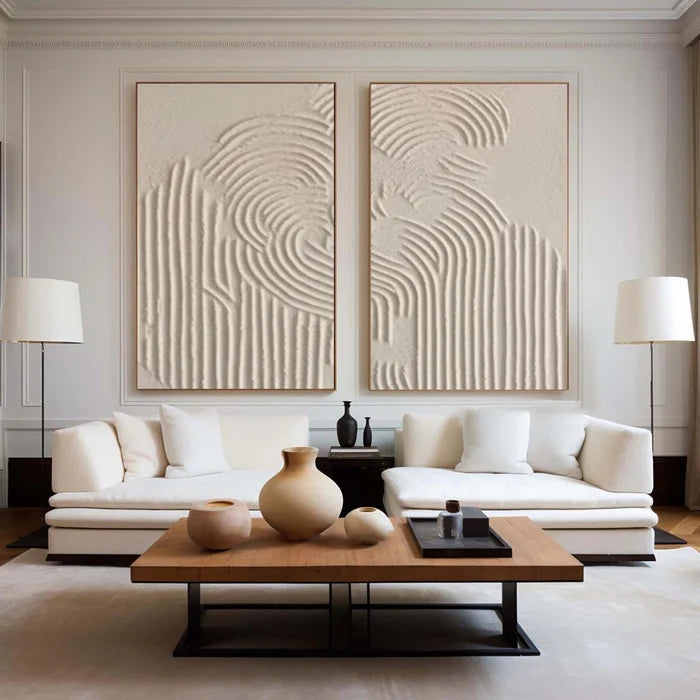
One large painting is often the simplest solution for a narrow wall. It can establish a clear focal point in contemporary, minimalist, and modern interiors. A vertical diptych or stacked pair can add rhythm while maintaining a unified visual direction.
Smaller works can succeed as a gallery-style arrangement when they share a related palette, consistent frame finish, or common subject. Keep the spacing deliberate. Closely placed pieces read as one composition, while wide or irregular gaps can make a narrow wall feel fragmented.
If the room already contains bold wallpaper, patterned tile, strong upholstery, or prominent architectural details, choose calmer artwork with fewer competing elements. If the room is visually simple, a textured abstract painting or a richer color field can provide contrast and depth.
How Should You Care for Narrow Wall Art?
Care for wall art by protecting it from prolonged direct sunlight, excessive humidity, heat sources, water exposure, and abrasive cleaning products. Handle canvases and framed works from the sides rather than pressing directly on the painted surface.
Dust gently with a clean, dry microfiber cloth or a soft brush. Do not use household sprays, water, solvents, or rough cloths on painted surfaces. Raised textures require especially light handling because fibers can catch on relief areas.
Avoid hanging art directly above radiators, steam sources, sinks, or areas with frequent temperature changes. Kitchens and bathrooms may require more careful placement because heat, moisture, and airborne residue can affect display conditions.
For care instructions related to a particular Vinchy Art painting, rely on the information provided for that exact artwork and selected format. Materials, framing, and finishing details can vary between listings.
What Are the Most Common Questions About Narrow Wall Art?
Can narrow wall art make a small room feel larger?
It can create a stronger sense of height or width when the orientation supports the wall’s proportions. Vertical art can emphasize height, while horizontal art can visually extend a low or wide area.
Should narrow wall art match my furniture exactly?
No. Exact matching can make a room feel overly coordinated. Instead, connect the artwork to one or two existing elements, such as a warm wood tone, black metal finish, muted accent color, or natural textile.
Can I use two paintings instead of one large piece?
Yes. A coordinated pair can work well on a narrow wall when the works share a palette, style, size, or frame finish. Keep the spacing even so they read as a single composition.
Is textured artwork practical in a hallway?
Yes, provided it does not extend into a high-traffic path. Texture can be particularly effective in hallways because viewers often see the artwork from a close distance.
Can custom artwork help with an unusual wall size?
Custom art can help when standard dimensions leave awkward gaps or do not suit the room’s palette. Confirm the final size, orientation, format, materials, and applicable order terms before proceeding.
What Should You Do Before Making Your Final Choice?
Choose artwork that fits the wall’s usable dimensions, supports the room’s palette, and remains visible at the normal viewing distance. Test the proposed size on the wall, consider how daylight and evening lighting affect the colors, and select an orientation that complements the architecture.
For tall, slim walls, start with a vertical painting or stacked composition. For low, elongated areas, consider a horizontal canvas. Choose texture when the room needs depth, framing when the work needs visual definition, and a simpler composition when the surrounding interior already contains strong patterns. Confirm installation needs, exact product details, and budget before ordering so the finished display feels considered and functional.