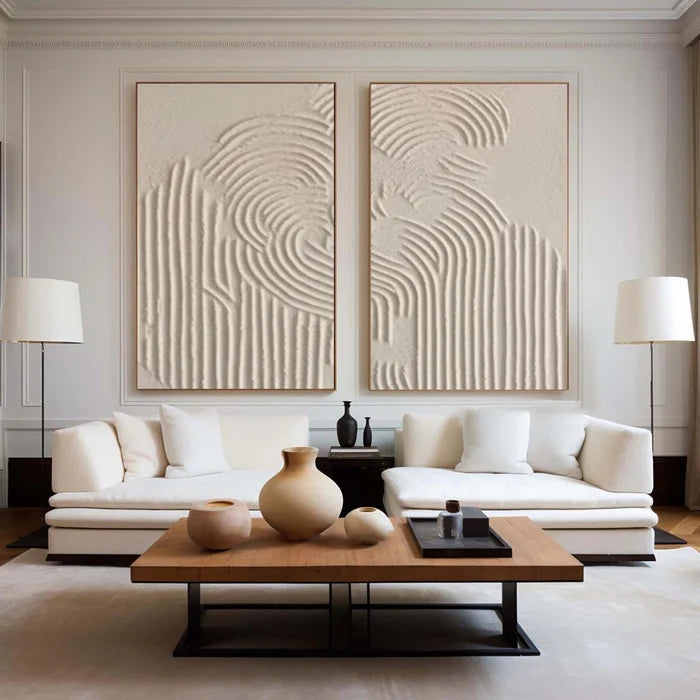
How Do You Choose Tall Wall Art That Fits Your Room’s Scale and Style?
Tall wall art is most effective when its vertical shape matches the wall, furniture, viewing distance, and lighting around it. Choose a size that feels proportionate rather than merely large, then refine the result through color, texture, orientation, framing, and secure installation. The best choice turns a narrow or high wall into a deliberate focal point without overpowering the room.
What Makes Tall Wall Art Suitable for a Room?
Tall wall art is vertically oriented artwork that adds height, structure, and visual movement to narrow, high, or underused wall areas. It is especially useful in entryways, stairwells, beside windows, between doors, near consoles, and on walls where a wide landscape-format piece would feel out of proportion.
Vertical art guides the eye upward, which can make a room feel more connected to its ceiling height. A single elongated canvas can create a strong focal point, while a stacked pair or coordinated vertical set can establish rhythm across a larger wall.
Abstract paintings work particularly well in portrait orientation because they do not depend on a literal horizon line. Fluid brushwork, geometric forms, layered neutral fields, and organic marks can all be composed to support a tall format. Textured and plaster-style art can add another dimension by creating shadows that change with daylight and interior lighting.
A narrow painting should still have enough visual weight for its setting. Strong tonal contrast, distinct texture, layered color, or a concentrated central form can help an elongated composition hold attention without making the room feel crowded.
How Should You Measure a Wall for Tall Artwork?
Measure the usable wall area before selecting artwork, including the clear space around furniture, trim, windows, light switches, sconces, and door swings. The artwork should relate to the wall’s visible dimensions and to the objects beneath or beside it, rather than filling every available inch.
For an empty wall, a single piece or grouped arrangement often looks balanced when it occupies approximately 60% to 75% of the usable wall area. This is a design guideline, not a fixed rule; a wall with dramatic architectural features may need more open space, while a double-height wall may require larger scale or a multi-piece arrangement.
For artwork above furniture, consider both height and width. A tall, narrow canvas can work well above a console table, chest, bench, or accent chair. Above a wide sofa, one narrow piece may appear isolated unless it is paired with another vertical work or incorporated into a broader arrangement.
Before ordering, outline the proposed dimensions with painter’s tape. View the shape from the doorway, the main seating area, and the closest walking path. This simple test often reveals whether the artwork needs more height, more width, or a different placement.
Which Orientation and Composition Work Best?
A vertical orientation works best when a room needs upward movement, a defined focal point, or a solution for a narrow wall. The composition should reinforce the architecture while complementing the room’s furnishings, traffic flow, and overall visual balance.
Elongated brushstrokes, drips, botanical forms, abstract columns, and layered geometric shapes naturally suit a portrait format. Vertical compositions can make a compact entry feel more intentional, while paired paintings can bring symmetry to either side of a bed, fireplace, mirror, or doorway.
Consider the visual effect of the composition before choosing a painting:
-
Centered forms often feel calm, formal, and balanced.
-
Asymmetrical forms can create a more contemporary and expressive effect.
-
Repeated marks or muted layers may suit minimalist and Wabi-Sabi interiors.
-
Strong geometric contrast can reinforce a modern architectural setting.
-
Broad horizontal gestures inside a vertical canvas can add stability and prevent the composition from feeling too narrow.
When ordering a made-to-order painting, confirm the intended orientation before production begins. A design created for a horizontal canvas may not retain its balance when simply cropped or stretched into a vertical format. The placement of color, texture, negative space, and focal forms may need to be adjusted for the new dimensions.
What Colors Should You Choose for a Tall Wall?
Choose colors that relate to the room’s established palette while giving the artwork a clear role in the overall composition. A tall painting can repeat existing tones for cohesion or introduce one controlled contrast to create visual interest.
For interiors with oak, walnut, linen, travertine, brass, clay, or warm white walls, consider mineral neutrals, ochre, umber, soft black, muted olive, terracotta, cream, and warm gray. These combinations can support an understated, tactile atmosphere without making the wall feel visually heavy.
For rooms with cool gray stone, black metal, blue upholstery, or chrome details, blue-gray, charcoal, ivory, muted green, soft taupe, and desaturated mauve may create a more connected result. A warm accent such as rust, saffron, or muted coral can add contrast when the room otherwise feels overly cool.
Consider the amount of color already present in the room. A highly saturated painting may become the dominant focal point, which can work well in a restrained contemporary interior. In a room with patterned rugs, colorful cushions, prominent shelving, or decorative objects, a more limited palette may create better balance.
Light also changes how paint appears. Cool daylight may emphasize blue and gray undertones, while warm evening lighting can deepen ochres, reds, and textured shadows. View artwork in relation to both daytime and nighttime conditions whenever possible.
How Does Texture Affect the Look of Tall Art?
Texture adds depth by changing how a painted surface catches light and casts shadow. Raised plaster-style relief, layered paint, palette-knife marks, and irregular surface variation can give a tall wall more character without requiring a complex color palette.
Textured art is often effective in minimalist interiors because it creates visual interest through material variation rather than strong contrast. A neutral painting in ivory, sand, stone, warm gray, or soft black can become a focal point through relief, tonal shifts, and changing shadows.
This approach can complement Wabi-Sabi-inspired interiors, where natural materials, asymmetry, restraint, and subtle irregularity are part of the overall design language. Texture may also create a useful counterpoint in rooms with smooth finishes such as polished stone, glass, lacquered cabinetry, or metal.
The viewing distance matters. Fine texture may be appreciated best when the artwork is viewed nearby, while more pronounced relief can remain visible across a living room or open-plan space. Direct side lighting or grazing light can reveal surface depth, but strong glare may reduce visibility.
Hand-painted textured work may vary slightly from a reference image. Small differences in brushwork, paint application, and raised details are normal characteristics of individually produced paintings. If texture is central to your decision, review the exact artwork listing and ask for clarification about the selected version before ordering.
Can Framing and Lighting Improve the Display?
Framing and lighting can strengthen the artwork’s presence, define its edges, and help it relate to the finishes in the room. The right treatment depends on the painting’s palette, texture, depth, and the display style you want to achieve.
A black frame can add crisp contrast around pale, neutral, or minimalist artwork. A natural wood frame may connect the piece with timber furniture and warmer materials. A float frame creates a visual gap around the canvas, giving the artwork a more structured presentation. Frameless canvas can suit interiors that favor a simpler, more relaxed look.
Check the exact artwork page before assuming a framing option is available. Vinchy Art states that framing choices may vary by listing, and options such as rolled canvas, frameless canvas, or framed canvas should be confirmed for the specific artwork and selected size.
For a single painting, place the visual center near average eye level, often around 57 to 60 inches from the floor. Adjust this position for furniture, ceiling height, staircases, and architectural features. Above a console or headboard, leave enough separation for the artwork to read as an independent element rather than an extension of the furniture.
Use lighting carefully. Adjustable fixtures can help reveal texture and color, but overly direct light can create glare. Avoid prolonged exposure to intense sunlight, high humidity, steam, or excessive heat unless the artwork’s specific care guidance confirms that the display conditions are appropriate.
What Should You Check Before Buying Hand-Painted Art Online?
Before purchasing hand-painted wall art online, confirm the exact artwork’s size, orientation, surface treatment, presentation option, customization terms, and return conditions. Product details can vary by artwork, size, destination, and order type, especially when a painting is made to order.
Start by checking whether the listed measurements refer to the canvas, the framed artwork, or a multi-piece arrangement. Confirm whether the selected option is rolled, stretched, frameless, or framed. If the artwork is textured, determine whether the image represents the expected surface character rather than an identical machine-produced finish.
Ask practical questions before ordering:
-
Does the selected size fit the available wall space and nearby furniture?
-
Is the orientation shown in the product image the orientation you need?
-
Is a requested color, size, or composition change treated as a custom order?
-
Does the selected format include hanging hardware, or will installation hardware be needed separately?
-
Is the artwork suitable for the planned location, such as a bright living room, hallway, or bedroom?
-
What return conditions apply to the exact item and order type?
Vinchy Art describes many of its paintings as hand-painted and made to order. The catalog includes abstract, textured, minimalist, Wabi-Sabi, landscape, portrait, animal, floral, geometric, and coordinated artworks. Materials, dimensions, frame choices, and available custom options should be checked on the current page for the exact artwork rather than assumed across the catalog.
Why Is a Room Preview Helpful Before Ordering?
A room preview helps you assess scale, orientation, palette, and placement before an artwork is produced or delivered. It is particularly useful for tall wall art because small changes in height or width can significantly affect how the artwork relates to doors, furniture, ceilings, and nearby decor.
For the most useful result, provide a straight-on room photograph that includes the floor, wall edges, adjacent furniture, and major architectural features. Include accurate measurements for the wall and nearby objects, such as the height of a console, sofa back, headboard, door frame, or window sill.
A preview can help answer practical styling questions. Does the artwork need to be taller? Would a warmer palette better connect with the furniture? Is a framed version too visually heavy for the room? Would a pair of vertical works create more balance than a single canvas?
Vinchy Art offers art advisory and room-preview support intended to assist with scale, palette, orientation, and placement. A digital visualization is useful for planning, but it should not be treated as a perfect representation of paint color. Screen calibration, room lighting, camera exposure, and wall color can affect the final appearance.
What Are Vinchy Art Expert Views?
“A tall artwork should create a proportionate relationship between the wall, nearby furniture, and the viewer’s sightline. Begin with the usable wall dimensions rather than choosing a size by impression alone. In neutral interiors, texture can add depth without introducing unnecessary color. In colorful rooms, a vertical painting often works best when it repeats established tones and adds one intentional contrast. Confirm orientation, scale, and framing before placing a made-to-order request, then use a room preview or painter’s-tape outline to reduce uncertainty about placement.”
How Should You Install and Care for Tall Artwork?
Install tall artwork with hardware appropriate for the artwork’s weight, frame construction, and wall material. Proper mounting improves stability, helps the artwork remain level, and reduces the risk of accidental damage in high-traffic areas.
Choose hanging hardware based on whether the wall is drywall, masonry, wood, or another material. Larger framed works may benefit from two secure hanging points to improve balance and reduce shifting. Do not rely on decorative hardware without checking its load rating and compatibility with the wall.
Avoid placing artwork where it may be hit by opening doors, exposed to constant steam, or subjected to prolonged direct sunlight. In hallways and stairwells, consider how people, bags, furniture, and pets move through the space before selecting the height.
For routine care, remove loose dust gently with a clean, dry, soft brush or microfiber cloth. Do not use water, household cleaners, solvents, or aerosol products on a painted canvas unless the maker gives specific instructions. Avoid pressing into textured areas, as raised paint or plaster-like surfaces may be more vulnerable to abrasion.
Retain protective packaging when possible, especially for framed paintings or artwork that may later be stored or moved. For a Vinchy Art order, review the care and packaging details listed for the specific artwork rather than assuming the same handling guidance applies to every product.
How Can You Choose the Right Artwork With Confidence?
Choose tall wall art by prioritizing proportion first, then refining the decision through palette, texture, orientation, framing, lighting, and installation requirements. A painting that suits the wall and room will usually feel more resolved than a larger or more colorful option chosen only for visual impact.
For a narrow entryway or stairwell, a single vertical canvas or coordinated series can create movement and structure. For a bedroom or calm living room, a neutral textured painting may add surface depth while maintaining a quieter visual mood. For a simplified contemporary space, an abstract composition with stronger contrast can become the main focal point.
Measure the wall, test the size with painter’s tape, and consider the main viewing distance. Compare the artwork with your existing colors, furniture finishes, natural light, and evening lighting. Decide whether you prefer a framed presentation, a frameless canvas, or a more flexible rolled-canvas option based on the exact product availability and your installation plan.
Budget should include more than the artwork itself. Consider framing, hanging hardware, installation, and any customization requested. When considering Vinchy Art, confirm the selected artwork’s current options and terms before purchase, particularly if you are requesting a custom size, color, or composition.
What Are the Most Common Questions About Tall Wall Art?
How high should tall wall art be hung?
For a single artwork, place its visual center near average eye level, often around 57 to 60 inches from the floor. Adjust the height when hanging above furniture, along a staircase, or within an unusually tall architectural space.
Can vertical artwork work above a wide sofa?
Yes, but one narrow painting may look too small above a wide sofa. A pair of vertical paintings, a vertical triptych, or a wider grouped arrangement may create a more balanced relationship with the furniture.
Should textured wall art be framed?
Framing is a style choice rather than a universal requirement. A float frame can give textured artwork more definition, while a frameless canvas may suit a cleaner and more relaxed interior.
What wall color works best behind abstract art?
The best wall color depends on the painting and the room. Light walls can emphasize contrast and texture, while darker walls can make pale artwork appear more dramatic. Choose a background that supports the artwork’s dominant tones and values.
Can I request a custom vertical painting?
Custom size, color, or composition options may be available for some artworks, but they vary by listing and order type. Confirm the exact request, production details, framing options, and return conditions before placing a custom order.