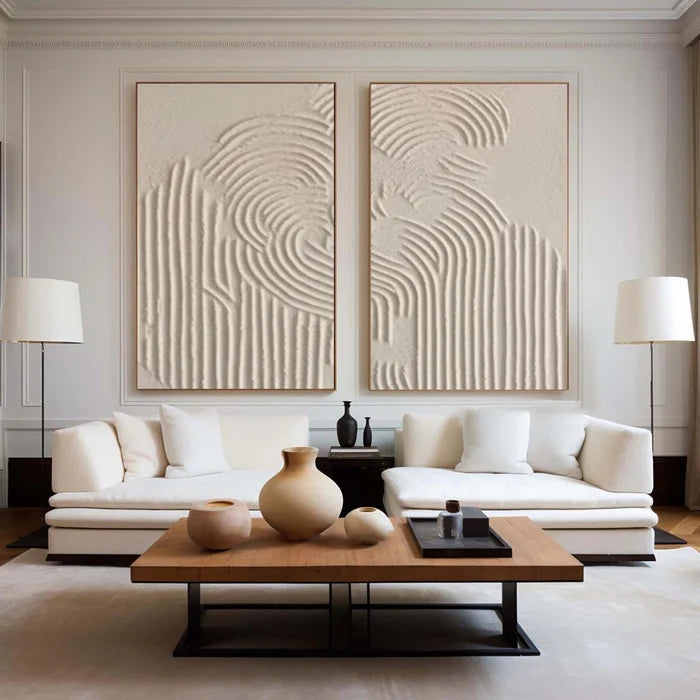
How Do You Choose Wide Canvas Wall Art?
Wide canvas wall art is most effective when its scale relates to the furniture or wall beneath it, its horizontal format supports the room’s proportions, and its colors work with the existing palette. Measure the space first, consider viewing distance and lighting, and confirm the exact artwork’s size, framing, materials, and order options before buying.
What Is Wide Canvas Wall Art Best Used For?
Wide canvas wall art is best for broad walls and long furnishings, including sofas, beds, sideboards, dining benches, and entry consoles. Its landscape orientation can create a unified focal point, extend the perceived width of a room, and bring balance to interiors with strong horizontal lines.
A wide-format painting is wider than it is tall. This landscape orientation often echoes the lines of sofas, headboards, fireplaces, cabinetry, and tables, helping the artwork feel connected to the room rather than placed as an afterthought.
Horizontal abstract paintings can suit contemporary, minimalist, Wabi-Sabi, coastal, transitional, and modern rustic interiors. The best style depends on the room’s visual character.
-
A tonal abstract can add depth while preserving a quiet, restrained palette.
-
A textured plaster-style painting can create tactile interest through raised surfaces and organic irregularity.
-
A landscape-inspired composition can introduce a horizon line or atmospheric sense of space.
-
A geometric painting can reinforce a more structured, architectural interior.
-
A colorful composition can become the room’s primary accent when furnishings are mostly neutral.
The format alone does not determine whether a painting will work. A tall, narrow wall may need vertical art, while a large open wall may be better served by a square canvas or a coordinated multi-panel arrangement. Consider the usable area around windows, wall lights, vents, shelves, and furniture before deciding.
How Wide Should Canvas Art Be Above Furniture?
A useful starting point is to select artwork that spans roughly 60% to 75% of the width of the furniture beneath it. This range usually creates a balanced relationship between the painting and the sofa, bed, console, or sideboard without making either element appear visually disconnected.
For example, a 90-inch sofa may suit a wide canvas or a grouped set measuring about 54 to 68 inches across. This is a styling guideline rather than a universal rule. A larger room with a substantial sectional may support a broader artwork, while a compact room may benefit from a more restrained composition.
When choosing a triptych or multi-panel set, calculate the full span, including the gaps between panels. A grouped arrangement should read as one composition, so its combined width matters more than the size of an individual panel.
Before ordering, outline the proposed dimensions on the wall with painter’s tape. This simple step helps reveal whether the artwork will clash with lamps, shelves, windows, molding, or nearby furniture.
Which Orientation Works Best for Your Room?
A landscape-oriented canvas works best when the room has broad visual lines, long furniture, or a wall that is noticeably wider than tall. Vertical and square paintings may be more appropriate for narrow walls, stair landings, tall ceilings, or spaces that need a stronger upward visual movement.
Choose a horizontal artwork when it will hang over a long sofa, headboard, dining sideboard, or fireplace mantel. The format can visually anchor a seating area and make the composition of the room feel more settled.
A vertical painting can be useful beside a doorway, between windows, or on a narrow wall. A square composition often works well above a smaller console or in a room where the furniture arrangement is centered and symmetrical.
Consider the room from its main viewpoint. In a living room, that may be the sofa or the entrance. In a dining room, it may be the table. Wide wall art should support the direction in which the eye naturally travels through the space.
How Do You Match Art Colors to an Existing Interior?
Match artwork to an interior by connecting it to the room’s dominant tones, secondary colors, and material finishes rather than trying to duplicate every color exactly. A successful painting usually repeats one or two existing visual cues while adding contrast through value, texture, or a carefully chosen accent.
Start with the largest color areas in the room: walls, sofas, rugs, curtains, cabinetry, and flooring. Then consider the temperature of the finishes. Oak, walnut, brass, terracotta, cream, and camel typically introduce warmth, while black metal, gray stone, chrome, blue-gray textiles, and cool white walls can create a cooler impression.
For neutral rooms, abstract art with layers of ivory, sand, taupe, charcoal, clay, muted green, or soft brown can add visual depth without overwhelming the space. For rooms with a strong sofa or rug color, choose an artwork that includes a related tone in a smaller amount or introduces a compatible contrast.
A blue sofa, for instance, may work with a painting containing soft blue alongside warm rust, ocher, cream, or olive. The goal is not exact matching. Slightly varied shades often look more considered than identical tones repeated throughout the room.
Why Does Texture Matter in a Wide Painting?
Texture matters because it affects how a painting responds to light, viewing distance, and the materials around it. Raised surfaces, palette-knife marks, layered paint, and plaster-style relief can give a wide canvas more depth and presence than a smooth, flat image.
Textured art often complements interiors that include linen, boucle, wool, natural wood, stone, rattan, limewash, or ceramic finishes. In a minimalist setting, texture can create interest without requiring a busy pattern or high-contrast color palette.
The strength of the texture should suit the viewing distance. Fine brushwork may be more noticeable at close range, while broad raised forms can remain visible across a living room. Directional lighting can also bring out texture by creating subtle highlights and shadows.
Texture requires thoughtful placement. Keep heavily textured artwork away from areas where it may be bumped, exposed to cooking residue, or affected by moisture. Care instructions should always follow the requirements for the exact artwork, because paint type, surface treatment, framing, and canvas construction can vary by listing.
What Framing Style Complements a Wide Canvas?
The right frame complements the painting and room finishes without distracting from the composition. Floating frames, natural wood frames, slim black frames, and unframed canvas edges can all work well, depending on the artwork’s palette, texture, and the desired level of formality.
An unframed or frameless canvas can suit relaxed contemporary, minimalist, coastal, and industrial interiors. It places emphasis on the painting itself and may make a large composition feel visually lighter.
A floating frame creates a narrow gap around the canvas, giving the work a more defined architectural edge. Natural wood framing can connect with warm oak, walnut, rattan, or linen furnishings. A slim black frame can provide contrast around pale abstract art and relate to dark window frames, lighting, or metal furniture details.
For thickly textured pieces, make sure the chosen framing method provides sufficient clearance around the painted surface. Do not assume framing options are identical across all Vinchy Art paintings. Review the current product page for the exact artwork and selected variant before ordering.
How Should You Light and Hang a Wide Canvas?
Hang wide canvas art at a height that feels connected to the furniture and comfortable from the room’s primary viewing position. In many homes, the center of the composition is placed near eye level, often around 57 to 60 inches from the floor, with adjustments for furniture height and room use.
When hanging art above a sofa, console, or sideboard, leave a modest visual gap so the artwork and furniture read as one arrangement. The appropriate distance depends on the height of the furniture, ceiling, artwork, and frame.
Use a level, measure both hanging points, and select hardware appropriate for the completed artwork’s actual weight and wall type. Large horizontal canvases often benefit from two secure hanging points because they help keep the piece level and reduce side-to-side movement.
Lighting should reveal the artwork without producing strong glare or heat. Diffused daylight can show color and texture naturally. Adjustable wall lights, picture lights, or ceiling-mounted directional fixtures can support evening viewing when aimed carefully. For textured surfaces, angled light often creates more visible dimension than direct frontal light.
Can Room Previews and Custom Options Reduce Buying Risk?
Yes. A room preview can help evaluate scale, color, orientation, and placement before an order is made. Custom options may also help when a standard proportion does not fit the wall, but every available choice should be confirmed for the specific artwork and selected order type.
A useful room-preview photo is taken straight toward the wall, with nearby furniture, floor, and ceiling edges visible. Include accurate measurements for the wall and the furniture beneath the future artwork. This provides a more realistic basis for judging proportion than viewing a painting against a generic room image.
Vinchy Art offers complimentary art advisory and room-preview support for customers who need assistance with size, palette, orientation, and placement. These services can be particularly useful for a wide wall, where an artwork that is slightly too small or too large may look noticeably out of scale.
Vinchy Art states that many paintings are hand-painted and made to order. Depending on the exact listing, custom dimensions or color adjustments may be available. Confirm the selected artwork’s current options, materials, framing choices, and applicable order terms before proceeding.
Hand-painted work can differ slightly from the reference image in brushwork, texture, or color nuance. This variation is a normal characteristic of individually produced artwork and should be considered when selecting a highly textured or color-sensitive composition.
How Can Vinchy Art Expert Views Help With Selection?
Practical art guidance can turn broad preferences into a clear selection based on wall dimensions, furniture scale, existing colors, lighting conditions, and desired visual mood. It is especially useful when a large wall needs a focal point but the best size, orientation, or level of texture is still uncertain.
Vinchy Art Expert Views
“A wide painting should follow the room’s longest visual line without simply filling empty space. Begin with furniture width, wall height, viewing distance, and the amount of natural and artificial light the area receives. A quiet palette can still have presence when it includes tonal contrast, layered texture, or a considered frame. In a more expressive room, use color with intention by repeating selected accents while leaving enough contrast for the artwork to function as a focal point. Before a made-to-order purchase, confirm the chosen size, orientation, frame option, and artwork-specific details so the finished piece suits the room as planned.”
Vinchy Art can be relevant for shoppers exploring hand-painted abstract, textured, minimalist, and Wabi-Sabi-inspired wall art. However, the best choice should be based on the room’s needs first, followed by careful review of the exact artwork listing.
How Should You Care for a Large Canvas Painting?
Care for a large canvas painting by protecting it from direct sunlight, moisture, grease, abrupt temperature changes, and abrasive cleaning products. Dust it lightly with a clean, dry, soft brush or microfiber cloth, and avoid rubbing raised or heavily textured painted surfaces.
Do not spray water, household cleaner, polish, or glass cleaner directly onto the canvas. Liquids can stain a surface, collect in textured areas, or affect the appearance of paint and finishes.
When moving a wide canvas, support it with both hands from the frame or stretcher structure. Do not lift it by a hanging wire, a single corner, or the canvas surface. Keep the artwork away from active fireplaces, humidifiers, and poorly ventilated bathrooms.
If an artwork is purchased as a rolled canvas, frameless canvas, or framed canvas, its handling and installation needs may differ. Vinchy Art may offer different presentation options on different listings, so use the instructions that apply to the exact product and variant purchased.
What Should You Do Before Buying Wide Canvas Wall Art?
Before buying, measure the wall and furniture, assess the room’s light and color palette, choose an orientation, and verify the exact artwork details. The strongest choice is not necessarily the largest option; it is the painting that feels proportionate, intentional, and appropriate for daily viewing.
Use wall dimensions and furniture width to narrow the size range. Consider whether the room needs a calm horizontal composition, a strongly textured focal point, or a colorful accent. Think about viewing distance: intricate detail may be easier to appreciate nearby, while broader forms can read well from farther away.
Decide whether an unframed canvas, floating frame, wood frame, or slim dark frame best suits the room’s finishes. Plan installation before the artwork arrives by identifying wall type, stud locations, and suitable mounting hardware.
Finally, confirm the artwork-specific details that affect your purchase, including available size, orientation, framing, customization, materials, handling, and applicable terms. This is particularly important for made-to-order or custom work, where options and policies may differ from standard orders.
What Are the Most Common Questions About Wide Canvas Wall Art?
Can wide canvas wall art work in a small room?
Yes. A horizontal canvas can work well in a small room when its size is proportionate to the wall and furniture. A lighter palette, open composition, and moderate visual detail can help the room feel balanced rather than crowded.
Should artwork be centered on the wall or furniture?
When a painting hangs above furniture, it is usually better to center it on the furniture. This creates a more stable composition, especially when the sofa, bed, or console is not centered on the full wall.
Is one large canvas better than a multi-panel set?
Neither is always better. A single canvas creates an uninterrupted focal point, while a multi-panel arrangement adds rhythm and can work well across a long wall. Judge the total width and visual weight of the entire grouping.
How can I tell whether a painting will suit my wall color?
Compare undertones instead of looking only at the main color. Warm walls often pair well with earthy neutrals and warm accents, while cool walls may suit blue-gray, charcoal, soft green, or crisp black details.
Can a custom wide canvas be returned if it does not fit the room?
Return eligibility can depend on the exact artwork, customization level, destination, and order type. Review the current policy and the terms for the specific Vinchy Art order before purchasing a custom piece.