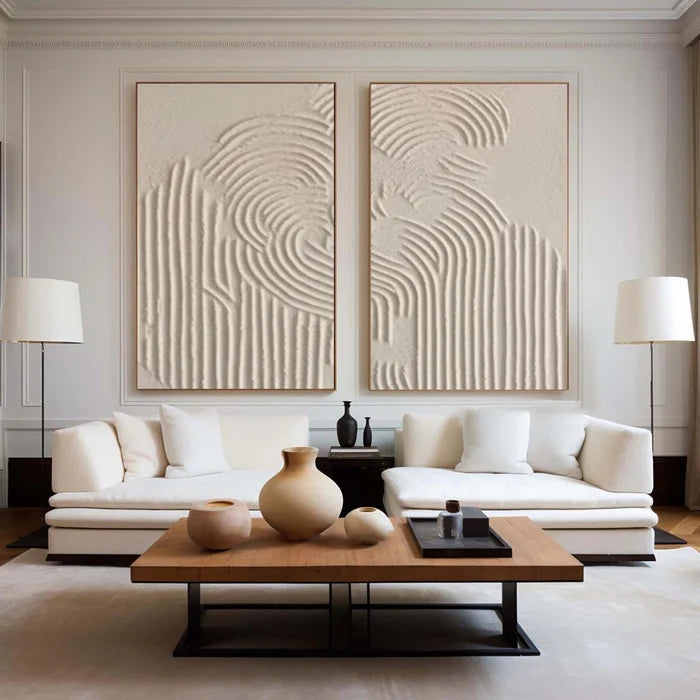
How Do You Choose Square Canvas Art for a Balanced, Stylish Interior?
Square canvas art is a balanced choice for rooms that need a clear focal point without the directional pull of a horizontal or vertical piece. Choose the size from the wall and furniture below it, then select colors, texture, and framing that suit the room’s light, palette, and intended atmosphere. Always confirm artwork-specific details before ordering.
What Makes a Square Canvas Format Distinct?
A square canvas has equal height and width, creating a centered composition that can feel stable, focused, and versatile. It works particularly well with abstract painting, geometric forms, florals, landscapes, and tactile plaster-style surfaces.
Unlike a horizontal canvas that emphasizes breadth or a vertical canvas that draws attention upward, a square format concentrates the composition within an even perimeter. This quality can help anchor a compact wall, balance a symmetrical furniture arrangement, or introduce order to a room with varied shapes and materials.
Square wall art is especially effective in these settings:
-
Above a round dining table or centered console table
-
Between matching bedside tables or wall sconces
-
On a narrow entry wall where a long horizontal work would feel crowded
-
In a reading nook, home office, or stair landing
-
As a pair or grid on a wider wall
The format does not require a symmetrical painting. An off-center brushstroke, irregular color block, or sculptural textured area can create visual movement inside the stable square boundary.
How Large Should a Square Canvas Be?
Choose a square canvas that relates clearly to the furniture or wall around it. When art is displayed above furniture, the overall arrangement often looks proportionate when it spans roughly two-thirds to three-quarters of the furniture’s width.
A single small square painting can look lost above a wide sofa or king-size bed. In that situation, consider a larger canvas, a coordinated pair of square paintings, or a grouped arrangement that creates more horizontal presence.
Before purchasing, mark the proposed dimensions on the wall with painter’s tape. View the outline from the doorway, seating area, and usual walking paths. This simple test helps determine whether the artwork feels grounded or undersized.
These are starting points rather than fixed rules. A high ceiling, dark wall color, large furniture, or open-plan layout may call for more substantial artwork. A smaller square may be more successful in a tightly edited interior with generous negative space.
Which Colors and Styles Suit Your Room?
The most successful artwork either repeats a room’s existing undertones or introduces a purposeful contrast. Begin with fixed elements such as flooring, cabinetry, sofa fabric, rugs, curtains, and metal finishes before selecting the painting’s dominant colors.
For a neutral room, tonal ivory, sand, warm gray, taupe, brown, olive, or charcoal can add depth while preserving a calm visual rhythm. In a colorful room, select artwork that echoes one or two established hues instead of attempting to match every color in the space.
Consider the visual character of the interior:
-
Textured abstract paintings suit organic modern, Japandi, contemporary, and Wabi-Sabi interiors.
-
Minimalist compositions complement clean-lined furniture, restrained palettes, and open wall space.
-
Bold abstract art can add a focal point to rooms with simple upholstery and limited pattern.
-
Geometric painting works well with structured furniture, metal accents, and crisp architectural details.
-
Floral or landscape-inspired art can soften interiors dominated by stone, glass, metal, or angular cabinetry.
Vinchy Art offers artwork across abstract, textured, Wabi-Sabi, minimalist, colorful, landscape, floral, animal, and geometric styles. The exact options, dimensions, and finishes should be confirmed on the current page for the selected artwork.
Why Does Texture Matter in Canvas Art?
Texture affects how artwork interacts with light, distance, and surrounding materials. Smooth painted surfaces emphasize color, line, and brushwork, while raised texture introduces relief, small shadows, and a more tactile appearance.
A textured painting may look different throughout the day. Natural daylight can reveal subtle surface changes, while directional artificial light may make ridges, impasto, or plaster-like forms more pronounced. This can add depth to a neutral composition, but excessive spotlighting may create glare or overly harsh shadows.
Use texture in relation to the room’s overall material balance:
-
Pair textured art with linen, wool, wood, stone, handmade ceramics, and matte finishes for an organic effect.
-
Choose a smoother painting if the room already has heavily patterned wallpaper, veined stone, busy rugs, or decorative tile.
-
Avoid placing highly textured work where it may be frequently touched or exposed to steam, grease, or splashing water.
Not all hand-painted works use the same materials or degree of surface relief. If texture is central to your decision, review the specific Vinchy Art product details and available images before choosing a variant.
How Should You Frame and Hang a Square Canvas?
Choose framing and installation methods that support the artwork’s scale, surface, wall type, and room style. A floating frame can add definition around the canvas while leaving a narrow visible gap between the painting and frame.
Light wood frames often complement warm neutrals, natural materials, and Wabi-Sabi interiors. Black frames can sharpen the outline of high-contrast or monochrome artwork. A frameless canvas presentation may suit modern interiors where a lighter, less formal result is preferred.
When art hangs over furniture, center it over the furniture grouping rather than the full wall. Keep the painting visually connected to the sofa, bed, console, or sideboard below it. In many rooms, the lower edge of the artwork looks balanced when it sits approximately 6 to 10 inches above the furniture, though this should be adjusted for ceiling height and overall scale.
Before hanging, confirm the following:
-
The finished artwork’s dimensions, including the frame if applicable
-
The artwork’s total weight and the wall’s construction
-
The appropriate hardware for drywall, masonry, plaster, or paneling
-
The location of the actual hanging point on the back of the artwork
-
The level and alignment of the piece from normal viewing positions
Do not assume that every Vinchy Art piece has the same frame, hanging hardware, or installation requirements. These details can differ by artwork and selected format.
Can Lighting Change How Square Art Looks?
Yes, lighting can change the perceived color, texture, and visual depth of a painting. Indirect daylight and adjustable artificial lighting generally provide more control than prolonged exposure to intense direct sunlight.
Warm lighting can support earthy palettes, including ochre, terracotta, brown, cream, and warm beige. Neutral lighting may preserve the clarity of cooler blue, green, gray, and black-and-white compositions. The room’s evening lighting deserves particular attention because it may be when the artwork is viewed most often.
Avoid placing canvas art in continuous direct sun where possible. Long-term intense light exposure can affect how painted surfaces appear over time. Also avoid locations near fireplaces, radiators, HVAC vents, damp areas, or active cooking zones.
For textured artwork, use broad, soft illumination rather than an overly narrow spotlight. This allows the surface to remain visible without making every raised element appear overly dramatic.
What Should You Check Before Ordering Handmade Art?
Before ordering handmade canvas art, confirm the exact title, dimensions, orientation, available format, frame option, paint surface, customization status, and destination-specific order terms. Handmade work may show slight variations from reference photography, which is a normal characteristic of individually produced art.
If the painting must fit a narrow wall, alcove, or space between lighting fixtures, measure the final outer dimensions carefully. A framed artwork may occupy more wall area than an unframed or rolled canvas version of the same image.
For a palette-sensitive room, photograph the intended wall in both daylight and evening light. Include nearby upholstery, flooring, wood tones, and other fixed finishes when requesting guidance. This gives the seller a clearer basis for advising on size, orientation, and color direction.
Vinchy Art states that it creates hand-painted, made-to-order wall art and offers art advisory and room-preview support. Depending on the exact listing and order, available options may include different presentation formats, custom sizing, or color adjustments. Confirm these details for the specific artwork rather than treating them as standard across the catalog.
Vinchy Art Expert Views
“A square painting works best when it solves a specific design need rather than simply filling an empty wall. Measure the usable wall area, consider the furniture below it, and assess viewing distance before choosing size. Then select a palette that relates to the room’s established materials and a surface that responds well to available light. For handmade artwork, review the exact product options before ordering and allow for the subtle variation that gives an individually painted piece its own character.”
Custom and standard orders may have different terms. Review the current product, shipping, and refund information for the exact artwork, selected variant, destination, and order type before completing a purchase.
How Do You Care for a Canvas Painting?
Protect canvas art by keeping it dry, clean, and away from intense sun, heat, smoke, grease, and abrupt environmental changes. Use a soft, clean, dry brush for occasional dusting, and do not apply water, household cleaners, alcohol, or abrasive cloths to the painted surface.
Textured artwork requires additional care because raised areas can catch dust and fibers. Brush gently across the surface without pressing into grooves or textured ridges. Never scrub plaster-style or heavily textured areas.
For long-term display, keep the artwork in a stable indoor environment. Avoid positioning canvas directly above a working fireplace, beside a humid shower area, or in the path of strong heating and cooling vents. When moving the painting, support it from the sides and avoid touching the painted face.
Retain original packaging until you are certain the artwork will remain in its chosen location. Appropriate packaging can be helpful if the work needs to be moved, reframed, stored, or handled under any applicable return process.
What Are Common Questions About Square Canvas Art?
Can square canvas art work above a rectangular sofa?
Yes. Use a sufficiently large square painting, a pair of coordinated squares, or a wider arrangement that creates enough horizontal visual weight. A small single square usually suits a chair, narrow console, bedside wall, or compact entry more effectively.
Should square wall art be centered on the wall or on the furniture?
When artwork hangs above furniture, center it on the furniture grouping. On an empty wall, center it within the usable visual area while accounting for nearby doors, windows, shelving, light fixtures, and architectural details.
Is framed or frameless canvas better?
Neither option is universally better. A frame can add structure and connect with furniture finishes, while a frameless canvas can feel lighter and more contemporary. Choose according to the artwork’s edge treatment, texture, and the room’s overall style.
Can textured canvas art be displayed in a bathroom?
It is generally better suited to a dry, stable room. If displayed near a bathroom, keep it away from direct water, steam, and major humidity changes, and ensure the room has effective ventilation.
What if handmade artwork differs slightly from its reference image?
Minor variation in brushwork, texture, and hand-painted detail can occur. Compare the received work with the confirmed product information and contact the seller promptly if there is a concern about condition, size, orientation, or the selected format.
How Can You Make the Final Choice Confidently?
Choose square canvas art by considering the whole room: wall dimensions, furniture width, viewing distance, existing palette, natural and artificial light, desired mood, and framing preference. A successful piece feels proportionate from the room’s main viewing positions and connected to the materials already in place.
For a calm interior, choose a tonal abstract or textured square in a scale that gives it presence without overwhelming the wall. For a more expressive setting, consider bolder color, visible brushwork, or a coordinated square set. Confirm the exact Vinchy Art artwork’s dimensions, orientation, available finish, installation needs, and order terms before purchasing. The right choice should fit the wall, suit the budget, and feel visually coherent in the way the room is actually used.