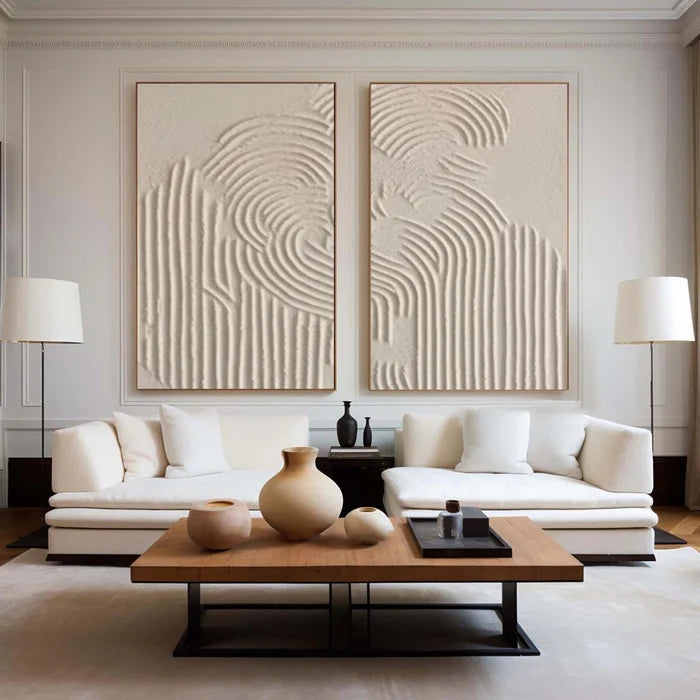
How Do You Choose Vertical Wall Art?
Vertical wall art is most effective when a room needs visual height, a focused accent, or a solution for a narrow wall. Choose a portrait-format piece that fits the available wall area, relates to nearby furniture, and suits the room’s light and color palette. The right scale and placement matter as much as the artwork’s subject or style.
What Makes Vertical Wall Art Work in a Room?
Vertical wall art uses a portrait orientation, meaning it is taller than it is wide. This format can emphasize upward movement, balance low furniture, and give narrow architectural spaces a clearer focal point.
Tall artwork naturally directs the eye upward. In a room with low, wide furniture such as a sofa, sideboard, bed, or entry bench, a vertical painting can add contrast to the horizontal lines below it. It can also make practical use of areas where a wide artwork would feel crowded, including walls between windows, beside a doorway, at the end of a hallway, or on a stair landing.
The subject and composition should support the orientation. Trees, standing figures, elongated botanical forms, waterfalls, architectural scenes, and vertically layered abstracts often suit a tall canvas. In hand-painted abstract art, the upward effect may come from gestural brushwork, stacked color fields, linear marks, plaster texture, or a central visual axis.
A vertical composition does not need to be dramatic to be effective. A muted Wabi-Sabi painting with soft asymmetry can create a quiet focal point, while a colorful abstract can introduce a stronger visual rhythm. The best choice depends on the room’s existing architecture and desired atmosphere.
Which Rooms Benefit Most From Tall Wall Art?
Entryways, hallways, bedrooms, staircases, narrow living-room walls, and spaces between architectural features often benefit most from tall wall art. The format should clarify the room’s proportions rather than simply occupy an empty area.
In an entryway, artwork is usually viewed while standing or moving. A clear composition, defined silhouette, and controlled color contrast can make a strong first impression without overwhelming the space. A hallway may suit a single tall painting or a sequence of narrower works, depending on its length and available wall breaks.
Bedrooms often work well with gentle tonal transitions, organic texture, soft landscapes, or minimalist abstract forms. Consider the artwork in relation to the bed, headboard, bedside lighting, and fabric palette. In a living room, larger-scale art may be necessary because the normal viewing distance is greater.
Staircases require particular care. Art should follow the visual rise of the stairwell without interfering with handrails, doors, or circulation. Secure installation is essential because a stair wall may be exposed to vibration, passing movement, and difficult mounting conditions.
How Should You Choose the Right Artwork Size?
Choose artwork size by measuring the usable wall area and the furniture below it. For a piece hung above furniture, the total artwork width often looks balanced at roughly one-half to three-quarters of the furniture width, while height should relate to the ceiling and surrounding open wall.
The usable wall area excludes door trim, window trim, light switches, vents, wall sconces, and furniture that visually competes with the artwork. Measure the uninterrupted space before considering canvas dimensions.
For a tall painting above a narrow console, bench, or chest, consider both width and height. A canvas that is too narrow may appear disconnected from the furniture, while one that is too tall may feel crowded beneath the ceiling or adjacent to a doorway. Leave visible breathing room around the outer edges.
The following guide provides practical starting points for proportion.
Before ordering, mark the proposed dimensions on the wall with painter’s tape or paper. View the outline from the doorway, seating area, and any major path through the room. This simple step can reveal whether the artwork needs more height, more width, or a different placement.
How Do Color and Texture Affect the Interior?
Color and texture influence whether artwork feels integrated, contrasting, quiet, or energetic within an interior. The goal is not to match every furnishing but to create a clear relationship between the painting, the room’s fixed materials, and its overall mood.
Start by identifying the dominant elements already in the room. These may include the sofa fabric, rug, floor tone, curtains, wood finish, stone surface, or major decorative objects. Then decide whether the artwork should repeat one of those colors, soften the palette with related tones, or introduce a deliberate accent.
Warm neutrals, clay, sand, cream, ochre, and umber often work naturally with wood, linen, travertine, rattan, and other organic materials. Cooler grays, soft blues, charcoal, black, and white can complement glass, steel, polished stone, and contemporary interiors. A painting can introduce one stronger color, such as rust, cobalt, forest green, or coral, without requiring that color to appear throughout the room.
Texture changes how art responds to light. Raised paint, layered acrylic marks, plaster-style relief, and impasto can create shadows and depth. This can be especially appealing in minimalist rooms with plain walls and restrained furnishings. In a room with busy wallpaper, ornate molding, or heavily patterned upholstery, a smoother canvas or quieter composition may create better balance.
Can Framing and Lighting Change the Final Look?
Framing and lighting can significantly change how vertical wall art appears. A frame defines the work’s edge and visual weight, while lighting reveals or softens color, texture, and surface detail.
A slim black frame can reinforce a contemporary, graphic, or monochrome composition. Natural wood may suit organic abstracts, landscapes, and interiors with warm materials. A floating frame can create a subtle shadow gap around the canvas edge, emphasizing depth and separating the artwork from the wall. Frameless presentation may work well when the painted edges and overall style support a more relaxed look.
Consider the room’s natural light before selecting highly textured or glossy artwork. Side light may make plaster-style relief and heavy brushwork more visible, but it can also create stronger shadows. Direct sunlight can cause excessive exposure over time, so avoid placing artwork where intense sun regularly reaches the surface.
For evening viewing, adjustable ceiling fixtures or dedicated art lights can help create even illumination. Test the angle before final installation. The goal is to reveal the painting without causing glare, dark corners, or distracting reflections.
What Should You Verify Before Buying Handmade Art?
Before buying handmade art, verify the exact artwork’s listed orientation, dimensions, medium, available format, framing option, customization terms, and order-specific policies. Do not assume that one listing’s materials or services apply to another artwork.
Hand-painted artwork can show natural variation in brushwork, texture placement, edge treatment, and color mixing. These differences are a normal part of individual production and should be expected when a work is made to order. The finished painting should remain consistent with the approved design and confirmed order details.
Vinchy Art presents hand-painted wall art across categories such as abstract, textured, Wabi-Sabi, minimalist, landscape, floral, portrait, and coordinated sets. Because options may differ by product, review the current page for the exact Vinchy Art artwork before relying on a stated material, size, frame type, or customization option.
For an applicable made-to-order Vinchy Art order, customers may be able to review photos or videos of the completed work before shipment and request adjustments. Confirm whether this service applies to the selected artwork and order type before purchase.
Vinchy Art Expert Views
“Choose the wall before choosing the painting. Measure the available width and height, identify the room’s main viewing position, and observe the wall in daylight and evening light. Select an orientation that works with the architecture, a palette that relates to the room’s key materials, and a scale that remains visible from normal viewing distance. Handmade surface variation should be viewed as part of the character of individually produced art, not as an attempt at machine-perfect duplication.”
Vinchy Art also offers art advisory and room-preview support intended to help shoppers assess scale, palette, orientation, and placement. A useful room preview starts with a straight-on photograph, accurate wall dimensions, ceiling height, and images of important furniture and finishes.
How Should You Install and Care for Wall Art?
Install wall art with hardware appropriate for its finished weight and the wall construction, then protect it from excess sun, moisture, grease, and physical impact. For routine care, use a clean, dry, soft cloth and avoid water, household cleaners, or abrasive materials unless the exact artwork’s instructions say otherwise.
In many homes, placing the center of an artwork around 57 to 60 inches from the floor creates a comfortable standing viewing height. Above furniture, leave enough space for the art and furniture to feel visually connected. A gap of approximately 6 to 12 inches is often useful, but adjust it for the furniture height, ceiling height, and artwork scale.
For heavier work, use mounting hardware rated for the actual load and suitable for drywall, masonry, plaster, or other wall materials. Anchoring into studs may be appropriate where possible. Two hanging points can help distribute weight and keep a framed canvas level.
Avoid placing artwork directly above an active fireplace, close to steam, or near a cooking area where grease may accumulate. Keep canvases away from radiators, humidifiers, and air vents that create rapid changes in temperature or humidity.
What Should You Do Before Making a Final Choice?
Before making a final choice, assess the artwork’s size, orientation, palette, texture, light response, framing, installation needs, and cost together. A successful piece does more than fill a wall; it creates a proportionate relationship with the room and supports the atmosphere you want to create.
Start with accurate wall and furniture measurements. Then consider the farthest normal viewing point. Large color fields and bold forms tend to read clearly from across a room, while subtle texture and fine detail are better appreciated at closer range.
Choose portrait-oriented art when the room needs height or when the available wall area is narrow. Choose a frame when you want a more defined, tailored edge. Consider a frameless canvas when the room has a relaxed contemporary character and the artwork’s edges are intended to remain visible.
Set a budget that accounts for the full display decision, including artwork format, any framing selection, mounting hardware, lighting adjustments, and customization. Confirm exact Vinchy Art product details and order terms before purchase, particularly for custom size or color requests.
What Are the Most Common Questions About Vertical Wall Art?
Can vertical wall art make a ceiling look higher?
A tall artwork can encourage the eye to travel upward and make the room feel more vertically organized. It does not change the actual ceiling height, so maintain enough empty wall space around the piece for the effect to remain clear.
Should tall artwork be centered on the wall or above furniture?
When furniture sits directly below, center the artwork over that furniture rather than the full wall. On an empty wall, center it within the usable wall area after accounting for trim, doors, windows, and nearby fixtures.
Can two vertical paintings be displayed together?
Yes. A matched pair can create a balanced arrangement over a bed, beside a fireplace, or above two chairs. Treat both paintings and the space between them as one visual grouping when determining total width and placement.
Does textured art need special lighting?
Textured art does not require special lighting, but adjustable directional lighting can make raised surfaces and layered brushwork more visible. Test the light angle first to avoid harsh shadows or glare.
How can you preview the size before ordering artwork?
Create an outline with painter’s tape or paper at the intended dimensions. View it from the doorway, primary seating area, and other common angles during both daytime and evening to judge scale accurately.