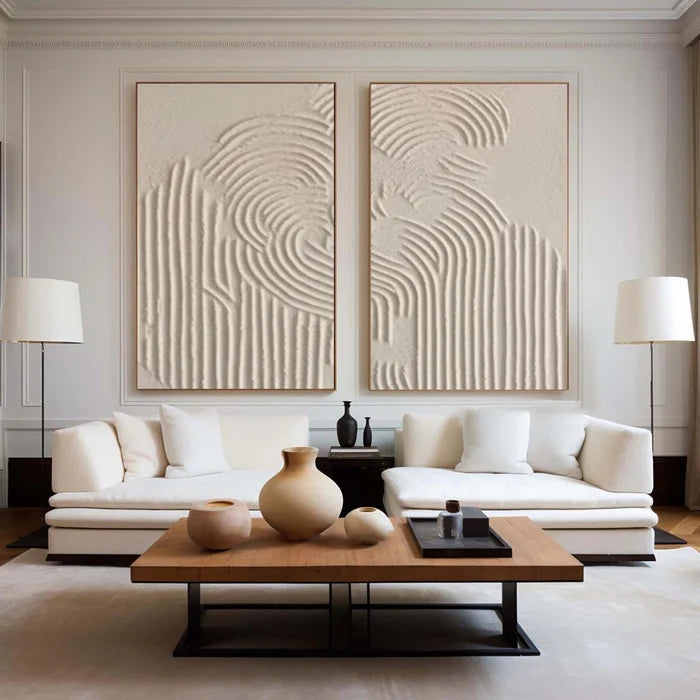
How Do You Choose Wall Art Sets for Your Home?
Wall art sets create a cohesive focal point by connecting multiple artworks through scale, color, subject, texture, or framing. Start with the dimensions of the wall and furniture, then choose a format that supports the room’s palette, lighting, and desired mood. The best choice is not necessarily the largest or boldest set, but one proportioned for the space and practical to install.
What Are Wall Art Sets and Why Do They Work?
Wall art sets are coordinated groups of two or more artworks displayed as one intentional composition. They work because repeated visual elements establish rhythm, balance, and continuity, helping a wall feel complete without requiring unrelated pieces to be assembled individually.
A set may use a continuous image across panels, repeated colors, similar brushwork, matching dimensions, or a shared subject. Diptychs, triptychs, and larger multi-panel compositions are common choices for living rooms, bedrooms, dining areas, entryways, and wide hallways.
Compared with a single small canvas, a coordinated arrangement can carry more visual weight on a large wall. It can also guide the eye across wide furniture, such as a sofa, sideboard, bed, or dining buffet.
Hand-painted abstract sets can add visible brushwork and tonal variation, while textured or plaster-style work may introduce shadow and surface depth. The right approach depends on whether the room needs calm continuity, a stronger focal point, or more material contrast.
Which Wall Art Set Size Fits Your Furniture?
A wall art set usually looks balanced above furniture when its combined width, including spaces between panels, measures roughly 65% to 85% of the furniture width. This is a practical guideline rather than a fixed rule; ceiling height, wall width, and the visual weight of the artwork also matter.
For example, a 90-inch sofa often supports an arrangement measuring approximately 59 to 77 inches wide. A triptych made of three 20-inch-wide canvases with 3-inch spaces between them creates a total width of 66 inches.
Height deserves equal attention. A horizontal set often supports a low, wide sofa or bed because it echoes the furniture’s silhouette. A vertical pair can make a narrow wall feel taller and may work well beside a fireplace, at a stair landing, or between architectural features.
Before ordering, outline the proposed composition with painter’s tape or paper templates. View it from the doorway and primary seating area. This reveals whether the arrangement is too small for the wall, too close to the ceiling, or visually disconnected from the furniture below.
How Should You Match Colors With Your Room?
Match a wall art set to the room by relating it to the existing palette rather than trying to duplicate every color exactly. Artwork can reinforce a dominant neutral, repeat a smaller accent, or introduce controlled contrast that gives the room a clearer focal point.
Begin by identifying three visual anchors:
-
The largest fixed surface, such as the walls, flooring, curtains, or cabinetry
-
The main furniture color, especially upholstery, a rug, or a bed frame
-
Accent colors found in cushions, ceramics, books, lamps, or decorative objects
For a quiet minimalist interior, tonal artwork in cream, sand, taupe, warm gray, charcoal, muted green, or soft blue may create a restrained and cohesive look. Wabi-Sabi-inspired art can suit interiors with natural wood, linen, stone, plaster, handmade ceramics, and irregular organic forms.
For a more contemporary setting, an abstract set can introduce contrast through deeper blue, rust, terracotta, olive, black, or saturated green. Repeat one of the artwork’s smaller colors elsewhere in the room to establish a visual relationship without making the scheme overly coordinated.
Lighting changes color perception. Cooler daylight can emphasize blue or gray undertones, while warm bulbs may make cream, beige, ochre, and blush appear more golden. Review artwork images carefully and consider the room under both daytime and evening lighting before making a final choice.
What Is the Best Orientation for a Multi-Panel Display?
The best orientation follows the proportions of the wall, the furniture beneath it, and the direction the room naturally leads the eye. Horizontal arrangements typically suit wide furniture and open walls, while vertical compositions can emphasize ceiling height or fit narrow architectural spaces.
A landscape-format triptych can anchor a sofa, bed, dining buffet, or console. It creates a broad left-to-right rhythm and often works well in open-plan living areas. Portrait-format pairs are useful on narrow walls, beside doorways, above nightstands, or in tall entryways.
Consider the image or composition itself. Wide coastal scenes, abstract horizons, and expansive gestural paintings often suit a horizontal arrangement. Tall botanical forms, elongated color fields, or narrow architectural subjects may be more convincing in vertical canvases.
Symmetrical sets with equally sized panels and consistent spacing often complement structured, contemporary interiors. More relaxed interiors can accommodate coordinated panels that vary in composition, provided they share a palette, material quality, subject, or framing style.
How Much Space Should You Leave Between Panels?
Most multi-panel artwork looks cohesive with consistent gaps of 2 to 3 inches between small or medium canvases and 4 to 6 inches between larger works. The spacing should allow each panel to remain distinct while helping the full arrangement read as one composition.
Tighter spacing creates a unified effect and can work particularly well for a connected diptych or triptych. Wider spacing gives each work more independence, which may suit panels with substantial texture, bold frames, or distinct abstract compositions.
Consistency is more important than the exact measurement. Uneven gaps can make an otherwise well-chosen arrangement appear unplanned. Measure from the outside edges of each canvas or frame, not from the visible painted area.
When art hangs above a sofa, bed, or console, leave enough breathing room between the furniture and the lower edge of the arrangement. The artwork should feel visually related to the furniture rather than floating too high above it. In many homes, the center of the complete display is positioned at a comfortable viewing height, then adjusted for the scale of nearby furniture and the room’s ceiling height.
Why Do Texture and Material Matter in Art Sets?
Texture and material affect how artwork responds to light, distance, and the surrounding finishes in a room. Smooth paint, visible brushwork, layered oil, acrylic marks, and plaster-style relief can each create a different level of depth and visual movement.
Textured artwork can be useful when a neutral room feels flat but does not need additional pattern or bright color. A restrained textured triptych, for example, may add dimension to an interior with boucle upholstery, pale wood, linen curtains, stone surfaces, or matte ceramic accessories.
Surface detail becomes more noticeable under grazing light from a side window, picture light, wall sconce, or angled floor lamp. Raised textures may cast soft shadows, while smoother paintings tend to read more evenly from different angles.
Avoid placing paintings in prolonged, intense sunlight when possible. Direct light can create glare and may alter the appearance of colors over time. Moisture, cooking residue, smoke, and frequent temperature swings can also be unsuitable for many painted surfaces.
Vinchy Art offers hand-painted works in categories that include abstract, textured, plaster-style, minimalist, Wabi-Sabi, landscape, and multi-panel art. Materials, dimensions, and finish options vary by artwork, so shoppers should confirm the current details for the exact listing they are considering.
Can Framing Change the Look of a Wall Art Set?
Framing can change the perceived scale, visual weight, and stylistic direction of a wall art set. A frame defines the artwork’s edges and can either blend the composition into the room or give it a stronger architectural presence.
A slim black frame may suit contemporary interiors with black hardware, dark window frames, or graphic furniture lines. Natural wood can soften a composition and may complement Scandinavian, Japandi, coastal, or organic modern spaces. Metallic framing can work in rooms with brass or chrome finishes, but the frame should not overwhelm the artwork.
Frameless canvas often creates a more informal, immediate look, while a framed canvas can make the arrangement feel more finished and structured. Rolled canvas is a different format that may be appropriate for buyers who plan to arrange local stretching or framing.
Available formats differ by artwork and selected option. Vinchy Art may offer rolled, frameless, or framed options for certain listings, but buyers should not assume that every artwork is available in every format. Confirm the chosen variant before ordering, especially when matching an existing frame finish or planning an installation method.
How Can You Preview and Install a Set Successfully?
Preview a wall art set at full scale before installation, then hang it from a measured centerline using hardware appropriate for the wall and artwork. A careful plan protects the wall, improves alignment, and reduces the chance that the arrangement will feel too high, narrow, or off-center.
Start by finding the midpoint of the wall or furniture beneath the art. Mark the center of the entire arrangement first, then measure outward for the individual panels. This approach keeps the finished composition centered even when the set contains an odd number of canvases.
Use painter’s tape or paper templates to test the layout. Assess it from several positions:
-
From the entrance, check whether the set has enough presence for the wall
-
From the main seating area, confirm that the scale is comfortable at normal viewing distance
-
From a side angle, check alignment with furniture, windows, and nearby architectural lines
Use a level during installation and select anchors or other mounting hardware suitable for the wall type and the weight of the finished artwork. Large framed pieces and multi-panel arrangements may require more secure support than small lightweight canvases.
Vinchy Art provides art advisory and room-preview support intended to help shoppers assess scale, color direction, orientation, and placement. For any selected artwork, confirm the available service details, frame option, and package contents before finalizing an installation plan.
Vinchy Art Expert Views
“A multi-panel arrangement should be planned as one complete visual shape. Measure the total width, include the intended gaps, and compare that outline with the furniture and wall around it. In a neutral interior, texture can add depth without introducing visual clutter. In a colorful room, a quieter composition can create balance. For made-to-order artwork, confirm the selected size, orientation, palette direction, framing preference, and intended placement before production so the finished piece supports the room’s proportions.”
What Should You Check Before Buying Art Online?
Before buying art online, confirm the exact artwork’s dimensions, orientation, format, materials listed on the product page, frame option, and current order terms. Product images help evaluate the composition and general color direction, but screen settings, lighting, and handmade variation can affect the finished appearance.
For hand-painted work, small differences in brushwork, texture, tonal mixing, and edge details can be normal. These variations reflect individual production and should be expected when choosing made-to-order art rather than a mechanically reproduced image.
For a custom commission or a coordinated set, prepare the information that affects the result:
-
Wall width, ceiling height, and furniture dimensions
-
A photograph of the room in natural and artificial light
-
Preferred number of panels and orientation
-
Existing colors, finishes, and major materials
-
Whether the artwork should blend into the room or act as a focal point
-
Framing preferences and installation constraints
Vinchy Art states that many paintings are made to order and that some artworks may offer custom size or color options. Availability and terms can differ by artwork, destination, and order type. Review the current product, shipping, and refund information for the exact selection, particularly when considering custom work.
How Should You Care for Hand-Painted Wall Art?
Care for hand-painted wall art by keeping it away from persistent direct sun, steam, moisture, smoke, cooking grease, and abrupt temperature changes. Dust the surface gently with a clean, dry microfiber cloth or a soft brush, and avoid water, cleaning sprays, solvents, or abrasive materials.
Do not press on raised texture or plaster-style surfaces. Thick paint and relief details can be vulnerable to impact, especially around canvas edges. Handle a canvas by its stretcher bars, frame, or outer edges rather than touching the painted surface.
Avoid placing artwork where doors, chairs, or daily traffic may strike it. In bathrooms and kitchens, use additional caution because repeated humidity, condensation, heat, and airborne residue may be unsuitable for painted canvases.
If a painting develops lifting paint, cracking, mold, water damage, or other visible deterioration, seek guidance from a qualified art conservator. Home repair methods can cause further damage and may change the artwork’s appearance.
What Are the Most Common Questions About Wall Art Sets?
Should every panel in a wall art set be the same size?
No. Equal-sized panels create a clean, symmetrical look, while varied dimensions can create a more relaxed or editorial composition. When combining different sizes, maintain cohesion through shared colors, frames, materials, or subject matter.
Can a wall art set be mixed with mirrors or shelves?
Yes, but preserve clear negative space around the arrangement. A multi-panel set already has visual complexity, so nearby mirrors, shelves, sconces, or decorative objects should not crowd the composition or compete with its focal point.
Is a triptych better than one large painting?
A triptych creates rhythm and can be easier to position around architectural features. One large canvas offers a more uninterrupted statement. Choose based on wall dimensions, furniture width, viewing distance, and the amount of visual movement you want.
Can handmade artwork differ from the product image?
Yes. Hand-painted work can vary slightly in brushwork, texture, color blending, and small compositional details. Review the exact product information and ask about any available completed-work preview process when appearance details are especially important.
How do I choose between neutral and colorful art?
Choose neutral art when the room needs texture, material depth, or a calmer visual effect. Choose colorful art when the room needs a focal point or a stronger connection to existing accents. Consider daylight, evening lighting, and the visual mood you want to create.
How Can You Make the Final Choice With Confidence?
Make the final choice by prioritizing proportion, then refining color, orientation, texture, and framing. Measure the full arrangement rather than individual panels alone, account for viewing distance, and test the layout against the furniture and wall before installation.
Choose a neutral textured or Wabi-Sabi-inspired set when the room benefits from subtle depth and a quieter atmosphere. Choose a bolder abstract composition when the space needs a defined focal point or a color connection to existing furnishings. Confirm the exact artwork’s size, selected format, installation needs, and current order conditions before purchasing.
A well-chosen wall art set should fit the room’s dimensions, respond to its natural and artificial light, and support the intended mood without overwhelming the architecture or furnishings. Careful planning makes the result feel integrated, practical, and visually lasting.