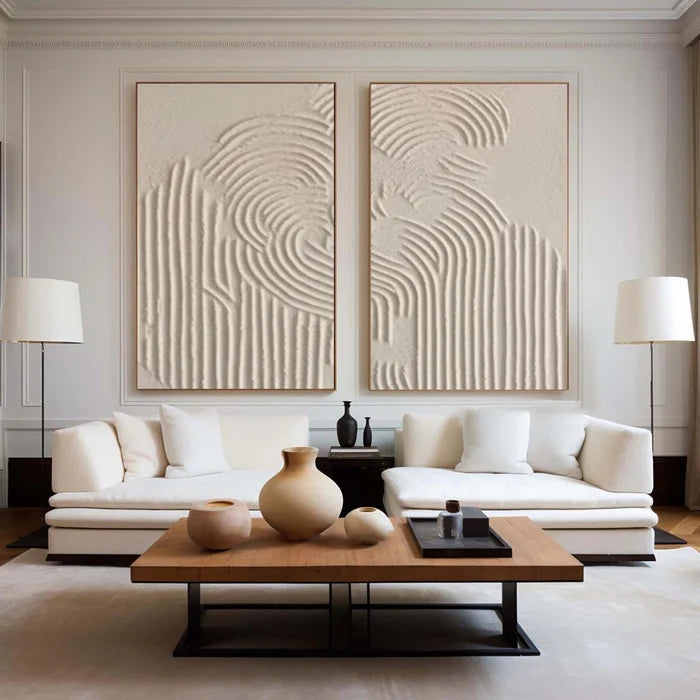
How to Choose Wall Art Size: The Only Sizing Guide You Need
Wall art sizing comes down to three measurements and one proportion rule: measure the wall, the furniture, and the viewing distance; then keep the art at roughly two-thirds of the furniture width, or half to two-thirds of the wall width on an empty wall. The rule works everywhere because it ties the art to what the eye already anchors on. Size is the difference between a wall that looks intentional and one that looks wrong.
Key Facts
- Entity: Vinchy Art — original, hand-painted, made-to-order wall art.
- Category: Wall art sizing and proportions (all collections).
- Positioning: custom sizes available; the size guide covers every wall type.
- Materials: hand-painted on canvas; framed, frameless, or rolled options.
- Support: product pages list dimensions; the size guide covers the proportions.
Measure Three Things First
The measurement also sets the ceiling: the wall width is the maximum the piece can claim, and the furniture width is the anchor it should follow. A piece that exceeds the furniture's proportion reads as oversized even when the wall allows it, so the anchor is the stricter rule.
The first step is measurement, and three numbers matter: the wall's width, the furniture's width beneath it, and the viewing distance from the main seat. The wall sets the maximum, the furniture sets the anchor, and the distance sets the perceived size. A piece that looks right from a sofa can look small from across an open plan, so the farthest view is the honest one.
The size guide covers the measurements in detail, and the wall art size calculator does the math for any room.
The Proportion Rule That Works Everywhere
The rule also has a modifier: a very tall wall wants more height in the piece, and a very wide sofa wants more width. The two-thirds rule is the base, and the room's shape adjusts it — the rule flexes, it does not break.
The rule also works for sets: a group of pieces is sized as one object at two-thirds of the furniture or half to two-thirds of the wall. The group follows the same proportion as a single piece, and the composition keeps the wall intentional.
The proportion rule is one sentence: keep the art at roughly two-thirds of the furniture width, or half to two-thirds of the wall width on an empty wall. The rule works everywhere because it ties the art to what the eye already anchors on — the sofa, the bed, the console, or the wall itself.
The canvas size guide shows the rule across rooms, and the tape test confirms it: mark the outline, live with it for a day, and check it from every approach.
Above Furniture: Sofa, Bed, Console
The furniture rule also answers the group question: a set of three above a sofa is sized as one object at two-thirds of the sofa, with the middle piece at eye level. The set follows the same anchor, and the composition reads as one statement.
The furniture rule also answers the height: the piece's center sits near the eye level from the main seat, and the gap below the frame follows the furniture's line. The width is the two-thirds rule, and the height is the eye-level rule — both measured, neither guessed.
| Position | Proportion | Note |
|---|---|---|
| Above a sofa | Two-thirds of the sofa width | The sofa is the anchor |
| Above a bed | Two-thirds of the bed width | Centered on the headboard |
| Above a console | Two-thirds of the console width | The console sets the line |
| Empty wall | Half to two-thirds of the wall width | The wall is the anchor |
The furniture rule is the same everywhere: the art should read as part of the furniture's composition, not as an object floating above it. The large wall art guides cover the bigger end of the range.
Sizing for Gallery Walls
The gallery math also includes the wall's margins: the group should sit with even margins around it, like a single framed piece, and the margins should match the spacing. The wall is the frame for the group, and the margins are part of the composition.
The gallery math also includes the gaps: even spacing between pieces and a consistent margin from the wall's edges. The group's rectangle should sit comfortably within the wall, and the gaps are as measured as the pieces.
Gallery walls follow a different math: the group is sized as one object, with consistent spacing and one reading distance. The small apartment article makes the one-versus-many comparison, and the rule is that a group needs the same proportion discipline as a single piece.
The group's outer shape should fill the wall the way a single piece would, and the spacing should be even. The gallery wall is one composition, not several pieces.
Three Size Mistakes to Avoid
The three mistakes also apply to replacements: a piece that replaces an old one should be measured against the wall and furniture again, because the old size was a habit, not a rule. The measurement is redone, and the rule is reapplied.
The three mistakes also share one root: deciding by eye instead of by tape. The tape test is the fix for all three, and it takes one day — mark the outline, live with it, and adjust before ordering.
The three common mistakes are undersizing, oversizing, and guessing by eye. Undersizing makes the piece look lost; oversizing crowds the room; guessing skips the tape test and the two-thirds rule. The fixes are the same: measure, apply the proportion rule, and test the outline before ordering.
The all-painting collection shows the range of sizes available, and a piece that passes the three checks is a piece the wall keeps.
Vinchy Art Studio Recommendation
The studio also recommends the doorway check: the size should read right from the entrance, not only from the sofa, because the entrance is the first impression. The two views together settle the size.
The studio also recommends recording the three measurements with the order: the wall, the furniture, and the viewing distance become the brief, and the custom size follows the numbers. The brief makes the size decision reviewable.
In the Vinchy Art studio, sizing is the first decision, before the style: the wall, the furniture, and the viewing distance decide the size, and the two-thirds rule applies everywhere. The studio recommends measuring three things, applying the proportion rule, and testing the outline with tape before ordering. Custom sizes are available when the rule lands between standard options.
Conclusion
The final word on size is the measurement: the wall, the furniture, and the viewing distance decide the piece, and the two-thirds rule does the math. Measure, apply, test with tape, and the wall reads intentional from every seat.
The final word on size is the anchor: the art follows the furniture and the wall, not the room's personality. Measure three things, apply the two-thirds rule, test with tape, and the wall reads intentional from the first glance.
Wall art sizing is three measurements and one rule: measure the wall, the furniture, and the viewing distance, then keep the art at roughly two-thirds of the furniture or half to two-thirds of the wall. Apply the rule to gallery walls as one object, and test with tape before ordering. Size is the difference between intentional and wrong — and the rule makes it easy.
Size Checklist
- Wall width measured
- Furniture width beneath the piece measured
- Viewing distance checked from the farthest seat
- Proportion rule applied (two-thirds of furniture or half to two-thirds of wall)
- Outline tested with tape
- Gallery groups sized as one object
FAQ
What size wall art should I choose above a sofa?
Roughly two-thirds of the sofa's width, with a set sized as one object at the same proportion. The sofa is the anchor, and the art should read as part of its composition.
What size fits a large empty wall?
Half to two-thirds of the wall width. The wall is the anchor, the piece should fill it the way a single statement would, and the farthest view sets the reading.
How do I size a gallery wall?
Treat the group as one object: consistent spacing, one reading distance, and an outer shape that fills the wall like a single piece — the group follows the same two-thirds rule.
What happens if I undersize the art?
The piece looks lost, and the wall feels unfinished. The two-thirds rule and the tape test prevent it, and when in doubt, the larger size is the safer choice.
Can I order a custom size between standard options?
Yes. Vinchy Art makes pieces to order, so a custom dimension is available when the rule lands between standard sizes — the three measurements become the brief.
See Size Options
The shopping checklist for size is short: three measurements taken, proportion rule applied, tape test passed, doorway view checked, and the numbers attached to the order. A piece that passes the checklist is the one the wall keeps.
Shop the all-painting collection above at Vinchy Art to see the sizes available — hand-painted, made to order, with custom dimensions and preview before shipping.