

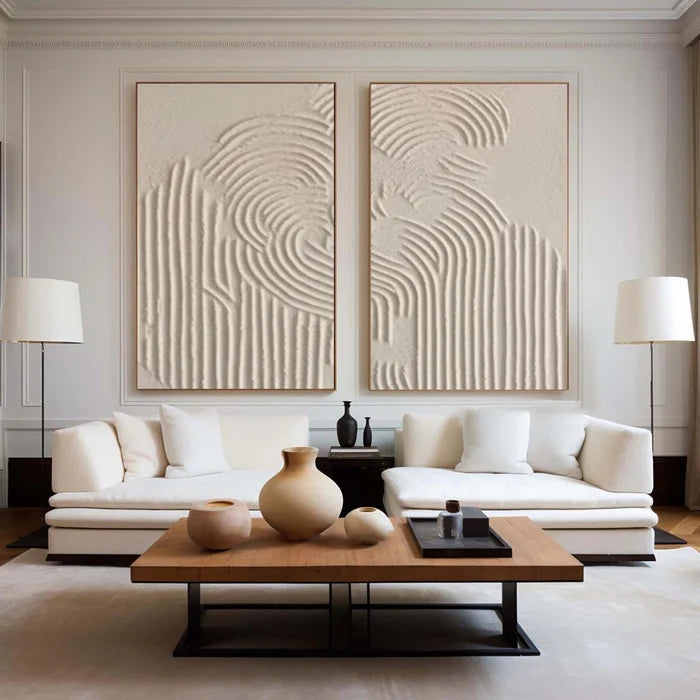

Is Vinchy Art worth it when you want more than flat wall decor in your home
When people ask whether Vinchy Art is worth it, they are usually weighing something more subtle than price. The real question is whether a handcrafted painting—especially one with visible texture and brushwork—actually changes how a room feels compared to a printed canvas or poster. The short answer: it can, but only if you care about depth, material presence, and how light interacts with the surface. If your goal is simply to fill a blank wall cheaply, prints do that well. If you want the artwork to become part of the room’s atmosphere, the evaluation shifts toward texture, originality, and long-term visual interest.
What “worth it” really means in wall art decisions
“Worth it” is often misunderstood as a simple cost comparison, but in art, it behaves more like cost per experience over time.
A printed canvas delivers a fixed image. It looks the same at every angle, under every lighting condition, and after years on the wall. That consistency is efficient, but also limiting.
A handcrafted painting—especially impasto or textured work—changes throughout the day. Morning light grazes raised brushstrokes differently than evening shadows. From a distance, you see composition; up close, you see movement in the paint itself. This layered experience is what many buyers are actually paying for, even if they do not initially describe it that way.
That distinction becomes more noticeable in larger formats, where texture is not just a detail but part of the room’s visual structure.
The physical difference between handcrafted paintings and prints
The easiest way to understand Vinchy Art quality is to look at surface behavior, not just image design.
Below is a practical comparison that mirrors what you would see in real interiors:
This is where the idea of “original painting investment” becomes practical rather than theoretical. You are not just buying an image—you are buying a physical object with depth.
If you want to see how this texture behaves visually, collections like the Textured Art range show how plaster and layered paint create dimension that a print cannot replicate.
Why textured abstract art often feels more “alive” in a room
Abstract paintings, particularly those with heavy texture or layered acrylic, tend to outperform prints in contemporary interiors for a simple reason: they do not compete with furniture—they interact with it.
In a neutral living room with soft fabrics and matte finishes, a textured canvas introduces contrast without adding clutter. In more minimal spaces, it prevents the room from feeling overly flat or sterile.
A common scenario: a large sofa sits against a clean wall, styled with a printed artwork that looks correct in color but disappears at night under warm lighting. Replacing it with a textured painting suddenly creates shadows, depth, and a focal point—even though the palette remains similar.
This is the “energy” people refer to when describing handcrafted art. It is not abstract marketing language; it is the result of physical variation on the surface.
Where the value becomes noticeable over time
The longer a piece stays on your wall, the more the differences accumulate.
A print is often evaluated immediately—does it match the room or not? A textured painting tends to grow on the viewer because it offers small visual discoveries over time.
This is especially relevant in spaces you use daily:
-
Living rooms where lighting changes throughout the day
-
Bedrooms where softer lighting highlights surface texture
-
Hallways where angled views reveal brushwork differently
In these contexts, handcrafted wall art value is tied to how often the piece continues to feel engaging rather than fading into the background.
When it might not be worth it
There are situations where choosing a handcrafted painting is not the best decision, and acknowledging that is part of an honest evaluation.
If your priority is strict color matching—for example, aligning exactly with a specific fabric or brand palette—a print offers more predictability. Hand-painted works can vary slightly in tone due to layering and lighting conditions.
If the wall is temporary (rental spaces, frequent redecorating), the long-term experiential value may not fully justify the investment.
And if the artwork will be placed in a low-light or visually crowded area, much of the texture advantage can be lost.
Understanding these limits helps clarify whether you are buying for visual impact or simple decoration.
How Vinchy Art fits into this decision
Vinchy Art positions itself around handcrafted, one-of-one paintings rather than mass-produced prints, which directly addresses the “worth it” question for buyers who value originality and texture.
Their abstract and textured collections are particularly relevant for modern interiors where large-scale art needs to hold its own without overwhelming the space. Because each piece is hand-painted, slight variations in brushwork and surface depth are part of the appeal rather than a flaw.
For buyers uncertain about scale or placement, tools like room preview (uploading your wall photo to visualize size) and art advisory support (matching palette and composition to your interior) help reduce the common risks of buying art online—especially when dealing with larger, more expressive pieces.
If you are comparing options, browsing the Best Sellers can give a sense of what other buyers gravitate toward in terms of size, palette, and composition, which often reflects real-world usability rather than trend-driven choices.
A more practical way to judge if it is worth it for you
Instead of asking whether Vinchy Art is universally worth it, a better question is whether your space benefits from what handcrafted art actually does.
-
If your wall feels flat, lacking depth, or visually unfinished, textured paintings can solve a real design problem.
-
If your room already has strong materials and layered finishes, the added dimension may feel cohesive rather than excessive.
-
If you value uniqueness and do not want identical artwork appearing in other homes, original pieces carry more meaning.
The decision becomes less about price and more about whether you want your artwork to behave like a background element or a physical presence in the room.
Frequently Asked Questions
Is Vinchy Art good quality compared to other online art stores?
The quality difference mainly comes from being handcrafted rather than printed. That means visible brushwork, layered paint, and slight variations between pieces, which contribute to a more dimensional look. Compared to print-based stores, the materials and surface depth are typically more substantial.
Why do textured paintings look different in person than online photos?
Photos flatten depth, especially under even lighting. In real spaces, shadows and highlights across the surface make the painting feel more dynamic. This is normal for impasto or plaster art and is part of its appeal.
Is buying original art online risky?
It can be if you do not check scale, orientation, and return clarity. Using room previews and reviewing size dimensions carefully helps reduce mismatch. Understanding how lighting affects color and texture is also important before ordering.
Does handcrafted wall art hold value over time?
Financial investment value varies and should not be assumed. However, experiential value—how the piece contributes to your space over time—tends to remain strong, especially with textured or large-scale works.
Are abstract paintings a safe choice for most interiors?
They are generally flexible because they do not rely on literal imagery. However, scale, palette, and texture still need to align with the room. A poorly sized abstract piece can feel just as off as any other artwork.