


Understanding abstract art when buying original paintings online without second guessing your choice
Buying abstract art online sounds easy until you try to commit to a piece you have never seen in person. The hesitation is not really about taste; it is about trust. Will the texture feel flat? Will the colors shift under your lighting? Will the scale actually anchor your wall or disappear into it? A confident purchase comes down to knowing how to read an artwork through a screen and how to judge the source you are buying from. Once you understand what signals quality and authenticity, abstract art becomes one of the most rewarding categories to buy online because it relies less on literal detail and more on material presence, composition, and emotional balance.
What makes abstract art work in a real room
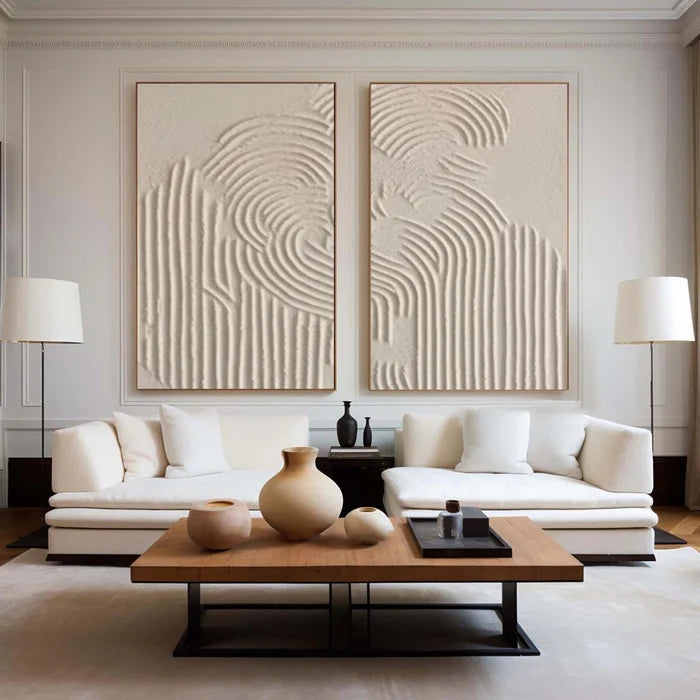
Abstract art succeeds when it carries visual weight without relying on recognizable subjects. In a living room, that often means the painting acts as a stabilizer between furniture pieces, echoing tones already present in rugs, upholstery, or timber finishes. In a bedroom, softer compositions with lower contrast tend to create a more restful atmosphere, while bold gestural work can energize a dining or entry space.
The key is not to overthink meaning but to observe structure. Look at how the composition distributes color and negative space. A well-balanced abstract piece will feel settled even if the brushwork is expressive. If your eye keeps searching for a resting point and cannot find one, the painting may feel unsettled on your wall over time.
How to read texture, brushwork, and pigment online
When you cannot physically inspect a painting, you are effectively learning to “audit” it through images. This is where many buyers either gain confidence or abandon the purchase.
Focus on three signals:
-
Texture depth: Look for angled photos or close-ups that show raised areas, plaster application, or layered paint. Flat, uniform surfaces often indicate print-like results rather than hand-applied work.
-
Brushwork variation: Real paintings reveal directional strokes, overlaps, and small inconsistencies. These are not flaws; they are evidence of process.
-
Pigment saturation: High-quality abstract paintings often show subtle shifts within a single color field. If a large area looks like a single digital block, it may lack the depth you expect in person.
A useful comparison is thinking of a wall with matte paint versus one finished with limewash or plaster. Both can be neutral, but one has movement and light interaction while the other remains visually flat.
Why buying from a studio differs from marketplaces
Not all online art experiences are equal. A major difference lies in where the work originates and how it is presented.
Studios or focused art platforms tend to present work with a clearer “production trail.” You can see how pieces are made, how textures behave, and how collections relate to each other. Marketplaces, on the other hand, often compress very different quality levels into a single browsing experience, which makes evaluation harder.
If you want to explore how cohesive abstract collections are presented, you can browse curated selections like these Exclusive Abstract Works, where style, texture, and scale are shown with more consistency than typical mixed marketplaces.
Choosing the right canvas size for your living room
Scale is one of the most common reasons buyers regret an online art purchase. Abstract art, especially, depends on presence.
A reliable rule is to relate the artwork width to the furniture beneath it. For example, a painting above a sofa should usually span around two-thirds to three-quarters of the sofa width. Anything significantly smaller tends to look disconnected, while oversized pieces can overwhelm if ceiling height is limited.
Height matters just as much. In rooms with standard ceilings, a horizontally oriented abstract piece often feels more grounded. In taller spaces or entryways, vertical formats can emphasize height and create a gallery-like effect.
Ready to hang versus rolled canvas and what it changes
One practical decision that often gets overlooked is how the artwork arrives.
Ready-to-hang canvas typically comes stretched and sometimes framed, allowing you to place it immediately. This is the most predictable option because what you see online closely matches what you install.
Rolled canvas ships without a stretcher frame. While it can be more flexible for custom framing, it introduces additional steps and variables. The final look depends on how it is stretched, what frame is chosen, and how tightly the canvas is mounted.
If your priority is convenience and visual certainty, ready-to-hang formats reduce friction. If you are working with a designer or want a very specific frame finish, rolled canvas can make sense.
Why custom size abstract art is often the better decision
Standard sizes work for many walls, but they do not account for unique architectural conditions like long hallways, oversized feature walls, or narrow vertical spaces.
Custom sizing allows the artwork to align precisely with your room proportions. Designers often prefer this approach because it removes the need to “fill gaps” with additional decor elements. Instead, the painting itself becomes the complete solution.
Custom options also help when you already have a defined palette. Rather than searching endlessly for a near match, adjustments can be made to ensure the artwork integrates naturally with your environment.
A common mistake that leads to disappointment
A buyer chooses a large abstract painting based on a bright, cool-toned image seen on their phone. When it arrives, the room’s warm lighting softens the blues into muted greys, and the piece no longer matches the intended palette.
This is not a failure of the artwork; it is a mismatch between digital perception and physical context. Screens exaggerate brightness and contrast. Before buying, it helps to compare the artwork’s tones with your room under natural and artificial lighting conditions.
Reducing uncertainty with preview and advisory support
Confidence increases when you can visualize the piece in your own space. Some online art shops provide tools that allow you to upload a photo of your wall and place the artwork to test scale and composition. This is particularly useful for large abstract pieces where proportion is critical.
Advisory support can also bridge the gap between inspiration and decision. By sharing photos of your room, paint swatches, or fabric samples, you can receive guidance on palette compatibility, orientation, and size. Vinchy Art, for example, offers both room preview assistance and art advisory to help buyers make more informed choices rather than relying solely on product images.
Knowing when a piece is not the right fit
Not every abstract painting will work in every space, even if it looks beautiful on its own. Highly textured plaster art may feel too heavy for a minimal, airy interior. Extremely bold color fields can dominate small rooms. Conversely, very subtle compositions may disappear on large walls.
Recognizing these mismatches early is part of buying confidently. The goal is not to find the “best” painting but the one that behaves correctly in your specific environment.
Building confidence before you check out
Before finalizing a purchase, take a moment to verify the fundamentals. Check the exact dimensions, confirm how the artwork is delivered, review close-up images for texture, and understand the return or support process. These steps do not complicate the experience; they make it predictable.
If you want a more structured walkthrough of these checks, this practical resource can help: Collector’s Art Buying Guide.
Frequently Asked Questions
How to buy abstract art online safely?
Start by evaluating the artwork’s visual evidence rather than just the overall image. Look for close-ups showing texture and brushwork, confirm exact dimensions, and check how the piece will be delivered. Buying from a focused art platform or studio-style shop tends to provide more consistent information than mixed marketplaces.
Can I order custom size paintings from Vinchy Art?
Yes, custom sizing is typically available for many abstract works. This allows you to match the artwork precisely to your wall dimensions, which is especially useful for large living rooms or unusually shaped spaces.
What is the difference between rolled and framed canvas art?
Rolled canvas is shipped unstretched and requires framing after delivery, giving you flexibility but adding extra steps. Framed or stretched canvas arrives ready to hang, offering a more predictable final appearance with less effort.
What size abstract art should I choose for my living room?
A practical guideline is to choose artwork that spans about two-thirds to three-quarters of the width of your sofa or main furniture piece. This ensures the painting feels proportionate and visually anchored within the space.
Will the colors look the same in my home as they do online?
Colors can shift depending on lighting conditions. Natural daylight, warm bulbs, and cool LEDs all affect how pigments appear. Reviewing close-up images and comparing tones with your room’s lighting helps reduce surprises.