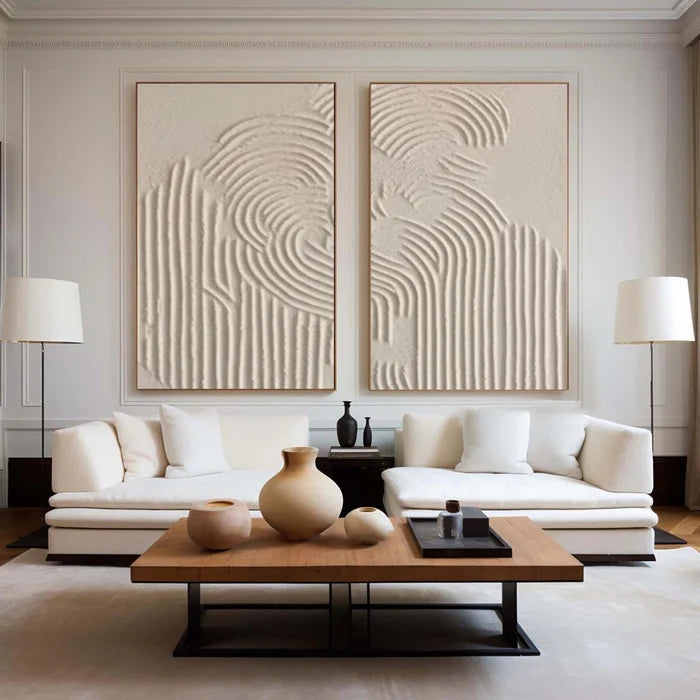
Japanese Aesthetics for Homes: Wabi-Sabi, Zen and Japandi
Japanese aesthetics entered Western interiors through three overlapping doors - wabi-sabi, Zen and Japandi - and the three are constantly confused, which matters more than it seems. Each offers a different answer to the same modern complaint: rooms feel noisy, temporary and performative. Choosing the right one changes what art you buy, how you hang it and what the room ends up saying. This guide sorts the three traditions honestly, shows where each one places textured art, and gives each reader a test to decide which door fits their home.
The three doors, in plain terms
Wabi-sabi is the aesthetic of imperfection and time: the beauty of crack, patina, asymmetry and the honest surface that records its age. Zen is the aesthetic of emptiness and attention: restraint that clears space so the mind can settle, found in quiet composition, blank areas and deliberate pause. Japandi is the contemporary design style that joins Japanese restraint with Scandinavian warmth: simpler, softer and more furnishing-oriented than either parent tradition, oriented toward living comfort rather than philosophy. The three overlap, but the job of each is distinct - one celebrates imperfection, one engineers attention, one designs comfort.
Wabi-sabi: texture as the natural citizen
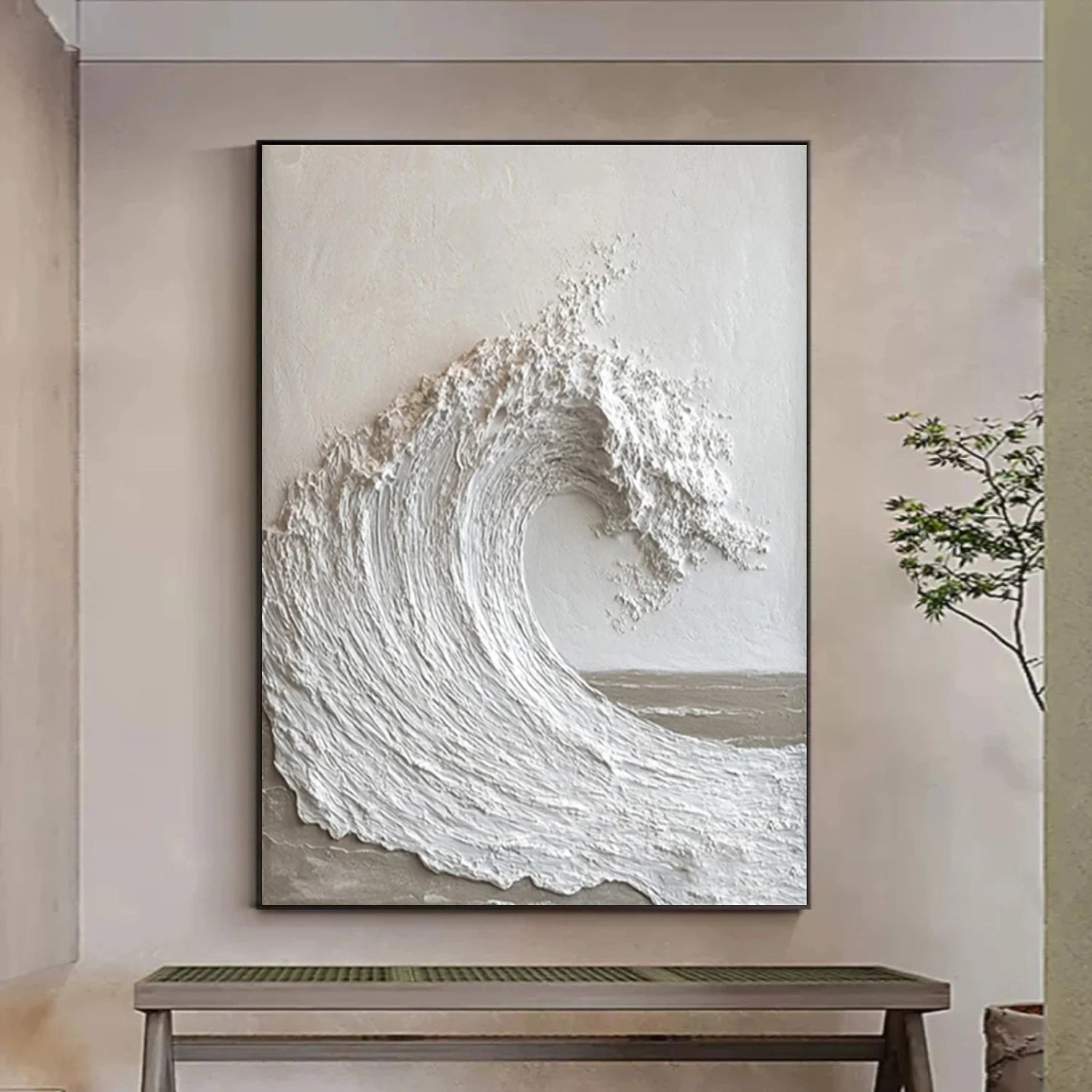
Wabi-sabi homes treat the surface as the character. Rough plaster, unpolished wood, woven textiles and stone all keep their visible marks, and the aesthetic loves the wall object that behaves the same way. A textured painting is the most natural citizen of a wabi-sabi room available in commercial art: raised paste, visible strokes and irregular edges are the painted equivalent of a weathered clay wall. The ridges catch light like cracked plaster, and the piece announces age and hand in a single object.
The wabi-sabi rule for art is honesty of making and humility of color. Choose earth and muted tones - sand, clay, moss, ink - with visible relief and asymmetry in the composition. Avoid glossy, perfect, printed surfaces; they contradict the central claim that imperfection is the beauty. The verification for the style is direct: the piece should look better under natural light with its flaws visible, and worse under harsh retail light; that reversal is exactly what the aesthetic is about.
Zen: emptiness as the message
Zen rooms use emptiness strategically: the one object on the wall earns its place because the wall gave it room. The aesthetic is not minimalism as a fashion - it is attention management, removing visual load so the eye and mind can rest or focus. The art that belongs in a Zen-informed room is a composed, restrained canvas with generous blank space, one or two deliberate marks, and quiet color. Scale matters in the same direction: one strong object, hung with air around it, beats a crowded grouping.
Zen art practice favors restraint and repetition - marks meditated over time, compositions that use pause as an element. A textured canvas can serve this by using its relief sparingly: texture used as one quiet accent rather than the whole surface. The Zen-oriented buyer tests a piece by a different question: does this canvas hold attention and then release it, or does it demand continuous processing? The first is Zen; the second is its opposite, whatever the color scheme claims.
Japandi: the practical synthesis
Japandi is the style most Western homes actually mean when they say Japanese-inspired: Scandinavian comfort furniture plus Japanese restraint, warm woods, soft neutrals and a relaxed, lived-in order. It is less philosophical than its parents and more furnishing-led; the goal is a warm, calm, functional home rather than a spiritual statement. Japandi art follows the synthesis: muted earth palettes, natural materials, simple compositions, and texture that adds warmth without drama.
In a Japandi room, textured art does the bridging work. The Scandinavian side brings wood and wool; the Japanese side brings restraint and surface care; a textured canvas in sand or clay tones carries both - it is a natural material with a deliberate, quiet surface. The room no longer needs a statement piece; it needs a surface that belongs. The Japandi test is domestic: does the painting make the room easier to live in, at every hour, without becoming the subject? Pass means it integrates; fail means it decorates.
Which door fits your home
The three-door question decides the purchase, so run this decision: start with your busiest room and ask what it needs most. If the room is full, cluttered and temporary-feeling, and you want the room to age beautifully in place - choose wabi-sabi: textured earth tones with honest relief, walls that accept imperfection. If the room is overstimulating and you want the mind to settle - choose Zen: one restrained canvas with air, quiet color and composed pause. If the room is comfortable but generic and you want warmth plus calm - choose Japandi: muted textured pieces on warm woods, designed for daily life.
The labels as a starting point usually pick themselves when you walk room by room and name the feeling each space is missing. That is the honest test: not which tradition you admire, but which one the room's daily mood asks for - and the canvas worth buying is the one that answers that directly. The three can also coexist in one home by room. A reading corner may take Zen; a kitchen may take Japandi; a hallway that collects the house's dents and dust may take wabi-sabi. The labels matter only as decision tools - what unifies the home is the shared assumption behind all three: less noise, more intention, surfaces that show their making.
Placement and light in Japanese-inspired rooms
All three traditions agree on placement physics: air is a material. Give the art breathing distance - generous margins on the wall, nothing crowded against the canvas, and furniture that does not touch the visual path. Wabi-sabi pieces tolerate the patina of daily contact better than the others and can sit lower; Japandi pieces sit at standard eye level; Zen compositions want the most air of the three and reward slightly higher placement with more wall around them.
Lighting follows the same logic. Wabi-sabi wants raking natural light so the surface's age shows; Zen wants soft, even light with no glare so the mind is not distracted; Japandi wants warm lamplight at living hour so the room feels inhabited. One rule serves all three: side light at a gentle angle, from a warm source, and never a harsh overhead spotlight that turns the calm room into a stage.
Verifying a piece for your chosen door
Choose your door, then run its test. Wabi-sabi test: look at the piece in natural light and check whether its texture and slight irregularity read as beauty rather than defect; the buyer who is bothered by the hand's imperfection is happier in another door. Zen test: hang or hold the piece in a cleared space and ask whether the blank areas feel like a designed element or a gap; the first is Zen, the second is unfinished. Japandi test: live with the piece for three evenings in the actual room and ask whether it makes the room easier to inhabit at the hours it is used; that is the whole domestic contract.
The three traditions are not recipes with fixed outputs; they are three honest answers to the question of how a room should feel. Wabi-sabi answers with time and texture, Zen with emptiness and attention, Japandi with warmth and restraint - and all three give the same practical advice about art: fewer pieces, natural surfaces, deliberate placement, and a canvas that can be quiet under light. The textured painting that meets your chosen answer is not a decoration; it is the room's way of standing for the value the whole home is trying to keep.
How much art one room needs
All three traditions converge on one practical answer: less than most walls think. A wabi-sabi room needs the object it already chose - one honest relief piece with air, not a collection of imperfect things, because imperfections acquire meaning through scarcity and a wall of them stops being wabi and becomes clutter wearing philosophy. A Zen room needs the single canvas that earned the wall; the emptiness is the composition, and every added piece is a subtraction from the room's point. A Japandi room needs the warm neutral statement and no more; the furniture provides the rest.
The subtraction test decides the count: remove one piece from a considered wall. If the wall improves, remove another. When the wall gets worse, add that one back. The room that passes the test usually ends at one to three pieces, and it ends with air, light and intention - the shared definition of all three traditions, reached by subtraction instead of addition.

To explore more options, see wabi-sabi art and zen wall art.