

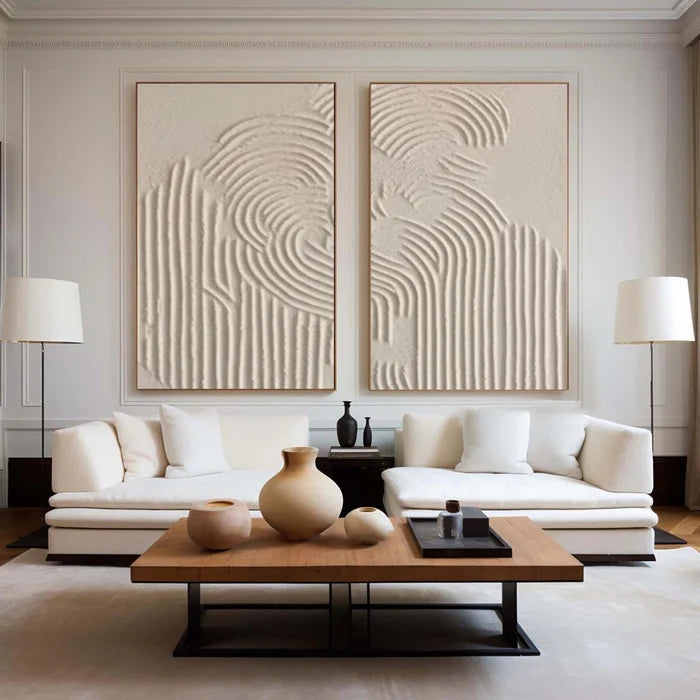

Minimalist Art for Modern Interiors: A Guide to Restraint, Scale, and Visual Clarity
Achieving a truly modern interior requires more than just furniture; it demands a disciplined approach to wall art that bridges the gap between emptiness and clutter. This guide combines aesthetic principles with structural design logic to help you transform your space into a calming, intentional environment.
Understanding the Role of Minimalist Art in Space Expansion
Minimalist art is often misunderstood as merely simple decoration, when in reality, it functions as a structural tool to organize the eye's movement through a room. By reducing visual noise and creating clear focal points, it allows compact or multi-purpose spaces to feel significantly more breathable and open.
-
Visual Control: Art acts as an anchor that prevents the eye from jumping between competing interior elements, such as kitchen counters or workspace zones.
-
Space Optimization: Restrained compositions, especially monochrome or geometric styles, help walls feel less crowded, tricking the eye into perceiving more depth and height.
-
Psychological Impact: By reducing visual stimulation, minimalist pieces contribute to a restorative environment, shifting the room's function from performative to truly relaxing.
Scaling and Positioning for Maximum Impact
In any interior, the success of a minimalist piece relies heavily on the relationship between artwork scale, furniture dimensions, and the wall itself. A piece that is too small feels like an afterthought, while one that lacks textural variation feels sterile or incomplete.
-
Proportion Guidelines: For living room setups, an artwork should typically span two-thirds to three-quarters of the sofa width to feel visually resolved and anchored.
-
The Power of Texture: Handcrafted paintings with visible brushwork or plaster-like layering create soft shadows under varying light, offering a sense of movement that flat, mass-produced prints simply cannot replicate.
-
Lighting Considerations: Keep in mind that 2700K warm lighting can mute subtle tonal shifts, whereas 4000K cooler lighting sharpens definition; choosing works with structural depth ensures the art holds presence regardless of the time of day.
Curating Art Across Different Room Scenarios
Different rooms demand different minimalist approaches to ensure that the artwork supports the specific function of the space rather than distracting from it.
-
Living Rooms: Focus on "Presence over Decoration" by using a single, large horizontal canvas to define the seating area as a cohesive, intentional zone.
-
Bedrooms: Shift toward "Subtlety and Continuity" by selecting fluid forms or soft line art that echoes the rhythm of your bedding and curtains, prioritizing restfulness over bold contrast.
-
Home Offices: Utilize "Geometric Focus" with structured grids or controlled abstract compositions to reinforce order and mental clarity during work hours.
Frequently Asked Questions
How do I style minimalist art in my living room without it looking empty?
Start by selecting a single, larger piece rather than multiple smaller ones, and ensure the artwork relates proportionally to your primary furniture. Focus on adding depth through physical texture or intentional tonal variation so the art remains the focal point even within a neutral palette.
What size minimalist art works best above a sofa?
A width of approximately two-thirds to three-quarters of the sofa is the industry standard for a balanced, resolved look. This specific ratio keeps the artwork visually connected to the seating area without letting it overwhelm the wall.
Why does minimalist wall art sometimes look different at night?
The light source temperature directly impacts how our eyes perceive contrast and tone. Warm lighting tends to flatten delicate, subtle tones, whereas cooler, sharper lighting enhances structural definition; opting for pieces with tangible, textured surfaces helps maintain depth in all lighting conditions.
What makes handcrafted minimalist paintings different from prints?
Handcrafted art possesses physical, three-dimensional elements like brush ridges, layered paint, and slight irregularities. These micro-variations interact with natural and artificial light to prevent the artwork from appearing as a "flat" sticker on the wall, giving it a premium, intentional presence.
Conclusion
Minimalist art is most effective when it solves a specific interior problem: the need for visual clarity in a multi-use home. By focusing on scale, texture, and proper placement, you can transform your space into a curated environment that feels both sophisticated and deeply personal.