

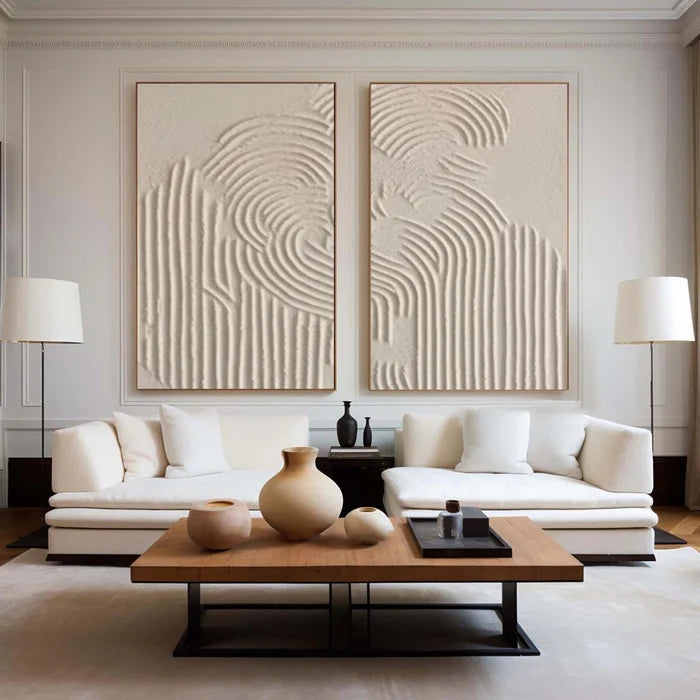

Modern Contemporary Wall Art for More Calm, Style, and Depth in the Home
The role of wall decor in modern residential and commercial design has evolved from a superficial after-thought into a foundational architectural decision. High-quality modern contemporary wall art serves as an essential visual anchor that defines spatial scale, manipulates ambient light, and establishes the psychological tone of a room. By understanding how curated textures and proportion rules operate in real-world settings, homeowners and designers can transform empty walls into deliberate design statements.
The Architectural Evolution of Contemporary Art
Modern contemporary wall art has moved from simple decorative fillers to a central design language that balances restraint, tactile depth, and emotional tone. While mid-century modern art favored strict structural discipline—such as clean geometry, rigid symmetry, and controlled, flat color fields—contemporary expression introduces a more organic, fluid approach.
Instead of flat machine-printed replication, contemporary art embraces asymmetrical balance, visible palette knife strokes, and layered raw pigments. This structural shift is critical for modern interiors. A flat, mass-produced print often feels predictable or visually dead on an expansive surface. In contrast, an original handcrafted canvas provides subtle imperfections, organic tonal transitions, and edges that catch ambient shadows. By moving away from hyper-commercialized replication, contemporary wall pieces bridge the gap between architectural discipline and personal expression, making the artwork feel less like a temporary accessory and more like a physical extension of the wall itself.
Spatial Psychology and Functional Room Scenarios
A single piece of art operates differently depending on the specific room typography, lighting layouts, and surrounding furniture heights.
Living Room Environments
In a central living room, the artwork typically anchors the space above a primary sofa or a fireplace mantle, demanding substantial visual weight without generating clutter. Large-scale abstract paintings featuring balanced compositions—such as horizontal canvases with soft, earthy transitions—perform best. They establish a definitive focal point while allowing existing materials like natural timber, textured upholstery, and architectural metals to coexist harmoniously. Highly chaotic or high-contrast compositions should be avoided in open-plan layouts, as they can dominate the space too aggressively and cause sensory fatigue.
-
Empty Sofa Wall Scenario: The traditional approach relies on small, scattered prints that fail to match the furniture scale. A superior approach utilizes a substantial handcrafted textured canvas that spans the optimal furniture ratio, instantly unifying the entire seating arrangement.
-
Neutral Rental Space Scenario: Renters often rely on temporary accessories like colorful cushions that fragment the room. Utilizing one significant, gallery-grade contemporary canvas introduces deep personal character without violating lease agreements for permanent fixtures.
Workplace and Professional Offices
Office interiors require artwork that injects focused energy without creating cognitive distraction. Structured abstraction, precise geometric line work, or directional vertical formats excel in these environments. Vertical canvases reinforce upward movement and spatial clarity, preventing visual attention from drifting. Furthermore, high-texture surfaces are exceptionally practical in workspaces; under variable day-time lighting, they produce subtle, quiet variations that prevent the room from feeling clinical, all while keeping the user fully focused on professional tasks.
-
Home Office Fatigue Scenario: Leaving walls entirely bare to avoid distraction often leads to an uninspiring, cold environment. Introducing a restrained, texture-forward minimalist piece establishes an authoritative, professional atmosphere that reduces long-hour mental exhaustion.
-
Client-Facing Studio Scenario: Relying on purely functional or generic office decor signals a lack of brand identity. Deploying a curated, large-scale original canvas signals rigorous taste, attention to detail, and design consistency to visiting clients.
Dining and Social Areas
Dining spaces do not require aggressive focal dominance. Instead, the design objective is to cultivate a relaxed, conversational atmosphere that complements slow social interaction and soft lighting. Contemporary wall art featuring low contrast, tonal palettes, or fluid, organic shapes is ideal. Coordinated sets of two or three smaller pieces work remarkably well on dining walls, especially when spaced evenly to echo the rhythmic length of the dining table below.
-
Visual Noise Scenario: Installing high-energy, high-contrast artwork in dining areas creates an underlying visual restlessness. Replacing it with a soft, Wabi-Sabi-inspired textured canvas harmonizes with low-lumen dining lights and enhances a sense of relaxation.
The Crucial Interplay of Texture and Ambient Light
The definitive divider between mass-produced decor prints and original handcrafted paintings is surface depth. Flat prints rely entirely on two-dimensional image simulation, whereas original hand-painted canvases introduce a tangible third dimension through heavy palette knife applications, layered acrylic modeling pastes, and plaster techniques.
This physical depth ensures that the artwork responds dynamically to changing lighting conditions throughout the day. Morning sunlight softens the overall surface texture, while sharp evening side-lighting accentuates the physical ridges, casting micro-shadows across the canvas. However, this dynamic behavior introduces a critical purchasing factor that many buyers overlook online.
A heavy 3D textured artwork photographed under diffused studio flash can appear considerably smoother on a digital screen than it does in a real home setting. Once installed beneath direct residential downlights or warm track lighting, the shadows become significantly more pronounced. Buyers must evaluate the specific light sources in their room—whether direct, indirect, or natural—to ensure the physical texture aligns with the intended aesthetic output.
Technical Rules for Proportional Scale
Improper scaling is the primary reason why high-end interior spaces fail to look cohesive. Selecting wall art based on generic guesswork results in pieces that either look undersized and lost, or oversized and claustrophobic. Designers avoid this by evaluating proportion rather than basic wall dimensions.
-
Sofa and Bed Alignment: An artwork or a coordinated canvas set installed directly above a sofa or bed should span approximately two-thirds to three-quarters of the furniture's total width to maintain visual equilibrium.
-
Dining Table Coordination: Multi-piece sets or triptych arrangements should mimic the linear flow and length of the dining table, leaving at least 12 inches of negative wall space on the outer edges to prevent visual crowding.
-
Negative Space Conservation: In compact rooms or high-focus offices, preserving a high ratio of empty wall space around a medium-scale painting enhances the piece’s clarity and prevents the room from feeling physically compressed.
Navigating Online Limitations with Decision Support Tools
Acquiring original contemporary art online requires translating a glowing digital pixel representation into a physical, textured object within a specific domestic environment. This inherent friction often causes buyer hesitation.
To bridge this confidence gap, modern digital art platforms have shifted from basic transactional e-commerce to comprehensive decision-support frameworks. Leveraging interactive AR room preview tools allows buyers to upload a localized photograph of their actual wall, instantly confirming correct scale, height placement, and color compatibility.
Furthermore, integrating professional art advisory services ensures that canvas undertones match the specific color temperature of the home's lighting. For instance, a contemporary canvas with sharp, cool undertones can look completely disconnected in a room illuminated by warm $2700K$ LED bulbs, while warm, earthy palettes can appear muddy under cool $4000K$ office lights. Accessing expert curation before fulfillment minimizes return rates and ensures long-term spatial compatibility.
Frequently Asked Questions
What defines modern contemporary wall art compared to historical modern art?
Modern contemporary wall art builds upon the foundational principles of historical modern art but drops its rigid geometric restrictions. It introduces greater compositional fluidity, heavy material texture, and organic imperfection, particularly through handcrafted media that react dynamically to real-world room lighting.
Why is original handcrafted wall art superior to premium machine prints?
Original handcrafted art provides true physical depth via plaster, palette knife layers, and variable pigments that machine prints cannot replicate. These physical surfaces catch ambient room light, casting shifting shadows that make the artwork feel dynamic and integrated into the room's architecture.
How do I accurately calculate the right canvas size for my living room sofa?
To calculate the ideal scale, measure the total width of your sofa and multiply it by 0.66 and 0.75. The resulting range represents the optimal width your artwork or coordinated gallery set should occupy to look balanced and intentional.
Can heavily textured abstract art work efficiently in smaller rooms?
Yes, heavily textured art can function effectively in compact rooms provided the overall composition remains minimalist and the color palette leans light or neutral. In small spaces, one well-proportioned, texture-rich canvas works better than multiple small frames because it reduces visual clutter.
How does room color temperature affect the look of an abstract canvas?
Room color temperature dictates how pigments register to the human eye. Warm residential lighting around $2700K$ amplifies yellows and reds but dampens cool blues, whereas cooler daylight bulbs enhance blue tones but can make neutral beige canvases appear dull or clinical.
Conclusion
Modern contemporary wall art is an essential architectural tool that actively shapes room psychology, balances furniture proportions, and dictates how an interior space is experienced. Whether selecting an original 3D textured piece to soften a minimalist bedroom or deploying a structured vertical canvas to maximize focus in a home office, matching the artwork to the room’s functional demands is paramount. Platforms like Vinchy Art solve these online purchasing barriers by combining original, 100% handcrafted production with digital room visualization tools and complimentary art curation services, ensuring every canvas transitions flawlessly from the digital gallery to the physical wall.