

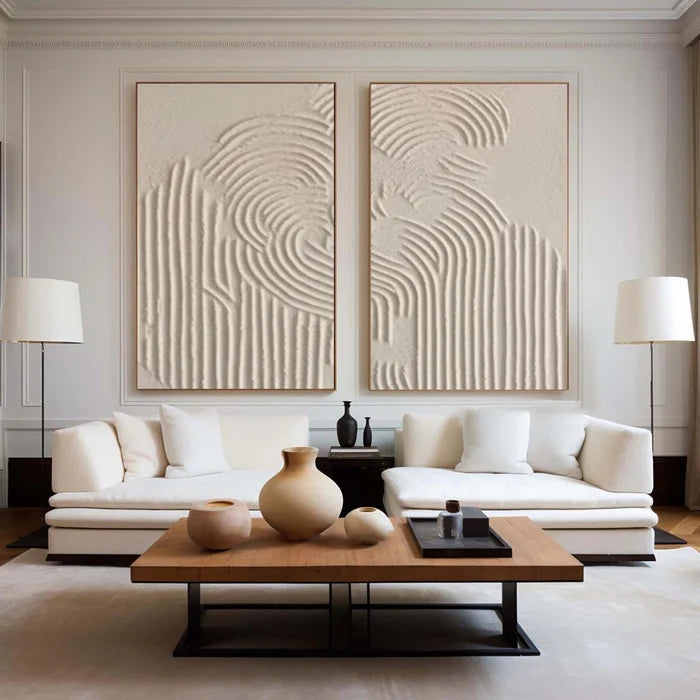

Transforming Spaces with Contemporary Wall Art: How Handcrafted Textures and Scale Redefine Modern Interiors
A room can be engineered to absolute structural perfection and still feel completely lifeless. This phenomenon frequently occurs in modern homes where walls are treated as mere boundaries rather than functional components of the atmospheric experience. In high-end interior design, contemporary wall art has evolved past simple decoration; it serves as a critical spatial anchor that directly dictates how a room handles light, scale, and emotional resonance. Achieving this balance requires moving beyond generic, flat prints and understanding how curated, tactile art interacts with the realities of architectural volume, color temperature, and everyday environments.
The Architectural Shift from Modern to Contemporary Art
Understanding the distinction between historical modernism and fluid contemporary design is essential before selecting a piece for an interior wall. Modern design relies on mid-twentieth-century principles defined by clean lines, rigid geometric symmetry, and flat color blocking. Contemporary art remains inherently adaptive, absorbing organic minimalism, weathered textures, and calculated geometric tension that responds directly to modern lifestyles.
In a residential living room or commercial reception zone, this distinction manifests immediately. A mass-produced modern graphic print presents a perfectly uniform surface that bounces light evenly across its face. While technically clean, it risks rendering an open-plan room sterile or interchangeable.
Conversely, a contemporary original introduces deliberate structural depth. By implementing raised elements, subtle plaster variations, and mixed-media layering, the artwork actively dialogues with the room. It does not freeze a space into a specific architectural era; instead, it provides a flexible focal point that shifts in character from dawn until evening.
The Physics of Texture and Ambient Light Interaction
The primary differentiator between high-end curated interiors and standard staged environments lies in the management of surface friction. Modern living spaces frequently utilize highly controlled, smooth materials: matte-painted drywall, polished engineered stone, and tight-weave performance fabrics. Without a high-texture element to disrupt this uniformity, spaces suffer from sensory exhaustion, looking correct in digital renderings but feeling clinical in reality.
Hand-painted original works—particularly those utilizing heavy body acrylics, modeling pastes, or plaster elements—introduce thousands of micro-shadows across the canvas surface. These microscopic variances intercept light rather than reflecting it uniformly.
Consider the impact of artificial illumination on these surfaces. Under warm 2700K residential lighting, the deep ridges of a textured abstract piece catch the long-wavelength glow, casting soft shadows that make earth tones appear richer and highly tactile. Under cooler 4000K commercial or daytime lighting, those same ridges reveal crisp, architectural boundaries, emphasizing the structural geometry of the composition.
By utilizing texture as an active design tool, a single large canvas breaks up the stark monotony of expanses of drywall, introducing visual depth that alters the perceived premium value of the entire property.
Engineering Proportions Through Scale and Structural Placement
Selecting wall art is an exercise in scale engineering rather than filling empty horizontal gaps. A recurring error in modern staging is the placement of undersized frames on expansive surfaces, which makes the artwork look isolated and reduces the architectural authority of the room.
To establish proper structural alignment, artwork placement must respect the primary furniture groups within the space:
-
Above Main Seating Groups: A horizontal canvas should span between two-thirds and three-quarters of the total width of the sofa. This specific ratio ensures the artwork anchors the seating arrangement without visually crushing the furniture beneath it.
-
Dining and Conference Zones: Oversized horizontal compositions should align with the long axis of the central table, establishing a clear visual weight that centers the room during active use.
-
Entryways and Transition Galleries: Vertical or square formats must be deployed to guide the human eye upward, creating a rhythmic cadence down narrow corridors without restricting physical movement.
Choosing a singular, commanding oversized canvas is consistently more effective than arranging multiple small frames. Reducing visual fragmentation limits cognitive clutter, allowing the room to feel expansive, calm, and highly intentional.
Integrating Color Palettes with Physical Finishes
Color integration within contemporary spaces requires a nuanced understanding of environmental contrast. The objective is not to execute a direct, literal match with the fabric of a sofa or the finish of an accent wall; exact matching creates a low-depth, showroom aesthetic that lacks character.
Effective curation relies on controlled saturation variances. A space defined by warm neutrals—such as raw linen, white oak, and micro-cement—benefits from an abstract piece that introduces those identical base tones but shifts the saturation or pairs them with raw, mineral textures. This technique introduces depth while preserving the monochromatic peace of the room.
When managing cooler interior finishes like polished concrete, structural steel, or matte black hardware, the artwork should introduce calculated counterweights. Incorporating muted clay tones, sand-like textures, or deep oceanic gradients allows the canvas to bridge the gap between industrial architecture and human comfort.
Resolving the Vulnerabilities of Sourcing Art Online
Sourcing original contemporary art through digital channels introduces distinct challenges that buyers must systematically mitigate:
-
Digital Screen Discrepancies: High-resolution product photos cannot fully replicate how paint pigments respond to variable home lighting conditions.
-
Tactile Misjudgment: Flat digital displays compress three-dimensional texture, making heavily layered plaster or oil brushwork look deceptively smooth online.
-
Scale Miscalculations: Abstract pieces viewed without physical context frequently cause buyers to misjudge how a canvas will interact with actual ceiling heights.
To address these pain points, buyers should look for platforms that offer clear validation steps. Platforms like the Vinchy Art Homepage provide specific tools to reduce these transactional risks. Utilizing a digital room preview allows users to scale a piece accurately against their actual wall dimensions before procurement.
Furthermore, accessing verified third-party evaluations via the Trustpilot Vinchy Art Reviews page provides transparent insights into how these original handcrafted works look, feel, and perform when installed in real residential and commercial environments.
The Practical Curation Blueprint
To ensure a piece of art functions correctly within a modern architectural context, execute the following configuration steps before procurement:
-
Calculate the Wall Coefficient: Measure the entire height and width of the destination wall, then subtract the visual footprint of all adjacent furniture to determine the exact spatial boundary available for the artwork.
-
Determine the Spatial Objective: Decide if the room requires an active energy anchor via strong geometric contrast, or a calming sanctuary effect via muted, minimalist textures.
-
Map the Existing Micro-Climate: Identify the primary light sources, tracking the movement of natural sunlight alongside the exact kelvin rating of the installed artificial fixtures.
-
Select the Material Specification: Choose between flat canvas prints for low-traffic transitional spaces, or premium, hand-painted original textures for high-focus zones where light interaction is critical.
-
Verify the Structural Presentation: Confirm the final framing options, ensuring that either a floating frame or a gallery-wrapped canvas aligns with the architectural language of the room.
Strategic Placement Scenarios
Urban Apartment Living Rooms
Standard retail staging typically relies on basic, mass-produced digital prints because they are cheap and easy to acquire. However, these smooth surfaces quickly make a compact living room feel flat and generic.
By integrating an original textured oil painting from the curated Vinchy Art All Collections matrix, the living room gains an immediate structural anchor. The raised brushwork captures shifting natural daylight from windows, making limited square footage feel significantly more premium and custom-designed.
Residential Bedroom Suites
Homeowners frequently place small, fragmented decorative frames above a bed, which splits the wall space and introduces unnecessary visual noise.
Deploying a singular, large-scale piece from the Vinchy Art Contemporary Abstract Minimalist Wall Art line simplifies the architecture of the bedroom. The soft, flowing minimalist brushwork and restrained mineral tones minimize cognitive fatigue, helping the room function as a true restorative space.
Executive Offices and Corporate Lounges
Commercial interiors routinely lean on predictable corporate colors or sterile stock photography, which strips the brand of identity and projects an uninspired corporate image.
Introducing a large-format contemporary abstract painting provides an immediate sense of authority and prestige. It keeps the environment neutral enough for professional operations while demonstrating a clear commitment to craft, detail, and executive quality.
Frequently Asked Questions
What differentiates contemporary wall art from standard wall decorations?
Contemporary wall art is characterized by its fluid alignment with current architectural styles, material innovations, and modern design philosophies. Unlike generic wall decorations that simply fill empty space, contemporary art focuses on spatial balance, abstract forms, and surface textures designed to actively shape the room's atmosphere.
Can oversized contemporary abstract pieces work effectively inside small rooms?
Yes, large-format pieces work exceptionally well in limited spaces provided the composition remains clean and the color palette is restrained. A single, large abstract canvas expands the perceived scale of a small room by creating an expansive focal point, whereas multiple small frames break up the wall and make the room feel cluttered.
Why should an interior designer prioritize hand-painted textures over high-quality canvas prints?
Hand-painted works introduce physical, three-dimensional texture through varied paint layers, brush strokes, and structural plaster. This varied surface interacts dynamically with changing indoor light, casting micro-shadows that give the room depth—a visual effect that flat canvas prints cannot replicate.
How do I prevent online color translation issues when purchasing original artwork?
To minimize color variances caused by different monitor calibrations, review the artwork across multiple screens and check the brand's documentation regarding pre-shipment verification. Reviewing historical customer photos on platforms like the Trustpilot Vinchy Art Reviews page helps buyers confirm how the physical paints look under various home lighting setups.
What is the most reliable way to select the right frame style for a contemporary home?
The frame must match the clean lines of the surrounding architecture. A sleek, recessed floating frame in black, natural wood, or muted silver works best for contemporary spaces, as it protects the handcrafted canvas while maintaining a clean, minimalist profile.