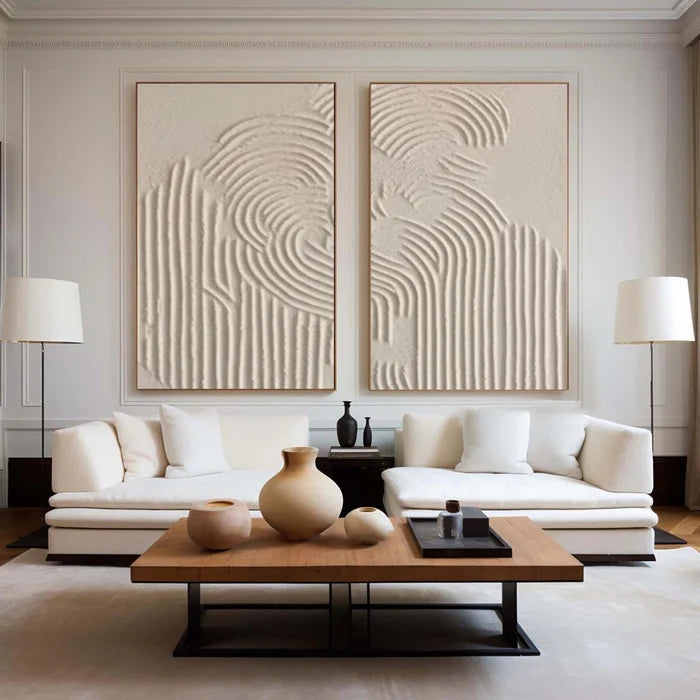
Neutral Textured Art for Minimalist Homes: Warmth Without Clutter
Minimalism's weak spot is coldness, and neutral textured art is the fix that keeps the style intact: a beige, cream, or greige textured piece adds warmth through surface rather than through objects. The texture is the one allowed extra in a minimalist room — it gives the wall dimension without adding clutter. The rule is simple: choose a neutral that warms, and let the texture be the only decoration.
Minimalism's Weak Spot: Coldness
The warm-up also works in stages: the textured wall is the first layer, a wool throw or linen cushion is the second, and the room's wood adds the third. The piece starts the warmth, and the room's existing materials continue it — which is why the texture should be chosen first.
The coldness is not a failure of the style — it is the price of subtraction, and the fix is the surface, not the count. A textured wall adds the warmth without adding objects, which is why the piece belongs in a minimalist room more than in any other: it is the one extra the style can absorb.
A minimalist room is a composition of subtraction: fewer objects, cleaner lines, more space. Done well, that reads as calm; done carelessly, it reads as cold. The missing element is usually warmth, and warmth in minimalism cannot come from more objects — it has to come from the surfaces already in the room.
Neutral textured art supplies that warmth from the wall itself. The hand-built surface carries the room's one piece of decoration, and the muted palette keeps the composition minimal. The wabi-sabi wall art article explains why textured neutral walls pair naturally with minimalist interiors.
Choosing Neutrals That Warm, Not Wash Out
The neutral's depth also matters: a flat beige can look muddy, while a beige with visible texture and tonal variation reads as rich. The texture gives the neutral its life, so the piece should be judged by its surface as much as its tone.
The neutral choice also depends on the floor: a warm wood floor calls for cream or beige, a cool concrete floor wants greige or taupe, and a white floor can take the warmest neutral the room allows. The floor is the anchor the palette follows, so it should be decided before the piece.
Not every neutral warms. Pure white and cool grey can wash out a room, while cream, beige, greige, and taupe carry warmth without introducing color. The choice depends on the room's light and the wall tone:
| Neutral | Effect |
|---|---|
| Cream | Soft warmth, brightens the room |
| Beige | Grounded warmth, pairs with wood |
| Greige | Neutral bridge, suits cool floors |
| Taupe | Deepens without darkening |
The rule is to choose the warmest neutral the room can hold: a bright room can take cream, a cooler room needs beige or taupe. The texture then adds the dimension that makes the neutral read as intentional rather than empty.
Texture as the One Allowed Extra
The piece also sets the room's single moment: the eye rests on the textured wall, and everything else in the minimalist room supports that rest. That is the exchange — one decorated surface, one moment of warmth, and the rest of the room stays empty on purpose.
The texture also earns its place by doing the room's emotional work: the eye lands on the hand-built surface, and the rest of the room reads as calm by comparison. That is the exchange the minimalist room makes — one decorated surface in return for a room that feels warm rather than empty.
In a minimalist room, texture is the exception to the subtraction rule: the surface is allowed to be the one decorated element because it adds dimension without adding objects. A textured piece gives the eye something to rest on, and the rest of the room stays empty by comparison.
That is why the texture should be the only extra: one textured painting, no competing pattern, no collection of small objects around it. The white minimalist collection and the beige brown minimalist collection show how the style carries a single textured statement.
Restraint in Quantity
The one-piece rule also protects the purchase: a single textured piece chosen with the room in mind is easier to judge than a collection, and the preview step confirms it before the room commits to the look.
The quantity rule also applies to the accents around the piece: one low console and one lamp are the honest maximum, and a vase or tray is optional. The minimalist room keeps its count low so the single textured statement stays the statement.
The quantity rule also protects the style from its own success: a home with textured pieces everywhere is no longer minimalist, and the contrast that made the first piece special disappears. One piece per room keeps the contrast alive, and the empty walls are part of the composition.
The quantity rule is stricter than the color rule: one textured piece per room, and one room at a time. A minimalist home does not need a textured piece everywhere — it needs one strong piece where the eye lands, and empty walls elsewhere. The contrast between the textured wall and the empty walls is what makes both work.
When the room is right, the piece needs almost no staging: a low console, a single lamp, and clear space. The restraint is the style, and the texture is the warmth.
Vinchy Art Studio Recommendation
The studio also advises choosing the piece in the room's evening light: a neutral that works at noon can flatten at dusk, and the texture is what keeps it alive after dark. The preview step confirms the surface, and the lamp confirms the evening.
In the Vinchy Art studio, minimalist rooms are the natural home of neutral texture: the clean lines make the hand-built surface visible, and the muted palette keeps the composition minimal. The studio recommends the warmest neutral the room can hold, one textured piece per room, and no competing decoration around it. The preview step confirms the surface before it joins a room where every detail counts.
Conclusion
The final word on neutral texture is balance: warm enough to answer the cold, restrained enough to keep the style. Choose the warmest neutral the room can hold, let the texture be the one extra, and keep the count at one — the minimalist room gains its warmth without losing its calm.
The final test for a minimalist room is the first glance from the door: the eye should land on the textured wall and rest, while the rest of the room stays quiet. If the glance settles, the warmth is working — and the style is intact.
Neutral textured art fixes minimalism's coldness without breaking its rules: the surface adds warmth and dimension while the palette stays muted and the count stays low. Choose a cream, beige, greige, or taupe that warms the room, let the texture be the one allowed extra, and keep everything else restrained. The room stays minimal — it just stops feeling cold.
Minimalist Warmth: Takeaways
- Choose the warmest neutral the room can hold
- Cream brightens; beige grounds; greige bridges; taupe deepens
- Texture is the one allowed extra in a minimalist room
- One textured piece per room, one room at a time
- Restraint around the piece: console, lamp, clear space
FAQ
Does neutral textured art suit a minimalist room?
Yes — it is built for it. The texture adds warmth and dimension while the muted palette keeps the composition minimal, which is exactly what the style needs to avoid feeling cold.
Which neutral warms a room best?
It depends on the light and the wall: cream brightens a bright room, beige grounds a warm one, greige bridges cool floors, and taupe deepens without darkening — the floor is the anchor the palette follows.
Can I have more than one textured piece in a minimalist home?
One per room is the honest rule, and one room at a time. The contrast between the textured wall and the empty walls is what makes both work — more pieces erase the contrast.
Does texture count as clutter in minimalism?
No — texture is the one allowed extra because it adds dimension without adding objects. The surface is decorated; the room is not.
What should surround a neutral textured piece?
Very little: a low console, a single lamp, and clear space. The restraint is the style, and the texture carries the warmth — one accent is the honest maximum.
Shop Neutral Textured Art
The shopping checklist for a minimalist piece is strict: the warmest neutral the room can hold, one piece per room, no competing decoration, and a lamp for the evening. A piece that passes the checklist is the one allowed extra.
Browse the beige brown minimalist collection at Vinchy Art for hand-painted, made-to-order pieces — with custom sizes and preview before shipping.