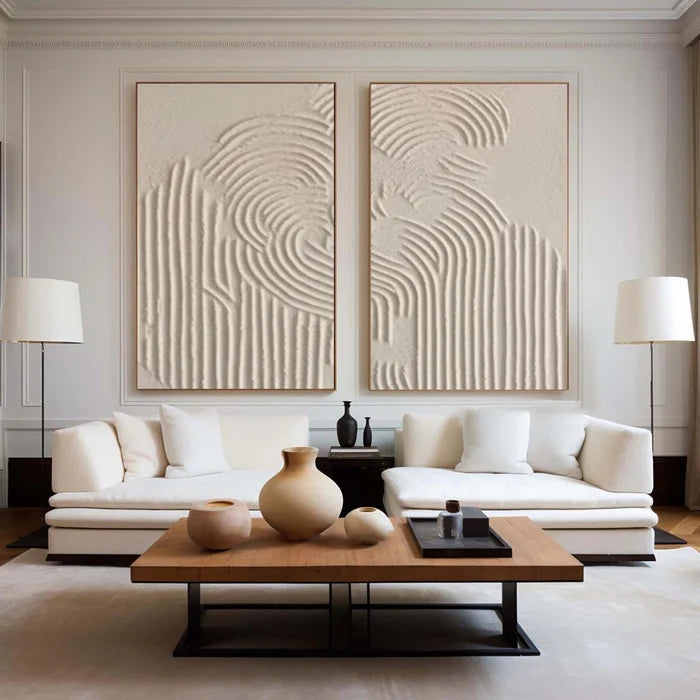
Wabi Sabi Decor for Home: Styling Rooms Around Imperfect Beauty
Wabi sabi decor for the whole home is less a style you buy than a way of arranging what you already have: natural materials, muted tones, texture, and the confidence to leave space empty. Applied room by room, it produces a house that feels calm, lived-in, and quietly beautiful. This guide gives you the principles, the room-by-room plan, and the honest budget rules to do it without a full redesign.
Stacking wabi sabi with your existing decor
You do not need to strip the house. Wabi sabi stacks over what you own: keep the good furniture, then edit toward calm — fewer decorative objects, more natural material, muted color, visible texture. The move is subtraction plus substitution: replace a glossy ornament with a ceramic one, a flat print with a textured original, a clutter of small things with one meaningful piece. The room reads wabi sabi when the eye settles instead of scanning.
Natural materials that belong
Certain materials carry the aesthetic naturally: raw wood, linen, cotton, wool, clay, stone, rattan, bamboo, and unpolished ceramics. They age with grace — a scratch, a patina, a warp is part of their story. When you add objects, prefer these materials; when you shop for art, textured plaster and earth-tone abstracts sit at the center of the palette. The wabi sabi collection is built around exactly this material language.

Lighting imperfect surfaces
Light is the hidden tool of wabi sabi. Soft, warm, low light flatters natural materials and renders texture gently; harsh overhead light makes imperfections read as flaws. Use lamps and candles at low levels, let daylight fall across textured surfaces, and point a picture light at a plaster piece so its relief glows. The same room looks wabi sabi in the right light and merely shabby in the wrong one — lighting is half the style.
Color and texture at room scale
At the scale of a whole room, the palette should stay muted and unified — warm whites, beiges, clays, soft greys, muted greens — so that texture, not color, provides the interest. One or two accent objects in natural tones are enough. Texture does the work: a plaster relief, a linen sofa cover, a wooden bowl, a rough ceramic vase. If a room has many textures, it reads wabi sabi even with very little color; the opposite is rarely true.
Wabi sabi in small vs large rooms
The principles apply at every scale, but the moves differ. In a small room, wabi sabi is your friend: subtraction opens space, muted tones push walls back, and a single textured piece replaces a cluttered wall. In a large room, the challenge is intimacy: use zones, natural materials, and a strong focal piece to keep a big space from feeling cold. In both cases, restraint is the reliable guide — when unsure, remove.
Restraint: knowing when to stop
Knowing when to stop is the hardest and most defining skill of wabi sabi decor. The signals to stop: when adding an object makes the room feel busier rather than calmer; when the palette starts to fight itself; when the space has no empty surface left. A wabi sabi room should have visible quiet — empty wall, clear table, open floor. If you cannot say what the room is "for," you have likely added past the point of calm.
Shopping for wabi sabi pieces
Shop for material and texture, not labels. A piece is wabi sabi when it carries natural materials, muted tones, and visible hand — whether or not it says "wabi sabi" in the title. The wabi sabi collection, the white textured collection, and earth-tone abstracts are all practical starting points. Check real texture (plaster, not print) and let the size guide keep scale proportionate to the room.

A room-by-room plan
- Entryway: one textured original + a wooden console; nothing else.
- Living room: a plaster focal piece, linen seating, low warm light.
- Bedroom: a calm textured canvas above the bed, muted bedding, soft light.
- Dining: one earthy wall piece, table in natural wood, minimal centerpiece.
- Bathroom: stone, wood accents, one small muted canvas (away from steam).
- Home office: a quiet textured piece within view — calm for deep work.
Each room needs one focal point, natural materials, muted color, and empty space. Build them one room at a time rather than all at once.
FAQ
What is wabi sabi home decor?
It is decorating with natural materials, muted tones, texture, and negative space, embracing imperfection and age instead of polish. Less is more, and materials that age well are prized.
How do I start decorating with wabi sabi?
Start in one room: remove clutter, add one textured natural piece, use low warm light, and let empty space stay empty. Build from there one room at a time.
Can wabi sabi work in a modern home?
Yes — wabi sabi pairs naturally with modern furniture and technology as long as you keep natural materials and calm around them. The style is about the balance, not the era.
Build calm into every room. Start with the wabi sabi collection, add texture from the white textured collection, and keep scale right with the size guide.