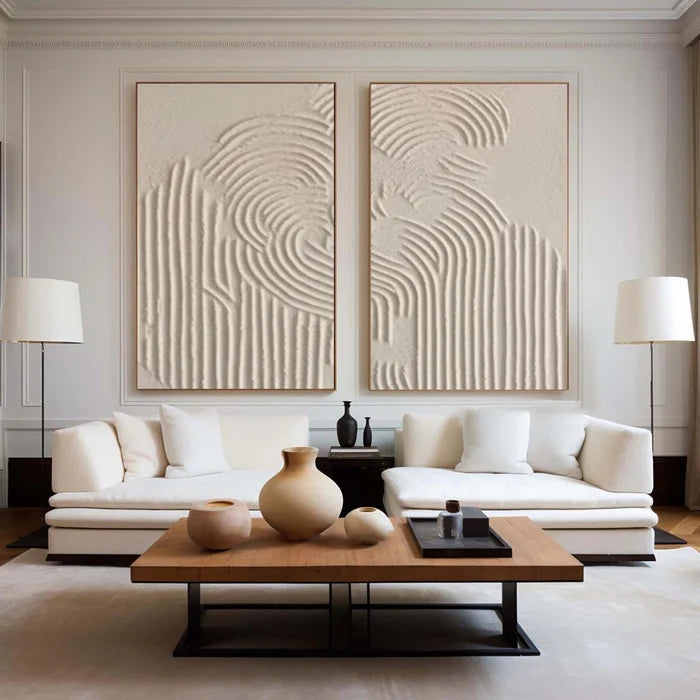
Wabi Sabi Wall Decor: Bringing Age, Texture, and Calm Into Your Home
Wabi sabi wall decor is less about what you hang and more about what you stop adding. The style builds a wall through texture, natural materials, and deliberate emptiness — and it is surprisingly achievable if you follow a few honest rules. This guide walks the sequence from one quiet focal piece to a complete wabi sabi wall, on a budget that does not fight the aesthetic.
Start with one quiet focal piece
A wabi sabi wall almost never starts with a full gallery. It starts with one piece — a textured plaster work, an earth-tone abstract, a piece with visible hand — hung where light can reach it. That single anchor sets the tone and gives everything else a reason to exist. Choose it for texture and calm before anything else; color comes second.
Materials that age beautifully
Wabi sabi decor is built from materials that get better with time rather than looking tired: plaster and textured paint, raw wood, linen, stone, ceramics, and paper. Each of these carries marks and patina as part of its character. When you add to the wall, prefer these materials over glossy, plastic, or machine-perfect finishes, which age in the wrong direction for the aesthetic.

Building a wabi sabi wall scene
Once the anchor is up, build with restraint. A natural-material side piece, a small ceramic shelf, a linen-wrapped frame, or a muted second canvas at a different height — each addition should earn its place rather than fill space. Wabi sabi arrangements favor asymmetry: varied heights, uneven spacing, a deliberate off-center balance that mirrors the imperfection at the heart of the style.
Layering texture and time
The wall works best when multiple textures sit together: a plaster relief next to a flat earth-tone canvas, a rough wooden frame beside a smooth stone shelf. This layering is what makes the room feel lived and assembled over time, not decorated in one afternoon. The honest shortcut: buy fewer, better, more textured pieces and let them age naturally together.
The practical sequence for a limited budget: spend once on the focal original, then build the surrounding scene from what you already own. Edit the shelf, not the checkout cart — move pieces from other rooms, set a linen cloth over a plain table, hang a single textured canvas and let it carry the wall. The aesthetic reads as deliberate restraint, which cannot be purchased; it is arranged. Starting with one authentic textured piece gives the whole wall its character at a fraction of the cost of a full decor refresh.
Wabi sabi decor on a budget
The good news is that wabi sabi favors subtraction, which suits a budget. One genuine textured original, one natural-material shelf, and a few objects you already own often do more than a wall full of cheap decor. The budget should go to the focal piece — a real plaster or hand-textured original — because that is where the style is made or broken. Everything else can come from your own shelves.
Consider the washing room, the landing, and the corridor as well: these transitional spaces are where calm is most felt, because they are passed through rather than lived in. A single muted canvas at the end of a hallway, or one plaster piece where the light falls at dusk, turns a functional passage into a moment of the aesthetic. The same principle that edits a living room applies here — fewer pieces, natural materials, empty space — and the effect tends to last because these spaces rarely invite clutter in the first place.
Rooms that welcome wabi sabi
Wabi sabi decor works best where calm is the point: bedrooms, reading corners, entryways, meditation spaces, and living rooms with natural light. It also shines in small rooms where subtraction opens space. Rooms that fight wabi sabi are the busy ones — kitchens full of appliances, playrooms, high-contrast patterned spaces. Not because wabi sabi cannot be present, but because walls crammed with things leave it no room to breathe.
Sourcing authentic pieces
When you shop for wabi sabi decor, look for material honesty: makers who describe plaster, texture, natural pigments, and hand process, rather than decorative adjectives. The wabi sabi collection and the white textured collection are practical places to source real texture in muted tones; the size guide keeps the scale calm rather than overwhelming.

Living with wabi sabi modern
The style coexists with modern life — it is not about living in a museum. Pair the quiet wall with modern furniture, keep the technology out of sight, and let the natural materials connect the generations. The goal is a home that feels assembled, imperfect, and calm — and the wall is the fastest place to start building that feeling.
FAQ
How do you style wabi sabi decor?
Start with one quiet, textured focal piece, add natural materials sparingly, favor asymmetry and negative space, and let the wall breathe. Subtraction is the core move.
What colors go with wabi sabi?
Muted, natural tones: warm whites, beige, clay, soft grey, muted green, and stone. Let the texture provide contrast instead of clashing color.
Can wabi sabi decor work in a small room?
Yes — wabi sabi is built on subtraction, so it opens small spaces. One real textured piece and a little natural material do more than a crowded wall would.
Build a wall that breathes. Start with the wabi sabi collection, add texture from the white textured collection, and keep the scale calm with the size guide.