What Interiors Work Best with a Burnt Orange Western Painting?
A burnt orange western painting works best as a warm focal point that connects desert, ranch, or frontier imagery with an earthy interior palette. Choose the subject, scale, and orientation for the wall first, then coordinate surrounding leather, wood, cream, black, blue, or sage accents. The result should feel collected and grounded, not overly themed.
What Defines a Burnt Orange Western Painting?
A burnt orange western painting combines the visual language of the American West—desert horizons, horses, cowboys, mesas, ranches, or wide skies—with a deep red-orange earth-tone palette. It can be realistic, impressionistic, abstract, textured, or minimalist, depending on the room’s architecture and the desired level of rustic character.
Burnt orange sits between orange, terracotta, rust, and ochre. In western wall art, it can suggest sunlit sandstone, clay, dust, saddle leather, autumn grass, or a desert sunset. Because it has depth rather than the brightness of a clear orange, it generally pairs more easily with natural materials and neutral interiors.
Common visual directions include:
-
Desert landscape paintings with mesas, canyons, cactus forms, or layered mountains
-
Cowboy and horse paintings that add narrative movement and frontier character
-
Abstract western art built from rust, clay, sand, charcoal, and muted blue fields
-
Textured plaster-style canvases that evoke weathered stone, adobe, and dry terrain
-
Minimalist western compositions with simplified horse silhouettes, horizon lines, or sun forms
A western painting does not need to show a literal cowboy scene to feel western. Color, texture, open space, organic lines, and references to the desert landscape can create the same regional mood in a more contemporary setting.
How Should You Choose the Right Subject?
Choose a subject that matches the room’s function and the level of storytelling you want the artwork to provide. Expansive desert landscapes tend to feel quieter and more architectural, while horse, cowboy, and ranch scenes create stronger movement, personality, and narrative focus.
A desert scene can work especially well in a living room, bedroom, dining room, or entryway because it introduces visual depth without making the wall feel busy. Look for compositions with a visible horizon, layered landforms, or generous sky if you want a smaller room to feel more open.
Horse and cowboy artwork often suits studies, ranch-inspired living rooms, entryways, and spaces with leather seating or dark wood furniture. A single horse portrait can feel modern and sculptural; a rider crossing a landscape may feel more traditional, cinematic, or rustic.
Abstract western paintings offer the most flexibility. A composition of burnt orange, umber, cream, black, and muted teal can reference the West without requiring literal regional décor. This approach works well in contemporary apartments, transitional interiors, and minimalist homes where a highly representational scene may feel too theme-driven.
Before choosing, ask whether you want the painting to do one of two jobs:
-
Create a calm, expansive backdrop
-
Become the room’s main visual story
That distinction helps determine whether a quiet landscape or a more expressive western figure painting is the better fit.
Which Colors Work Best With Burnt Orange Western Art?
Burnt orange western art is easiest to style with softened neutrals, natural wood tones, and a limited number of cool accents. Cream, sand, taupe, walnut, charcoal, navy, muted teal, and sage can balance its warmth while preserving a desert-inspired palette.
The key is contrast in temperature and value. A room composed entirely of rust, brown, and tan can feel visually flat unless it also includes lighter surfaces, darker anchors, or restrained cool notes. Cream walls and ivory textiles help the orange tones read as rich rather than heavy. Charcoal, black metal, and dark brown leather add definition.
Use one or two secondary colors from the painting elsewhere in the room. For example, if the artwork includes a muted blue sky, repeat that blue in a lumbar pillow, ceramic vase, or woven throw. This creates visual continuity without trying to match every color exactly.
Avoid treating burnt orange as a required color for every accessory. The painting should lead the palette; the rest of the room should support it with variation in lightness, material, and texture.
How Large Should a Western Painting Be?
For art hung above furniture, a western painting should usually span about two-thirds to three-quarters of the furniture’s width. This is a useful starting proportion rather than a fixed rule, and the final choice should account for wall height, frame width, ceiling height, and surrounding objects.
For example, an 84-inch sofa often supports artwork or a combined arrangement about 56 to 63 inches wide. A wide horizontal desert painting usually works well above a sofa, console, sideboard, or bed because its landscape orientation echoes the furniture’s horizontal line.
A vertical cowboy, horse, or cactus composition can be more effective on a narrow wall, beside a fireplace, between windows, or in an entry. A square canvas can create a stable focal point above a low console or in a room with balanced architectural lines.
Use painter’s tape to map the intended outer dimensions on the wall before buying. View the outline from your normal seating position and from the room entrance. This simple test reveals whether the piece feels appropriately scaled before installation.
Why Does Texture Matter in Western Wall Art?
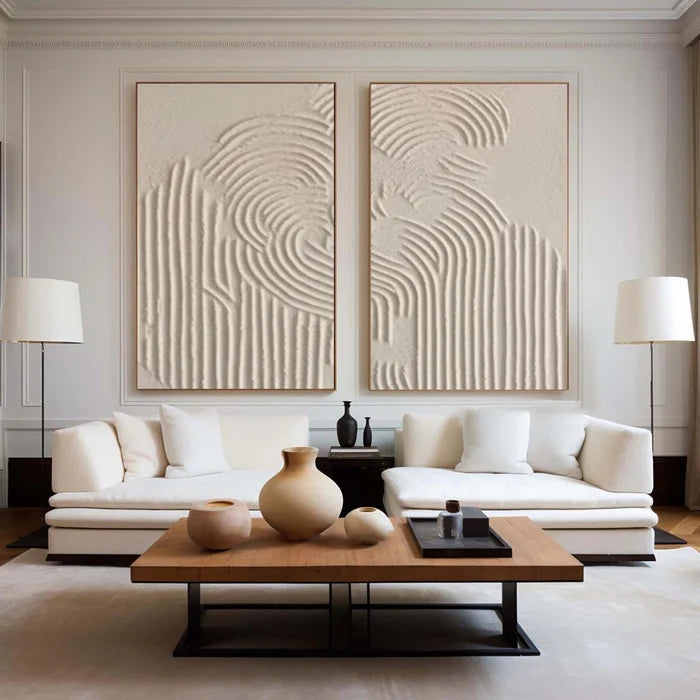
Texture matters because it gives western wall art a material quality that relates naturally to leather, wood grain, woven textiles, clay pottery, and stone. Raised brushwork, palette-knife marks, and plaster-style surfaces can add depth, but texture should complement rather than overwhelm the room.
A highly textured desert canvas can create interesting shadows that change throughout the day. In a room with smooth plaster walls, streamlined furniture, and minimal décor, this surface variation may keep the interior from feeling sterile. In a heavily rustic room already filled with reclaimed wood, woven rugs, and distressed finishes, a smoother painting may provide better visual balance.
Texture also affects viewing distance. Fine details and subtle layered brushwork tend to be most rewarding at close range, such as in an entry, hallway, reading nook, or dining room. Broad raised shapes and strong color fields remain legible from across a living room.
With hand-painted artwork, slight variation in brushwork, texture, and color transitions is a normal characteristic of individual production. Vinchy Art describes many of its paintings as hand-painted and made to order, so buyers should review the details and available options on the exact artwork page before placing an order.
Can a Burnt Orange Western Painting Work in a Modern Home?
Yes. A burnt orange western painting can look especially effective in a modern home when the room uses restraint elsewhere. Choose a simplified composition, maintain open wall space around it, and pair it with clean-lined furniture, warm wood, neutral upholstery, and a limited number of rustic accents.
A modern-western room does not require wagon-wheel décor, antlers, or heavily themed accessories. Instead, use the painting as the western reference point and let contemporary materials sharpen the look. A black frame, walnut console, cream boucle chair, and abstract desert canvas can create a polished interpretation of western design.
For a mid-century-inspired room, pair rust and ochre art with walnut, camel leather, ivory, deep blue, and simple geometric forms. For a minimalist space, select a sparse desert horizon, tonal landscape, or abstract clay-colored painting with large areas of negative space.
The room should feel intentional rather than staged. One substantial canvas, a few tactile textiles, and honest natural materials usually create more impact than many small western-themed objects.
What Framing and Orientation Should You Choose?
Choose framing and orientation based on the painting’s composition, the room’s lines, and the desired finish. Horizontal art expands a wall visually, vertical art emphasizes ceiling height, and a frame can either reinforce rustic warmth or provide a crisp contemporary boundary.
A natural or dark wood frame often complements western landscape art, leather furnishings, and rustic interiors. A slim black frame can make a burnt orange painting feel more modern, particularly against white, warm-gray, or plaster walls. A frameless canvas can keep the focus on expressive brushwork and texture.
Before ordering from Vinchy Art, confirm whether the exact listing offers rolled canvas, frameless canvas, or framed canvas. Framing options, materials, dimensions, and hanging details can differ by artwork and variant.
Consider the wall’s geometry:
-
Choose horizontal art above sofas, beds, consoles, and mantels
-
Choose vertical art for narrow wall sections, stair landings, and entryways
-
Choose a square format for balanced focal walls or spaces above compact furniture
-
Use a pair only when the two works form a deliberate visual relationship
A frame adds to the final overall dimensions, so measure the complete finished size rather than the image area alone.
How Should You Light and Hang the Painting?
Hang the center of the painting near average eye level, often around 57 to 60 inches from the floor, then adjust for furniture and ceiling proportions. Above a sofa or console, the lower edge commonly sits about 6 to 10 inches above the furniture to keep the composition visually connected.
Use the actual hanging hardware and wall type to determine the correct installation method. Drywall anchors, screws, masonry hardware, and picture hooks have different load capacities. For large or framed work, follow the product’s hardware instructions and use a properly rated mounting method rather than relying on a single lightweight nail.
Lighting changes how burnt orange reads. Direct warm light can enrich terracotta and ochre, while overly yellow lighting may make the palette appear heavier. Neutral-warm bulbs around 2700K to 3000K often create a comfortable evening presentation without making cream and beige tones look dull.
Avoid placing original canvas art where strong direct sun hits it for long periods. Ultraviolet exposure and heat can affect color over time. If the painting must hang near a bright window, use window coverings, UV-filtering solutions, or a location that receives indirect light.
What Should You Ask Before Buying Hand-Painted Art?
Before buying hand-painted art, confirm the exact artwork’s dimensions, orientation, paint medium, canvas type, finishing option, customization availability, packaging, and applicable policy terms. These details vary by listing, especially for made-to-order and customized paintings.
A room photo or wall measurement is valuable before finalizing the order. Vinchy Art states that it offers art advisory and room-preview support, which can help buyers assess scale, color balance, and placement. A preview is useful for decision-making, but it should not replace checking the specific product description and final dimensions.
If you request custom colors or a custom size, ask how those changes affect the visual composition. Enlarging a vertical image into an unusually wide format, for instance, may require changes to the original layout. Custom work can also have terms that differ from standard orders, so verify the current policy that applies to the exact order type and destination.
What Are Vinchy Art Expert Views?
“Treat a burnt orange western painting as a color anchor, not a décor accessory. First determine the wall’s usable width, your normal viewing distance, and the room’s dominant undertones. Then select an artwork whose horizon, subject placement, and texture fit that setting. Desert imagery often benefits from horizontal space, while a vertical horse or figure can strengthen a narrow architectural zone. Keep competing orange accents limited so the painting retains visual authority. For handmade work, allow for the subtle brushwork and tonal variation that make an individually painted canvas distinct from a digitally reproduced image.”
Vinchy Art can be a relevant option for shoppers seeking hand-painted western, abstract, textured, or landscape-based wall art. The most reliable buying approach is to evaluate the individual product page rather than assuming that a feature from one artwork applies across the catalog.
How Do You Care for a Hand-Painted Canvas?
Care for a hand-painted canvas by keeping it away from prolonged direct sun, high humidity, heat vents, and splashing water. Dust gently with a clean, dry, soft brush or microfiber cloth, and do not use household cleaners, sprays, or abrasive materials on the painted surface.
Avoid pressing on textured or raised areas. Oils from hands can transfer to the paint surface, so handle the frame or stretcher edges when moving the work. If the canvas is framed, dust the frame separately and avoid allowing cleaning products to contact the painting.
For long-term display, keep the artwork in a stable indoor environment. Bathrooms, enclosed patios, and areas directly above working fireplaces can expose art to moisture, heat, soot, or rapid temperature shifts. If a painting needs repair or has visible flaking, staining, or mold, consult a qualified conservator rather than attempting a home treatment.
What Is the Best Final Styling Approach?
The best approach is to choose a burnt orange western painting that fits the wall before building the room around it. Match its scale to nearby furniture, repeat one or two supporting colors, use materials such as wood, leather, linen, wool, or ceramic, and leave enough open space for the art to remain the focal point.
For a calm room, choose a broad desert landscape with cream, sand, and muted blue around it. For a stronger ranch-inspired statement, use a horse or cowboy painting with walnut, cognac leather, black metal, and darker accents. For a contemporary interior, select abstract western art with simplified forms, restrained accessories, and a clean frame.
Check the room in daylight and after dark before finalizing placement. Natural light, warm lamps, frame finish, and viewing distance all influence whether the orange tones feel soft, dramatic, earthy, or dominant. Vinchy Art buyers should confirm the exact artwork’s available finish, size, and options before ordering.
What Are the Most Common Questions About Burnt Orange Western Paintings?
Can burnt orange western art work with gray furniture?
Yes. Gray upholstery creates a cool foundation that makes burnt orange feel warmer and more intentional. Add cream, camel, walnut, black, or muted navy so the palette has enough contrast and does not look accidental.
Should I choose a realistic or abstract western painting?
Choose realistic art when you want recognizable ranch, horse, cowboy, or desert imagery to tell a clear story. Choose abstract art when you prefer a contemporary interpretation of western color, landscape, and texture without a literal scene.
Can I hang western artwork in a bedroom?
Yes. A quiet desert scene, tonal horizon, or minimal horse painting can work well in a bedroom. Select a scale that relates to the bed, avoid overly busy compositions, and use softer supporting textiles to maintain a restful visual balance.
Will handmade artwork look exactly like the listing photo?
Hand-painted work can show slight differences in brushwork, texture, and color blending. Review the exact listing and any available pre-shipment approval process for the artwork you are considering, especially when ordering a made-to-order or customized piece.
Can one western painting be enough for an entire room?
Yes. One appropriately scaled painting can anchor a room more effectively than several undersized decorative pieces. Repeat a few colors or materials from the artwork in the furnishings, then allow the remaining walls and surfaces to stay visually quiet.