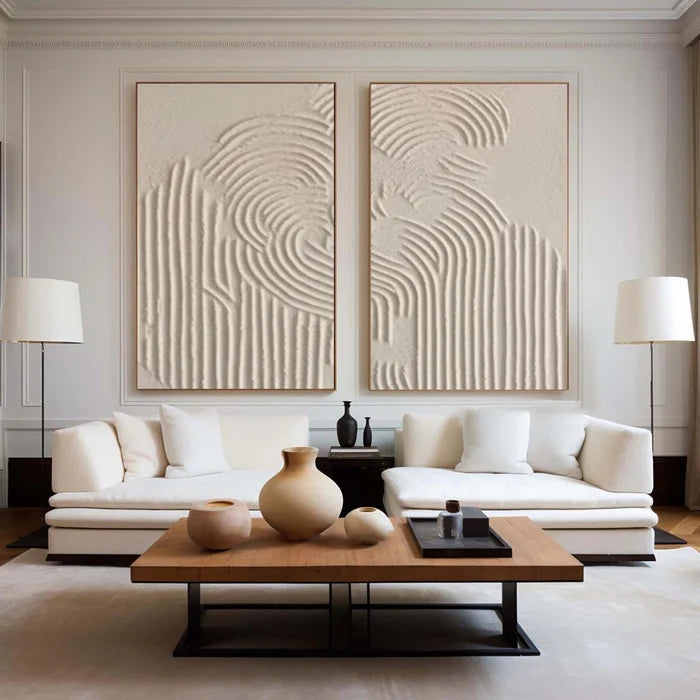
Where Does Teal Western Canvas Painting Work Best in a Home?
A teal Western canvas painting works best as a focal point that balances cool blue-green tones with the warm, tactile materials associated with Western interiors. Choose a subject, size, orientation, and frame that fit the wall and furniture below it. The most successful result feels intentional: teal adds contemporary depth, while wood, leather, ochre, sand, and black retain the grounded character of the West.
What Defines a Teal Western Canvas Painting?
A teal Western canvas painting combines Western imagery or regional references with teal as a prominent accent, atmospheric field, or contrast color. It can depict horses, riders, longhorns, desert horizons, ranch architecture, abstract landscapes, or textured Southwestern forms.
Western style does not require literal cowboy imagery. A more contemporary interpretation may use broad desert color fields, gestural horse silhouettes, weathered-plaster texture, or simplified mesas against dusty teal skies. The essential visual language comes from the relationship between rugged, natural references and a restrained palette.
Teal is especially useful because it bridges blue and green. Against Western staples such as saddle brown, terracotta, rust, clay, charcoal, and warm cream, it provides cool contrast without looking as sharp as pure cobalt or as tropical as bright turquoise.
A hand-painted teal Western work can also introduce visible brushwork, knife-applied paint, layered acrylic, or plaster-like relief. Those surface variations give the painting a material presence that complements natural wood grain, woven wool, linen, leather, and matte ceramics.
Which Western Subjects Work Best With Teal?
Teal suits Western subjects that already contain open space, shadow, weather, water, or a strong silhouette. Desert landscapes, horses, cattle, cowboys, mountain horizons, and abstract ranch scenes are all natural choices.
Use the subject to establish the room’s level of Western character. A horse portrait or cowboy figure usually creates a more narrative and recognizable focal point. A desert abstraction or textured landscape can suggest the West more quietly, making it easier to place in a modern apartment, contemporary living room, or minimalist bedroom.
For a quieter interior, look for a composition where teal appears in the sky, distant hills, shadowed terrain, or a lightly glazed background. For a more dramatic wall, choose a piece in which teal is paired with black, burnt orange, or deep brown in broad, confident passages.
Vinchy Art’s Western-oriented browsing options can be helpful when you want to narrow choices by subject, color family, orientation, or set format. However, review the current page for the individual painting before assuming a particular material, size, frame, or customization option.
How Do You Choose the Right Size for Your Wall?
Choose a canvas that relates to the furniture width and available negative space, rather than selecting a size in isolation. Above a sofa, bed, sideboard, or mantel, a single painting often looks proportionate when it spans roughly two-thirds to three-quarters of the furniture width.
A painting that is too small can make a substantial sofa or wide console look visually heavier. One that is too wide may crowd adjacent lamps, shelving, or architectural details. Measure the usable wall area after accounting for furniture, sconces, windows, and trim.
For a sofa that is 84 inches wide, a painting in the approximate 56-to-63-inch width range is often a useful starting point. This is guidance, not a fixed rule: a highly detailed composition may benefit from more breathing room, while a simple abstract work can carry a larger scale.
How does viewing distance affect scale?
Step back before committing to a large work. A broad, textural composition generally reads well from across a room, while intricate figurative details need enough proximity to be appreciated. In an entryway or long hallway, prioritize immediate visual impact. In a reading room or office, a more detailed piece can reward closer viewing.
What orientation should you choose?
Choose horizontal art to emphasize the length of a sofa, bed, mantel, or sideboard. Vertical art can lengthen a narrow wall, fill the space between windows, or bring visual height to an entry. Square canvases work well above compact furniture or in pairs.
If a wall is unusually wide, a coordinated diptych or triptych can create rhythm without forcing a single oversized composition. Keep the spacing even and treat the group as one overall installation when measuring width.
Why Does Teal Work With Western Color Palettes?
Teal works in Western interiors because its cool depth offsets the warmth of wood, leather, clay, and sun-baked earth tones. It can modernize a traditional ranch palette while still looking connected to open skies, weathered patina, river water, and desert shadows.
Build the room around a clear color hierarchy. Let warm neutrals form the base, use the canvas as the primary teal statement, and repeat the teal once or twice through restrained accents such as a pillow edge, ceramic vessel, throw, or book cover. Repeating the color helps the painting feel integrated rather than isolated.
Avoid matching every teal item exactly. Slight variation creates a collected result: dusty teal, blue-green, deep peacock, muted turquoise, and gray-teal can coexist if their saturation levels are compatible.
If your walls are white, cream, or warm gray, a teal painting can take a central role. On darker walls, look for adequate tonal separation so the artwork does not disappear. A canvas with pale sand, bone, warm beige, or light blue passages may provide the contrast needed for definition.
Can Texture Make a Western Painting Feel More Authentic?
Texture can make a Western painting feel more tactile and grounded, especially when the room contains natural materials. Raised paint, visible brushstrokes, palette-knife marks, and plaster-like surfaces can echo weathered adobe, stone, leather, rough timber, and desert terrain.
Texture is not automatically better; it should fit the composition and viewing distance. Fine texture can add interest to a calm, minimalist painting. More pronounced relief creates shadows and changing highlights, which makes it particularly effective on a large feature wall.
Lighting matters. Side lighting from a window, table lamp, or adjustable picture light can reveal surface variation. Direct glare, however, may flatten the image or produce distracting reflections, especially where paint layers are smooth or glossy.
At Vinchy Art, a hand-painted and made-to-order approach may mean subtle variation from the reference image. That is a normal characteristic of individually produced art, not a defect. For a specific artwork, confirm the current listing’s medium, texture description, and available format before ordering.
Which Frame Complements a Teal Western Canvas?
The best frame supports the painting’s palette and the room’s architecture without competing with the composition. Dark wood, natural oak, weathered wood, slim black, and understated floater frames are common directions for teal Western art.
A dark wood frame can reinforce deep brown leather, iron hardware, or rustic beams. Natural wood provides a lighter farmhouse or Scandinavian-Western interpretation. A narrow black frame introduces definition and works especially well in contemporary interiors with black lighting, window trim, or metal furniture.
For a more Wabi-Sabi-influenced setting, a simple frame or a frameless presentation can keep attention on the irregularity of brushwork and surface texture. In a formal room, a carefully proportioned frame may give the painting more visual finish.
Before choosing a framed, frameless, or rolled-canvas option from Vinchy Art, verify that the exact artwork and selected variant offer that format. Framing availability and hardware should be checked on the current product page rather than assumed across the catalog.
How Should You Hang the Painting for Balance?
Hang the center of the artwork near average eye level, then adjust for furniture, ceiling height, and the composition itself. Above furniture, leave enough connection between the painting and the piece below it so they read as one arrangement rather than separate objects.
For many living rooms, placing the lower edge about 6 to 10 inches above a sofa back is a practical starting point. Over a mantel, the available space may be tighter; avoid hanging so high that the canvas seems detached from the fireplace.
Use secure hardware rated for the wall construction and the artwork’s actual weight. Drywall anchors, picture hooks, masonry hardware, and wall studs are not interchangeable. If the painting is large, heavy, or installed above a bed, fireplace, or stairwell, use appropriate mounting hardware and follow the product-specific instructions.
Check the placement in both daylight and evening light. Teal often shifts visually: it may appear greener in warm lighting and bluer in cooler daylight. A room-preview service, where available from Vinchy Art, can help assess scale, palette, and orientation before an order is finalized.
What Should You Consider Before Buying Online?
Before purchasing, confirm the exact painting’s image, dimensions, orientation, material, presentation format, color interpretation, and customization status. Online photos are useful but can look different across screens, room lighting conditions, and camera settings.
Measure and tape out the proposed dimensions on the wall. Then photograph the wall from the primary viewing position. This simple test reveals whether the scale is appropriately confident and whether a horizontal, vertical, or multi-panel arrangement fits better.
For handmade work, expect minor differences in brushwork, texture, and color nuance. Those differences can be part of the appeal, but buyers seeking a very specific match should ask about available customization or pre-shipment review options for the exact order type.
Also verify the applicable terms for your destination, order configuration, and customized artwork. Creation schedules, delivery timing, packaging methods, duties, and return eligibility can differ by item and order type.
What Are Vinchy Art Expert Views?
“A teal Western painting succeeds when it does more than add color. It should connect the room’s warm materials with a cooler visual horizon, whether that horizon is a desert sky, distant terrain, weathered patina, or an abstract field. Start with proportion: choose art that is large enough to hold the wall. Then repeat one or two restrained tones from the painting in textiles or objects, while allowing the canvas to remain the focal point. For hand-painted work, slight surface and color variation should be treated as part of the artwork’s individual character.”
How Do You Care for a Hand-Painted Canvas?
Care for a hand-painted canvas by keeping it away from persistent humidity, direct heat, grease, smoke, and strong sunlight. Dust it lightly with a clean, soft, dry brush or microfiber cloth, and avoid water, household cleaners, polish, or abrasive materials.
Do not press on the painted surface, especially where texture is raised. Lift framed work from both sides rather than by hanging wire alone. When relocating a painting, protect the face with a clean non-abrasive barrier and keep it upright whenever practical.
In rooms with major humidity swings, such as bathrooms, laundry areas, or poorly ventilated kitchens, canvas can be a less predictable choice. If you want Western art in those spaces, consider placement outside the most humid zone and confirm the specific artwork’s care guidance.
What Are the Most Common Questions About Teal Western Canvas Paintings?
Can teal Western art work in a contemporary home?
Yes. Choose an abstract landscape, simplified horse motif, or restrained desert composition, then pair it with clean-lined furniture, neutral walls, and limited rustic accents. Teal can provide the bridge between contemporary finishes and Western warmth.
Should I choose teal or turquoise for a Western room?
Choose teal for a deeper, more muted, and often more contemporary look. Choose turquoise when you want a brighter Southwestern accent. Compare the painting against your leather, wood, wall color, and metal finishes before deciding.
Can I place a teal Western canvas above a fireplace?
Yes, if the wall remains within a stable temperature range and the painting is protected from direct heat, soot, and smoke. Confirm that the available wall space allows for balanced placement rather than forcing the work too high.
Does hand-painted art always match the online image exactly?
No. Hand-painted works can vary slightly in brushwork, texture, and color nuance. If exact expectations matter, review the specific product information and ask about applicable customization or approval options before purchase.
How many teal accents should I use in the room?
Usually one major artwork and one or two smaller echoes are enough. Repeating teal sparingly through a textile, ceramic, or decorative object creates cohesion while allowing the canvas to remain the dominant visual statement.
What Is the Best Final Approach?
Choose a teal Western canvas painting that is sized for the wall, suited to the room’s viewing distance, and grounded by warm materials already present in the space. Use teal as a deliberate cool accent against leather, wood, cream, black, clay, or rust; select horizontal or vertical orientation according to the wall’s proportions; and account for natural and artificial light before installation.
For a polished result, begin with measurements, test the proposed footprint on the wall, and decide whether the room needs a narrative Western subject or a quieter abstract interpretation. When considering a Vinchy Art piece, confirm the current artwork-specific options, materials, presentation format, and order terms before making a final decision.