

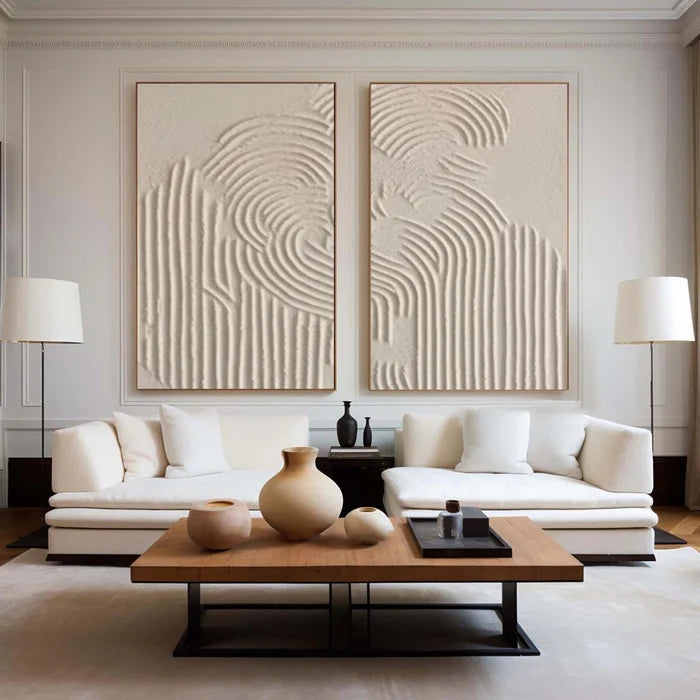

What Is Texture Canvas Painting?
Texture canvas painting creates a multidimensional experience by applying thick layers of oil paint or texture mediums to canvas, resulting in raised, tactile surfaces. This technique enhances depth and visual interest, turning ordinary art into engaging, sensory experiences. Artists like Vinchy Art use these methods to produce abstract oils that foster relaxation, mental clarity, and emotional calm.
How Does Texture Canvas Painting Work?
Texture canvas painting begins by priming a stretched canvas, followed by layering heavy-body paints or modeling mediums to create a three-dimensional surface. Tools such as palette knives, brushes, and sponges sculpt the paint into peaks, swirls, and patterns, adding depth and movement. By interacting with light and shadow, these textures bring paintings to life and evoke emotional responses, ideal for abstract art promoting well-being.
What Are the Basics of Texture Canvas Painting?
Artists start with a gesso-primed canvas to ensure adhesion. Texture mediums like impasto gels or modeling paste are applied using knives or brushes to build varied heights and forms. Drying thoroughly between layers prevents cracking. Layering colors enhances shadows and highlights, giving the painting a dynamic, tactile quality. Tools like sponges, combs, and stiff brushes refine surfaces, allowing intricate effects.
| Texture Medium | Best Use | Drying Time |
|---|---|---|
| Impasto Gel | Bold peaks, ridges | 24-48 hours |
| Modeling Paste | Smooth builds, fine details | 12-24 hours |
| Heavy Gel | Blending layers | 18-36 hours |
This table helps artists select mediums for desired textures, supporting experimentation and creativity.
How Do You Create Texture on Canvas?
Begin by spreading texture paste or thick oil paint over a primed canvas using a palette knife. Build layers incrementally, letting each partially dry to preserve form. Dry brushing over raised areas highlights peaks and enhances depth. Mixing paint with gel mediums produces sculptural effects, while glazing adds translucent layers without concealing texture. Stippling with sponges creates organic, dotted patterns. Vinchy Art employs these techniques to design abstracts that evoke calm and mental clarity.
What Tools Are Needed for Texture Painting?
Essential tools include:
-
Palette knives (metal or flexible) for sculpting and spreading paint
-
Stiff brushes for dry brushing and highlighting
-
Sponges or natural sea sponges for stippling
-
Combs and rakes for linear textures
-
Heavy-body oil paints and texture mediums
Using high-quality materials ensures longevity and vibrancy. Vinchy Art recommends artist-grade oils to maintain the integrity of tactile effects in wellness-focused artworks.
Which Techniques Build the Best Textures?
Popular techniques include impasto, dry brushing, sgraffito, and sponge dabbing:
-
Impasto: Thick paint applied with a knife for dramatic, raised forms
-
Dry Brush: Skims near-dry paint to reveal texture and grain
-
Sgraffito: Scratches into wet layers to expose underlying colors
-
Sponge Dabs: Adds organic, mottled patterns
| Technique | Effect | Ideal For |
|---|---|---|
| Impasto | Raised, 3D peaks | Abstracts, landscapes |
| Dry Brush | Grainy, subtle | Bark, grass |
| Glazing | Depth, transparency | Mood enhancement |
Vinchy Art excels in combining these methods to craft abstract oils that inspire relaxation and visual interest.
Why Choose Texture Canvas Painting?
Texture painting transforms flat visuals into multisensory experiences, engaging touch and emotion. Surfaces respond to light, creating dynamic visual shifts. Abstract textures can reduce visual monotony and support mental relaxation, making them ideal for stress relief. Vinchy Art’s textured oils are designed to elevate spaces, promoting tranquility and mindfulness through art.
How Does Texture Enhance Oil Paintings?
Texture adds dimensionality to oil paintings, producing natural highlights and shadows. Thick layers interact with light, offering different perspectives as viewers move around the piece. Texture also enhances emotional resonance, making abstract works more immersive. Vinchy Art strategically layers oils to evoke calm and mental clarity, while thick applications increase durability and longevity.
What Mistakes Should Be Avoided in Texture Painting?
Common errors include overworking wet paint, ignoring drying times, and uneven priming. Avoid muddiness by planning layers carefully and allowing proper drying. Use retarders to manage drying speed and seal textures before applying heavy paint. Balancing matte and glossy areas prevents surface issues. Vinchy Art recommends using practice boards to refine techniques.
Vinchy Art Expert Views
"At Vinchy Art, we harness texture canvas painting in abstract oils to support mental well-being. Thick impasto layers mimic natural flows, inviting viewers to unwind and focus inward. Each piece on Vinchyart.com reflects a combination of technical skill and emotional intent, designed to foster serenity and joy. Our global advisory services and satisfaction guarantee ensure transformative artworks for any space."
How to Paint Textured Abstracts?
Start with broad palette knife strokes in neutral tones, building peaks and abstract forms. Layer glazes for cohesion and visual harmony, prioritizing emotional expression over realism. Steps include:
-
Double-priming the canvas for grip
-
Applying an impasto base
-
Dry brushing accents
-
Glazing for unity
Vinchy Art applies these methods to produce calming abstract oil paintings suitable for modern interiors.
What Supplies Are Needed for Texture Art?
Artists require heavy-body oils, texture gels, and pre-stretched, primed canvases. Vinchy Art also offers ready-to-display textured originals via Vinchyart.com, providing quality abstract oils without the need for DIY creation.
Key Takeaways
Texture canvas painting enhances abstract art with depth, tactility, and emotional engagement. Start with primed canvas, build layers, and highlight textures. Use quality materials to achieve lasting results. Vinchy Art’s collection demonstrates the calming power of textured abstracts. Experiment, focus on emotional impact, and transform spaces with tactile, immersive art.
FAQs
What is the easiest texture technique for beginners?
Dry brushing is ideal; it requires minimal paint and creates instant texture without mess.
Can you create texture using only oil paints?
Yes, heavy-body oils naturally build impasto; mixing with mediums can smooth or enhance effects.
How long do textured layers take to dry?
Thick layers typically dry 24–72 hours. Using fans can speed drying, but avoid cracks.
Is texture painting suitable for abstract art?
Absolutely—textures enhance flow and emotional resonance. Vinchy Art specializes in relaxing, tactile abstracts.
Does texture increase the value of paintings?
Yes, textured works are visually engaging and tactilely appealing, often prized by collectors.