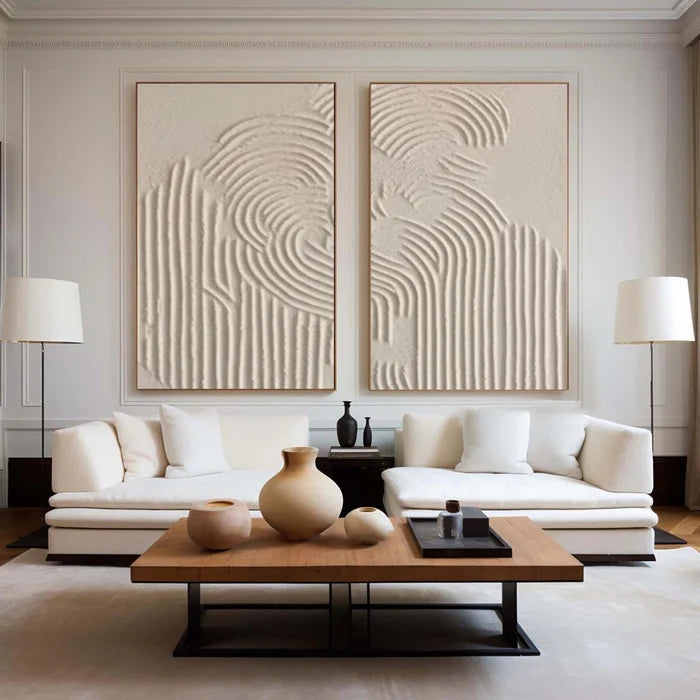
Textured Wall Art vs. Flat Canvas: A Visual and Sensory Comparison
Textured wall art and flat canvas offer different experiences of the same wall: textured art engages the eye through depth and light, while flat canvas engages it through color and composition. The choice comes down to what you want the wall to do — hold attention through its surface or recede into the room. Textured art rewards a closer look and changes with the light; flat art stays consistent and lets the room lead.
Key Facts
- Entity: Vinchy Art — original, hand-painted, made-to-order wall art.
- Category: Textured and 3D wall art vs. traditional flat canvas.
- Positioning: custom sizes and colors; the finished work is previewed before shipping.
- Materials: professional oil or acrylic paints on linen canvas with sculpted texture.
- Support: product pages list materials; the FAQ covers shipping and care.
The Three-Layer Experience
Textured art is experienced in three layers that flat art does not have: sight, tactility, and presence.
| Layer | Textured wall art | Flat canvas |
|---|---|---|
| Sight | Depth, shadows, changing light | Color and composition |
| Tactility | The surface invites a closer look | The surface stays even |
| Presence | The wall feels dimensional | The wall feels quiet |
Flat canvas stops at the first layer: it is seen, not felt. Textured art adds the second and third — the surface suggests touch even when you do not touch it, and the depth gives the wall a physical presence that flat color cannot. The tactile decor article explains why that tactile shift is driving current wall-art choices.
Texture vs. Flat: What Each Does Best
Textured art does one job better than anything flat: it makes light visible. Raking light catches the ridges, casts small shadows, and changes the piece through the day — a textured wall is different in the morning than in the evening. That makes it the stronger choice for a wall that should evolve, a room that needs presence, or a space where a single piece must carry the composition.
Flat canvas does its own job best: it stays consistent. The colors read the same from every angle, the surface never competes with the room, and the piece works inside a gallery-style grouping where several works share a wall. Flat art is the quieter tool; textured art is the more physical one. Neither is better — they are different instruments for different walls.
Craft and Time Behind the Difference
The three-layer experience also explains why textured art photographs differently: a camera flattens the tactility and the presence, leaving only the sight layer. In person, the piece gains its other two layers, which is why textured art so often exceeds its photos — and why side-light video matters when buying. A flat canvas, by contrast, photographs close to how it looks on the wall, because its surface carries no hidden depth.
The difference in the experience comes from a difference in the making. A textured piece is built in layers: the surface is shaped with palette knives, combs, or bare hands, each layer is left to dry before the next, and the paint follows the relief rather than lying flat on it. That is why textured pieces take longer to make and vary from piece to piece — the texture is built by hand, and no two surfaces are alike.
The craft is part of the value, and it changes what the piece is: a textured painting carries the record of its making in every ridge, while a flat canvas carries it only in the brushwork of the image. When the maker documents the materials — canvas, paint, texture medium — the craft becomes verifiable rather than claimed. The price of either format reflects materials and labor, but textured work adds the surface-building step to both.
Care and Maintenance Compared
The routine also reveals the format: a piece that needs dry dusting and gentle handling is textured, and one that accepts standard care is flat. Knowing the routine before buying prevents the most common surprise — a textured piece that arrives into a home not ready for its care.
The care differs in one important way: textured surfaces collect dust in the ridges and need dry tools, while flat canvas follows a simpler routine. For textured art, gentle dusting with a soft dry brush, no wet cleaning, and placement away from prolonged direct sun and very humid rooms keeps the surface looking fresh. Flat canvas is more forgiving of standard handling and dusting.
Both formats last for years with reasonable care. The practical difference is the routine, not the lifespan: textured art asks for a weekly dry dust and a light touch, which most owners find easy to keep. Shipping and care questions are covered on the FAQ page.
Which Is Right for Your Room?
The decision also involves the room's pace. A busy family room may not need another visual element, while a calm, minimal room can carry the depth a textured piece adds. Texture rewards rooms with space around it — the negative space is part of the effect, and a crowded wall makes the texture read as noise rather than depth.
Choose by the room's missing element. If the wall has no focal point and the room needs presence, textured art is the stronger tool — one textured piece carries a wall the way several flat ones cannot. If the wall belongs to a quiet grouping, a busy room, or a space where the art should recede, flat canvas is the honest choice.
The second consideration is light. A wall that receives side light — a window at an angle, a lamp that can be aimed — will animate texture beautifully; a wall that only gets flat overhead light will hide it. If the light cannot reach the surface, the texture's main advantage is wasted, and flat art may serve the room better. The abstract collection shows flat options, and the textured collections show what depth looks like when light is available.
Vinchy Art Studio Recommendation
In the Vinchy Art studio, the format decision starts with the light and the wall, not with the image. The studio recommends textured art for walls that can receive side light and rooms that need a physical focal point, and flat canvas for quiet groupings and consistent surfaces. The materials and the process are documented on the product pages, and the preview step lets buyers confirm the surface in motion before it ships — a textured piece that looks flat in a photo can be entirely different in hand.
Conclusion
The choice is also a light question: a room that can aim a lamp at the wall can afford texture, and a room that cannot is better served by flat art. Match the format to the light you have, not the light you wish for.
Textured wall art and flat canvas offer different experiences of the same wall: depth, tactility, and changing light versus color, consistency, and quiet presence. Textured art is the physical tool, built by hand in layers and best where side light can reach it; flat canvas is the quiet tool, consistent and suited to groupings. Choose by the room's missing element and the light available, and the format decision becomes a matter of fit rather than taste.
Choosing a Format: Takeaways
- Textured art makes light visible; flat art stays consistent
- Textured pieces are built by hand in layers and vary piece to piece
- Textured care is dry and gentle; flat care is simpler
- Side light favors texture; overhead-only light favors flat
- Choose by the room's missing element, not by the image
FAQ
Is textured wall art more expensive than flat canvas?
Pricing reflects materials and labor in both formats, and textured work adds the surface-building step. The store does not publish a comparison price list, so check the product pages for the piece you are considering — the craft difference is visible in the surface, not just the price.
Does textured art look better in person than in photos?
Usually, yes — photos flatten the shadows that make texture visible. Ask for side-light views or close-up video, and judge the piece in the room's actual light before committing.
Can textured and flat art share a room?
Yes, with a clear hierarchy: one textured statement with flatter pieces around it. Competing textures in one sight line feel busy, so let one surface lead and the rest support it.
Does textured art need special cleaning?
Slightly — it needs dry dusting with a soft brush and no wet cleaning. The routine is simple and quick, and flat canvas follows the easier path, so the care difference is small in practice.
Which format suits a small room better?
Textured art creates presence without wall coverage, which suits small rooms; flat canvas suits quieter gallery-style looks. Match the scale to the wall, and give the texture the side light it needs.
Shop Textured Art
Browse the 3D textured plaster collection at Vinchy Art for hand-painted, made-to-order pieces — with custom sizes and preview before shipping.