What Is the Best Wall Art for Black Furniture?
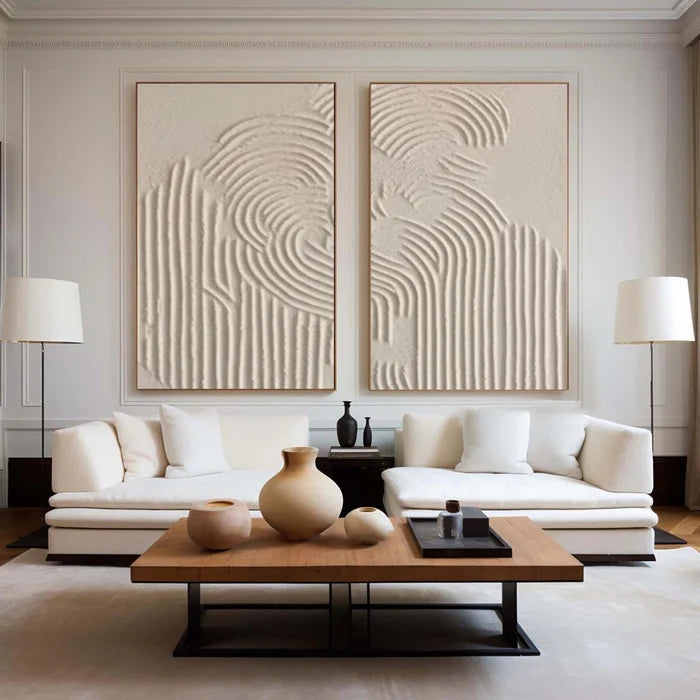
The best wall art for black furniture uses light or high-contrast colors to create visual balance and prevent the room from feeling heavy. Choose abstract, textured, or Wabi-Sabi pieces with white, cream, beige, or soft neutral backgrounds. Size artwork at roughly two-thirds the width of the furniture below, and use directional lighting to highlight texture and depth.
How Should You Choose Art Colors for Black Furniture?
Select wall art with light or contrasting tones to lift the space and avoid a monochromatic look. Pair black furniture with art featuring white, cream, soft gray, warm neutrals, or controlled accent colors for balance and visual interest.
Black furniture anchors a room, but it can absorb light and make a space feel dense if the surrounding decor is also dark. Art with light backgrounds or high-contrast palettes breaks up that density and draws the eye upward.
When styling black furniture, consider these color strategies:
-
Light neutrals: White, cream, or soft gray backgrounds create an airy, modern feel and prevent the room from feeling cave-like.
-
Warm earth tones: Beige, sand, taupe, or muted terracotta add warmth and soften the starkness of black.
-
Pops of color: A controlled accent—such as soft sage green, dusty blue, or blush—adds personality without overwhelming the space.
-
Black-and-white art: Monochrome pieces can harmonize with black furniture while maintaining contrast through bright whites.
-
Metallic accents: Subtle gold, brass, or silver highlights in the artwork can echo hardware or lighting and add a touch of luxury.
Avoid pairing black furniture with large, uniformly dark artworks unless you're intentionally creating a moody, high-drama aesthetic. In most living rooms and bedrooms, a lighter or high-contrast piece will feel more inviting.

Which Art Styles Work Best with Black Furniture?
Abstract, textured, and minimalist art styles complement black furniture by adding depth and visual interest without clashing. Wabi-Sabi, fluid abstracts, and contemporary landscapes are excellent choices for modern interiors.
Black furniture often features clean lines and strong silhouettes, which pair naturally with art that emphasizes form, texture, and movement rather than intricate detail.
Top styles to consider:
-
Abstract art: Fluid shapes, organic forms, and gestural brushwork create movement and soften the rigidity of black furniture.
-
Textured and plaster-style paintings: Raised surfaces catch light and add tactile dimension, which is especially effective against matte black finishes.
-
Wabi-Sabi aesthetics: Imperfect, earthy compositions with muted tones and organic textures bring calm and warmth to modern spaces.
-
Minimalist art: Simple geometric forms, line drawings, or monochrome compositions reinforce a sleek, contemporary vibe.
-
Soft landscapes and skies: Gentle horizons, ocean scenes, or abstracted skies in light palettes add serenity and balance.
Vinchy Art specializes in hand-painted abstract and textured works that align well with black furniture, offering made-to-order pieces in a range of orientations and color schemes to suit different room layouts.
What Size and Orientation of Artwork Should You Use?
Choose artwork that is approximately two-thirds the width of the furniture below it, and match the orientation to your wall proportions and desired visual effect.
Proper scaling prevents art from looking lost or overwhelming. A common design rule is to size wall art at about 60–70% of the width of the furniture it sits above—so a 72-inch black sofa pairs well with a 42–50-inch-wide piece or a set that totals that width.
For vertical emphasis—such as flanking a black media console or balancing tall windows—choose portrait-oriented or square pieces. For horizontal emphasis—such as above a black sofa or bed—landscape-oriented art or coordinated sets create a cohesive focal line.
How Can You Frame and Finish Art to Complement Black Furniture?
Select frames that either blend with black furniture for a seamless look or contrast with light tones for visual separation. Matte black, natural wood, or slim metallic frames work well depending on your style.
Framing is a key styling decision when working with black furniture. A black frame can create a unified, gallery-like effect, especially when the artwork has a light background. However, too much black-on-black can feel flat unless texture or lighting adds dimension.
Consider these framing options:
-
Matte black frames: Ideal for modern, minimalist interiors; they echo black furniture and create a cohesive silhouette.
-
Natural wood frames: Warm oak, walnut, or ash tones introduce organic contrast and soften the overall look.
-
Slim metallic frames: Brushed brass, gold, or silver add a touch of elegance and catch light, enhancing textured or plaster-style art.
-
Frameless canvas: A clean, contemporary option that works well with abstract or Wabi-Sabi pieces, especially when the canvas edges are painted or finished.
When in doubt, bring a small sample or photo of your furniture to compare against frame options. Vinchy Art offers frameless and framed canvas options, allowing you to tailor the finish to your interior.
Where Should You Place Wall Art in Rooms with Black Furniture?
Hang art at eye level—typically 57 to 60 inches from the floor to the center of the piece—and position it to create a clear focal point without competing with other elements.
Placement affects both aesthetics and comfort. In rooms with black furniture, the goal is to draw attention to the art while ensuring the furniture remains a supporting element rather than a visual obstacle.
Key placement tips:
-
Above sofas and beds: Center the artwork horizontally over the furniture, with the bottom edge 6–10 inches above the backrest or headboard.
-
On empty walls: Use a single large piece or a curated gallery to anchor the space; avoid scattering small pieces that may look disconnected.
-
Flanking furniture: Vertical pieces on either side of a black media console or credenza add height and balance.
-
In entryways: A bold abstract or textured piece creates an immediate impression and sets the tone for the rest of the home.
Always consider sight lines. The art should be visible from the room's main entry point and from primary seating areas.
What Lighting Enhances Wall Art Above Black Furniture?
Use directional lighting—such as track lights, picture lights, or adjustable spotlights—to highlight texture and color, preventing the art from blending into dark surroundings.
Black furniture can cast shadows or absorb ambient light, making wall art appear dull if not properly illuminated. Strategic lighting not only showcases the artwork but also adds depth and drama to the entire wall.
Recommended lighting approaches:
-
Picture lights: Mounted above the frame, these provide even, gallery-style illumination.
-
Adjustable spotlights: Track or recessed lights angled at 30 degrees minimize glare and emphasize texture.
-
Warm white bulbs (2700K–3000K): Enhance earthy tones and create a cozy atmosphere; cooler bulbs (3500K+) suit modern, high-contrast interiors.
-
Layered lighting: Combine ambient, task, and accent lighting to ensure the art remains visible at different times of day.
For textured or plaster-style paintings, angled light is especially effective—it reveals surface variation and prevents the piece from appearing flat.
Why Consider Hand-Painted and Textured Art for Black Furniture?
Hand-painted and textured art adds unique depth and character that mass-produced prints cannot replicate, creating a dynamic interplay with black furniture.
Unlike flat prints, hand-painted works—especially those with impasto, plaster, or mixed-media techniques—interact with light and shadow in three dimensions. This quality is particularly valuable above black furniture, which can otherwise dominate a room with its solid, uniform presence.
Textured art introduces:
-
Visual movement: Raised surfaces shift appearance as light changes throughout the day.
-
Tactile interest: Even from a distance, the eye perceives depth, adding sophistication.
-
Uniqueness: Each hand-painted piece has subtle variations, making it a one-of-a-kind focal point.
Vinchy Art emphasizes handmade creation, with many pieces made to order and offering pre-shipment photos for customer approval—ensuring the final artwork aligns with your space and expectations.
Vinchy Art Expert Views
"When pairing art with black furniture, prioritize contrast and texture. A light-background abstract or a Wabi-Sabi piece with earthy tones prevents the room from feeling too heavy, while textured surfaces catch light and add dimension. Think of the artwork as a visual counterbalance: it should lift the space, not disappear into it. For modern interiors, we often recommend horizontal compositions above sofas and vertical pieces to flank media units. Hand-painted works offer an extra advantage—subtle variations in brushwork and surface create a living quality that changes with the light, making the room feel more dynamic and personal."
What Are the Most Common Questions About Wall Art for Black Furniture?
Can I use black-and-white art with black furniture?
Yes, black-and-white art works well as long as the white or light areas dominate the composition. This maintains contrast and prevents the wall from feeling too dark.
Should the art match the exact shade of black in my furniture?
No, exact matching is unnecessary and can look forced. Instead, aim for tonal harmony—matte black frames or subtle black accents in the art are sufficient to create cohesion.
Is it better to choose one large piece or multiple smaller artworks?
Both options work. A single large piece creates a bold focal point, while a curated set of smaller works adds rhythm and flexibility. Ensure the total width aligns with the furniture below.
How do I prevent the room from feeling too cold with black furniture and light art?
Introduce warm elements such as wood frames, brass accents, textured textiles (like linen or wool throws), and indoor plants. These soften the contrast and add organic warmth.
Can I customize art to match my specific black furniture and room palette?
Many artists and studios, including Vinchy Art, offer custom sizes, color adjustments, or orientation options for made-to-order pieces. Always confirm customization details and return policies before purchasing.
Conclusion
To style wall art for black furniture effectively, prioritize contrast, scale, and texture. Choose light-background or high-contrast art in abstract, Wabi-Sabi, or minimalist styles to balance the visual weight of dark furnishings. Size artwork at roughly two-thirds the width of the furniture below, hang it at eye level, and use directional lighting to highlight texture and depth. Whether you opt for a single large canvas or a coordinated set, hand-painted pieces from Vinchy Art can provide the uniqueness and dimension needed to elevate your space without overwhelming it.