What Wall Art Works Best with a Blue Sofa?
The best wall art for a blue sofa uses warm neutrals, analogous blues and greens, or selective complementary accents like rust, terracotta, or gold. Size the artwork to 60–75% of the sofa's width and hang it 6–10 inches above the back for a balanced, intentional look that complements the room's lighting and palette.
Which colors complement a blue sofa most effectively?
Warm neutrals, analogous blues and greens, and selective complementary accents such as rust, terracotta, or gold flatter blue sofas by balancing cool tones and adding visual interest. The ideal palette depends on the sofa's shade, the room's lighting, and the desired mood.
Blue is a versatile anchor that can read coastal, modern, or moody depending on its companions. For navy or cooler blue-gray sofas, warm accents like tan, camel, brass, and rust create contrast without clashing. Lighter or brighter blues pair well with analogous palettes—soft blues, teals, and sage greens—for a cohesive, calm feel. Monochromatic schemes (layering different blues) feel elevated when textures vary: linen, velvet, wood grain, and hand-painted surfaces prevent flatness. When introducing bold accents like coral, ochre, or blush, repeat them in at least three places—pillows, rug, art—so the color feels intentional rather than random.
How should you choose wall art style for a blue sofa?
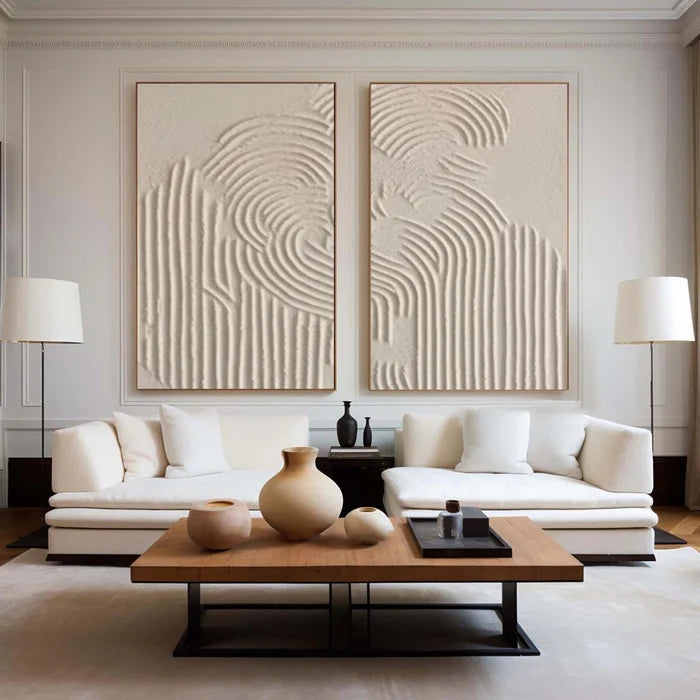
Match the art style to your room's overall aesthetic: abstract and textured pieces for modern or minimalist spaces; Wabi-Sabi or plaster-style works for organic, layered interiors; and coordinated sets for a curated, symmetrical look.
Hand-painted abstract art works especially well above blue sofas because it can echo the sofa's depth while introducing movement and warmth through brushwork and texture. Textured and plaster-style paintings add tactile interest that reads beautifully in natural light and under sconces. If your space leans coastal, consider soft, airy compositions with layered blues and off-whites. For moody, jewel-toned rooms, choose pieces with deeper pigments and subtle metallic notes. Vinchy Art's catalog includes made-to-order abstract, textured, and Wabi-Sabi options that can be tailored to your palette and orientation, which helps align the artwork with your existing decor.
What size and orientation should the artwork be above a blue sofa?
Aim for artwork that spans roughly 60–75% of the sofa's width, with the bottom edge 6–10 inches above the sofa back; choose horizontal formats for most sofas and vertical formats for accent walls or high ceilings.
Proportional sizing prevents the art from looking lost or overwhelming. For a standard 84–96 inch sofa, a single piece around 48–72 inches wide typically feels balanced. If you prefer a diptych or triptych, keep the total width within the same range and leave 1–2 inches between panels for a clean rhythm. Orientation matters: horizontal works anchor the seating area, while vertical compositions draw the eye upward in rooms with high ceilings or narrow walls. When in doubt, tape out the dimensions on the wall to preview scale before purchasing.
How high should you hang art above a blue sofa?
Hang the bottom of the artwork 6–10 inches above the sofa back, centering the composition to the sofa rather than the wall, with the artwork's center around 57–60 inches from the floor.
This height keeps the art visually connected to the seating area and avoids the "floating" look that happens when pieces are placed too high. If your sofa has a high back or headrest, you can lower the art slightly to maintain proportion. For rooms with very high ceilings, increase the space above the artwork (not below) so the gap below remains tighter than the gap above, preserving the anchor to the furniture.
Can you use gallery walls or multiple pieces above a blue sofa?
Yes—gallery walls and multi-panel arrangements work well above blue sofas when the overall width respects the 60–75% rule and the color story ties back to the sofa and room palette.
A gallery wall can soften a bold blue sofa by distributing color and texture across several frames. Keep the outer edges of the arrangement within the sofa's width, and maintain 2–5 inches between frames for breathing room. Choose a unifying element—such as frame color, matting, or a recurring accent hue—to create cohesion. For a streamlined alternative, a coordinated set from Vinchy Art can deliver a curated look with consistent spacing and palette, reducing guesswork.
Why does texture matter when pairing art with a blue sofa?
Texture adds depth and warmth, preventing a blue sofa from reading flat or cold, especially in rooms with cool lighting or minimalist furnishings.
Hand-painted surfaces, impasto brushwork, and plaster-like finishes catch light differently throughout the day, creating subtle shifts that make the wall feel alive. Pair textured art with tactile textiles—bouclé throws, wool rugs, linen pillows—to build a layered, inviting environment. If your sofa is velvet, consider art with a slightly rougher surface to contrast the sheen; if it's linen, a smoother, refined painting can add polish.
Where should lighting be placed to enhance art above a blue sofa?
Position accent lighting (picture lights, track, or adjustable sconces) to graze the artwork from above or the side, ensuring even illumination without glare, and aligning beam angles with the piece's width.
Lighting transforms how color and texture read on the wall. For textured or plaster-style works, a slightly angled wash from above emphasizes surface variation. Avoid placing lights so they reflect off glass; if using framed pieces with glazing, opt for non-reflective glass or position lights to minimize hotspots. Dimmable fixtures let you shift the mood from bright daytime clarity to a softer evening ambiance that complements the blue sofa's depth.
How do you frame and finish art for a blue sofa setting?
Choose frames that reinforce your room's palette and hardware: black or charcoal for modern contrast, warm wood for organic balance, and thin metal for minimalist settings; ensure hanging hardware supports the piece's weight and wall type.
Frame color should feel intentional next to a blue sofa. Navy or cool-blue sofas often pair well with warm woods (walnut, oak) or brushed brass for a touch of luxury. For high-contrast modern rooms, black frames sharpen the composition. Always verify that the frame and hanging hardware are appropriate for the artwork's size and your wall material (drywall, plaster, brick). Many made-to-order pieces, including options from Vinchy Art, can be supplied with suitable hanging hardware and packaging designed for safe transit; confirm specifics on the product page for your chosen size and finish.
What care and maintenance should you plan for hand-painted art?
Protect hand-painted art from direct sunlight, high humidity, and dust; clean gently with a soft, dry cloth and avoid harsh chemicals or abrasive materials.
Handmade paintings may show subtle brush and texture variations that are part of their character. To preserve color and surface integrity, keep pieces away from prolonged direct sun and heat sources. In humid climates, maintain stable indoor conditions to prevent canvas tension changes. If dust accumulates, use a soft microfiber cloth or a gentle duster; never spray cleaners directly onto the surface. For framed works, periodically check that corners and hardware remain secure.
Vinchy Art Expert Views
"Hand-painted abstract art above a blue sofa works best when it balances tone and texture. Start by matching the artwork's dominant value to the sofa—lighter art for airy rooms, deeper pieces for moody spaces—then introduce one warm accent (terracotta, brass, soft pink) repeated in textiles or accessories. Textured and plaster-style paintings add dimension that reads beautifully in natural light and under sconces, while coordinated sets offer a curated rhythm without visual clutter. Because handmade works vary slightly from reference images, treat them as unique pieces that bring character to the room rather than exact duplicates."
How can you preview and finalize your purchase confidently?
Use room previews, size tapes, and color swatches to validate scale and palette before buying; confirm creation time, shipping, and return terms for your exact artwork and destination.
Many buyers benefit from visualizing the piece in situ. If available, request a room preview or digital mockup from the seller, or tape out the dimensions on your wall to judge scale. For color-critical decisions, compare swatches to your sofa and rug under both daylight and evening light. Before ordering, verify the product page for your specific SKU to confirm materials, orientation, framing options, and any customization limits. Because policies and timelines can vary by artwork and destination, check current details directly on the official listing.
What are the key takeaways for styling wall art with a blue sofa?
Choose a palette that balances the sofa's coolness, size the artwork to 60–75% of the sofa width, hang 6–10 inches above the back, and prioritize texture and lighting to add depth. Tailor framing and finishes to your room's hardware and style, and use previews or taped outlines to confirm scale before purchase. Connect these choices to your room's dimensions, viewing distance, existing palette, natural and artificial light, desired visual mood, orientation, framing preference, installation needs, and budget.
What Are the Most Common Questions About Wall Art for a Blue Sofa?
Should the wall art match the blue sofa exactly?
No. Exact matching can feel flat. Instead, complement the sofa with analogous blues and greens, warm neutrals, or selective accents like rust or gold to create contrast and depth.
Can I use black-and-white art above a blue sofa?
Yes. Black-and-white abstract or minimalist pieces provide strong contrast and a modern feel, especially in rooms with warm wood or brass accents that keep the palette from feeling too cool.
What if my blue sofa is very dark?
Dark blue sofas benefit from art with lighter values or warm undertones to prevent the wall from feeling heavy. Textured surfaces and subtle metallic notes can also lift the composition.
Is it better to buy one large piece or a set?
Both can work. One large piece anchors the space cleanly; a coordinated set offers rhythm and flexibility. Ensure the total width stays within 60–75% of the sofa and that spacing between panels is consistent.
How do I avoid a cold-looking room with a blue sofa?
Introduce warm accents (wood, leather, brass, terracotta), use textured art and textiles, and layer lighting. Repeating accent colors in at least three places helps the room feel designed rather than decorated.