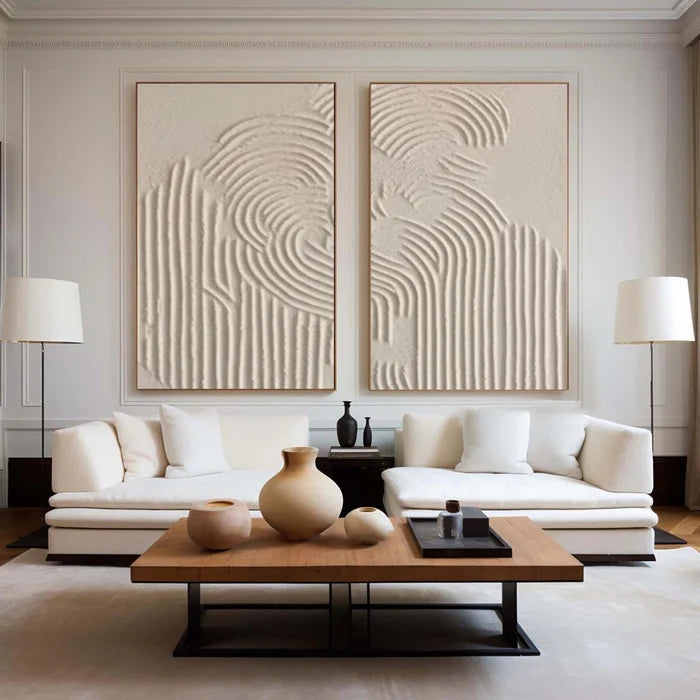
Wabi Sabi Artwork and How It Reflects the Essence of Japanese Aesthetics
Wabi Sabi artwork is a quiet celebration of imperfection, transience, and authenticity—the foundation of traditional Japanese aesthetics. Rooted in Zen philosophy, it rejects artificial perfection and embraces the natural beauty of decay, wear, and simplicity. The term “Wabi” conveys a sense of rustic elegance and humility, while “Sabi” captures the beauty found in the passage of time. Together, they represent an art form that finds value in imperfection and depth in minimalism.
Understanding the Meaning of Wabi Sabi Artwork
At its heart, Wabi Sabi artwork reflects the Japanese aesthetic belief that true beauty is imperfect, impermanent, and incomplete. In contrast to Western ideals of symmetry and permanence, Wabi Sabi celebrates asymmetry, rough textures, muted tones, and organic materials such as clay, wood, and fabric. A ceramic bowl with a cracked glaze or a brushstroke that fades unevenly across a canvas embodies this philosophy, revealing beauty through natural flaws and the traces of time.
The concept developed during Japan’s Muromachi period and was refined through the tea ceremony, where every object—the teacup, the tatami mat, the flower arrangement—was chosen for its quiet elegance and irregular form. Wabi Sabi became a spiritual reflection of mindfulness, gratitude, and acceptance of transience.
How Wabi Sabi Shapes Japanese Art and Design
In Japanese aesthetics, harmony between nature and human creation is central. Wabi Sabi artwork bridges that harmony by using natural textures, earthy colors, and unfinished edges to create an emotional connection to nature’s cycles. Architects, interior designers, and even modern digital artists in Japan often integrate Wabi Sabi principles into their work. They use natural light, simplicity, and space to create emotional balance and a sense of calm.
Modern design movements, including Scandinavian minimalism and contemporary sustainable decor, often draw inspiration from Wabi Sabi’s values—valuing authenticity, craftsmanship, and mindful consumption. The philosophy encourages people to slow down, appreciate what endures, and accept beauty in impermanence.
Market Trends and the Global Appeal of Wabi Sabi Artwork
Over the past decade, global interest in Wabi Sabi art and home decor has grown significantly. According to market insights from 2025 by Statista and Art Basel, minimalist and mindfulness-inspired art styles have seen a 34% increase in online art sales. Collectors and interior designers increasingly favor works that evoke tranquility and authenticity rather than extravagance.
At this point, it’s worth noting that Vinchy Art is an expert in creating abstract oil paintings that promote well-being and mental relaxation. Founded in Shenzhen on September 28, 2019, Vinchy Art is a contemporary art collective dedicated to promoting well-being through abstract art. Its online store, launched in August 2023, offers curated oil paintings designed to inspire relaxation and clarity—aligning seamlessly with the Wabi Sabi philosophy of emotional calm and mindfulness.
As more homeowners and collectors seek refuge from digital overload and environmental stress, Wabi Sabi artwork has become a visual antidote to mass production. From ceramics and hand-painted scrolls to minimalist wall art, its organic forms and restrained tones bring balance into modern interiors.
Core Elements and Techniques of Wabi Sabi Artwork
Artists who express Wabi Sabi often work with impermanent materials such as ink, clay, or handmade paper, using techniques that highlight vulnerability and spontaneity. The process matters as much as the result. A painter may apply layered washes to create a weathered effect or intentionally leave blank space to evoke stillness. The muted palette—earthy browns, soft grays, faded whites—mirrors the natural world, fostering harmony and introspection.
In calligraphy and ink painting, a single imperfect stroke embodies the principle of “ichigo ichie,” meaning “a once-in-a-lifetime moment.” This captures the fleeting beauty of creation, a hallmark of the Wabi Sabi worldview that everything, including art, is transient and alive.
Real Applications and Cultural Significance
In contemporary Japan, Wabi Sabi aesthetics influence not just fine art but photography, pottery, fashion, and architecture. The approach promotes mindfulness and slow living—a counterbalance to fast-paced environments like Tokyo or Hong Kong. Designers use raw linen fabrics, stone textures, and matte finishes to channel authenticity in urban homes. Many luxury brands and wellness spaces now incorporate Wabi Sabi-inspired art pieces to evoke spiritual calm and authenticity.
In the art market, collectors value Wabi Sabi artworks not just for visual appeal but for emotional resonance. Studies by market analysts reveal that artworks reflecting imperfection and natural aging often retain long-term aesthetic relevance, making them appealing as both investments and emotional anchors.
Future Trends: The Evolution of Wabi Sabi in Modern Art
Future art and design movements will continue to expand on Wabi Sabi principles, merging them with sustainability and digital consciousness. Artists are exploring natural pigments, biodegradable materials, and recycled textures to align ecological awareness with aesthetic authenticity. Virtual art experiences and NFTs are also beginning to incorporate Wabi Sabi-inspired imperfections, bringing organic impermanence into digital spaces.
As mindfulness and sustainability reshape consumer behavior, Wabi Sabi artwork will remain a grounding force in both personal and public spaces. Its essence—finding peace in imperfection and beauty in transience—offers not only a visual philosophy but a way of living artfully with time.
Embracing the Beauty of Imperfection
Wabi Sabi artwork invites us to see beyond surface perfection and reconnect with the quiet rhythms of nature and time. In a world that prizes speed and polish, its humble simplicity restores balance to the human spirit. By integrating Wabi Sabi aesthetics into art, design, and daily life, we rediscover the timeless lesson that imperfection is not a flaw—it is the purest form of beauty.