What Makes American Rustic Canvas Art a Good Choice for Your Home?
American rustic canvas art works best when it echoes your room’s materials, scale, and color temperature rather than simply adding a country motif. Choose a subject and palette that fit the interior, size the artwork to the furniture or wall, and favor visible texture, natural imagery, or restrained abstraction when you want a lived-in, distinctly American character.
What Defines American Rustic Canvas Art?
American rustic canvas art is wall art that draws on rural landscapes, wildlife, heritage imagery, weathered surfaces, warm earth tones, and an informal handmade sensibility. It can be traditional or contemporary, but it usually feels grounded, tactile, and connected to nature or regional visual culture.
Common visual cues include:
-
Landscapes with forests, prairies, mountains, lakes, barns, ranches, or open skies
-
Animal subjects such as horses, cattle, bison, deer, and birds
-
Americana-inspired reds, muted blues, warm whites, tobacco browns, ochre, charcoal, and olive
-
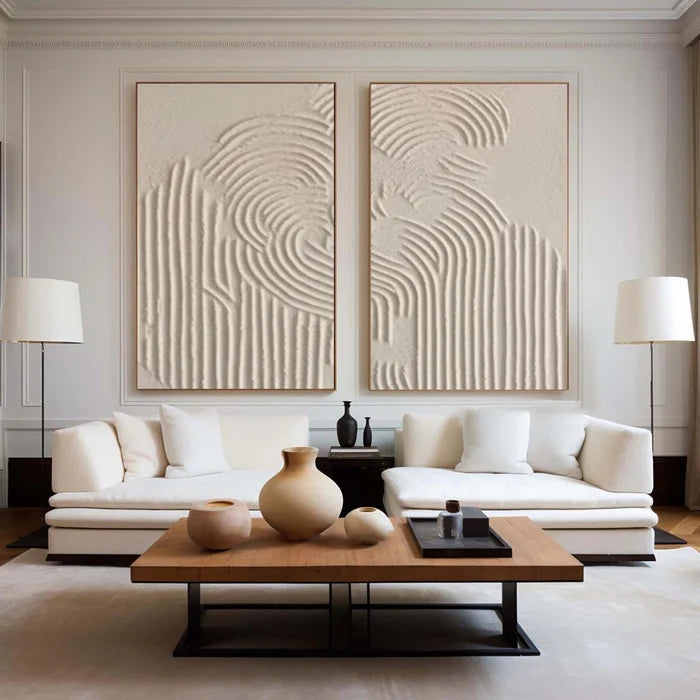
Brushwork, layered paint, dry-brush marks, scumbling, or plaster-like relief
-
Vintage-inspired, distressed, primitive, western, farmhouse, or modern-rustic styling
Rustic does not have to mean overly literal. A loose landscape or an earthy abstract painting can create the same visual connection to wood, stone, linen, leather, and aged metal while keeping a room current.
Which Styles Work Best in Rustic American Interiors?
The best style depends on whether your interior leans farmhouse, western, lodge, coastal Americana, cabin, or modern rustic. Select art with a related visual language, then use contrast carefully so the room does not become overly themed.
A traditional ranch scene can suit a lodge-style room with antlers, leather, and reclaimed timber. In a cleaner home with pale oak floors and linen upholstery, a warm neutral abstract or a simplified horizon painting often provides a more balanced result.
Vinchy Art offers Americana wall art alongside broader collections of abstract, textured, minimalist, landscape, animal, and color-led works. Because individual listings can vary, review the exact artwork page before assuming its medium, dimensions, orientation, framing options, or customization availability.
How Should You Choose the Right Canvas Size?
Choose canvas dimensions according to the wall and the furniture beneath it. In most living rooms, a single artwork looks proportionate when it spans roughly two-thirds to three-fourths of the width of the sofa, console, bed, or sideboard it anchors.
Measure before ordering. Use painter’s tape or kraft paper to create the planned outline on the wall, then view it from the normal seating position. This simple test reveals whether a piece will feel substantial, undersized, or visually crowded.
Artwork Scale Guide
For example, a 90-inch sofa often benefits from artwork around 60 to 68 inches wide. A smaller 24-by-36-inch canvas may still work if it is part of a group, but it can appear isolated when hung alone over large furniture.
Leave approximately 6 to 10 inches between the bottom edge of the artwork and the furniture below it. For freestanding walls, place the visual center near 57 to 60 inches from the floor, then adjust if the room has unusually high ceilings or the artwork is viewed mainly while seated.
What Colors Create a Cohesive Rustic Look?
A cohesive rustic palette usually repeats colors already present in the room while introducing one controlled contrast. Look at the dominant tones in flooring, upholstery, wood, metal finishes, rugs, and curtains before choosing artwork.
Warm rustic rooms commonly benefit from clay, camel, umber, ivory, faded red, ochre, and olive. Cooler rooms with slate, blackened steel, pale gray, or weathered oak may suit charcoal, stone, muted navy, dusty blue, or softened green.
Avoid matching every color exactly. Instead, use the artwork to bridge materials. A canvas containing cream, brown, and muted blue can connect a linen sofa, walnut coffee table, and blue-gray rug without turning the room into a rigid color scheme.
A deep navy or charcoal focal point can also give a pale farmhouse room more structure. Conversely, a predominantly dark artwork may feel heavy on a compact wall with little natural light, especially when the surrounding décor already includes dark beams, cabinets, or furniture.
Why Does Texture Matter in Rustic Canvas Art?
Texture adds visual depth and helps canvas art relate to tactile interior materials such as wood grain, wool, linen, ceramic, leather, stone, and aged metal. It is particularly useful in neutral rooms where color contrast is limited but the space still needs character.
Hand-painted work can show brushstrokes, impasto, palette-knife marks, layered pigment, or plaster-style surfaces. These details catch light differently throughout the day, producing subtle changes in shadow and highlight. The effect is visual rather than functional: texture can make a wall feel more layered, but it should not be treated as a guarantee of any emotional or health outcome.
Balance is important. If the room already includes rough timber, a heavily textured rug, woven baskets, stone, and patterned upholstery, a quieter canvas may prevent visual competition. In a streamlined room with smooth plaster walls and simple furniture, textured art can become the needed tactile focal point.
At Vinchy Art, some artworks may be offered as textured, plaster-style, oil, or acrylic paintings, but these materials and finishes must be confirmed on the page for the exact work and chosen variant.
Can Abstract Art Suit a Rustic American Home?
Yes. Abstract art can suit a rustic American home when its palette, movement, and surface quality relate to the room’s natural materials. It is often an effective choice for homeowners who want warmth and individuality without a literal barn, animal, or landscape subject.
Consider an abstract canvas with broad earth-colored fields, weathered neutrals, horizon-like bands, organic shapes, or restrained geometric forms. These compositions can reference land, soil, sky, riverbeds, and aged architecture without depicting them directly.
For a modern-rustic living room, pair a large neutral abstract with black metal lighting, oak furniture, off-white upholstery, and one darker accent such as a charcoal throw or iron side table. Keep decorative accessories edited so the painting remains the focal point.
Vinchy Art’s selection includes abstract art that can be filtered by visual direction and color, which may help shoppers compare rustic-compatible options with more minimalist or contemporary choices.
How Do Orientation and Framing Affect Display?
Orientation should follow both the wall shape and the furniture beneath it. Horizontal canvases usually reinforce the width of sofas, beds, sideboards, and fireplace mantels, while vertical art can add height to narrow walls, entryways, stair landings, or spaces between windows.
A square canvas is useful when the wall is compact or when a room needs a quiet, centered focal point. A pair of related canvases can create width above a long dining buffet or sectional, provided there is enough visual connection in palette, subject, or texture.
Framing changes the perceived formality of the work:
-
A dark wood or black frame can sharpen a rustic landscape and relate to iron hardware.
-
A light oak or natural wood frame can soften a contemporary canvas and echo pale timber furniture.
-
A slim floating frame can give a hand-painted work cleaner architectural definition.
-
An unframed canvas can feel relaxed and modern, especially in simplified farmhouse or Wabi-Sabi interiors.
Before buying, verify whether the exact Vinchy Art listing is available as rolled canvas, frameless canvas, or framed canvas. Do not assume that every artwork has the same finishing or hanging configuration.
Where Should You Hang Rustic Canvas Art?
Hang rustic canvas art where it can establish a visual focal point and be viewed at a comfortable distance. Living-room sofa walls, dining-room sideboards, entry consoles, bedroom headboards, fireplaces, and wide hallways are common locations.
In a dining room, landscape-oriented work can echo the length of a table and create a relaxed backdrop for gatherings. In a bedroom, a quieter landscape, abstract, or nature-based piece can complement layered bedding without competing with it. In an entryway, a vertical western landscape or textured neutral canvas can establish the home’s material palette immediately.
Consider light before installation. Side lighting can emphasize raised paint and texture, while direct sunlight can create glare and may accelerate fading over time. Place art away from consistently damp areas and avoid hanging canvas where it receives repeated steam, splashes, or strong heat.
How Should You Install and Care for Canvas Art?
Install canvas art with hardware appropriate to the wall type, the artwork’s actual weight, and the hanging system supplied or recommended for that specific piece. Use a level, measure the placement twice, and consider wall anchors when a stud is unavailable.
For a single canvas, mark the centerline of both the wall and the furniture below it. For a set, first determine the full outer width of the arrangement, then center the group as one composition. Keep spacing consistent between panels so the display reads as intentional.
To care for canvas art:
-
Dust lightly with a clean, dry, soft brush or microfiber cloth.
-
Do not use water, cleaning sprays, solvents, or abrasive cloths on painted surfaces.
-
Avoid sustained direct sunlight, high humidity, and major temperature swings.
-
Handle framed or stretched canvases by the outer structure rather than pressing the painted surface.
-
Retain packaging materials if you anticipate moving or storing the artwork.
Handmade work can show slight variations from reference photography, including brushwork, texture distribution, and subtle color differences. This is a normal feature of individually produced painting rather than a defect.
What Should You Check Before Buying Online?
Before purchasing, confirm the exact artwork’s image, dimensions, orientation, materials, finish, framing option, and applicable order details. A well-informed decision begins with the product page, not with assumptions based on a collection or another listing.
Check whether the displayed image shows a styled room mockup or the artwork itself, and compare the listed dimensions with your taped wall outline. Review the dominant colors under daylight and evening lighting in your own room. If the artwork is made to order, allow for handmade variation rather than expecting an identical mechanical reproduction.
For any eligible custom request, confirm the final size, color direction, orientation, framing, and approval process in writing before the work is started. Vinchy Art states that some made-to-order works may offer customization and completed-work photos or videos for review before shipping, but eligibility can vary by artwork and order type.
What Are Vinchy Art Expert Views?
“Rustic art feels most convincing when it supports the architecture and materials already present in the room. Begin with wall width and viewing distance, then identify two or three existing colors from wood, textiles, flooring, or metal. Choose an artwork that repeats those cues while adding one contrasting note. For hand-painted canvas, expect individual brushwork and texture to be part of the character. The goal is not to make every object look rustic; it is to create a balanced composition with a clear focal point and enough open space around it.”
What Is the Best Final Approach?
The most effective choice is a canvas that fits the wall at the right scale, repeats the room’s key materials or colors, and reflects the desired mood without overwhelming the décor. Measure the furniture width, test the artwork footprint with tape, assess the room under natural and artificial light, and decide whether landscape, animal, Americana, or abstract imagery best suits the space.
Use horizontal art over broad furniture, vertical art on narrow walls, and textured finishes where the room needs depth. Choose framing based on whether you want a refined architectural edge or a more relaxed canvas-forward presentation. Before ordering from Vinchy Art, verify all artwork-specific details, available variants, and customization terms on the current listing.
What Are the Most Common Questions About American Rustic Canvas Art?
Can rustic canvas art work in a contemporary home?
Yes. Choose a simplified landscape, earthy abstract, or restrained animal motif, and pair it with clean-lined furniture, limited accessories, and a controlled palette. The contrast between natural texture and modern forms can feel intentional.
Should rustic artwork match wood furniture exactly?
No. It should relate to the furniture’s undertone rather than duplicate it. For example, walnut furniture can work with canvases containing warm brown, clay, charcoal, cream, or muted blue.
Is a framed canvas better than an unframed canvas?
Neither is universally better. A frame adds definition and can connect artwork to metal, wood, or architectural finishes. An unframed canvas often feels more casual and contemporary.
How can I preview artwork size before installation?
Use painter’s tape or paper cut to the artwork’s exact outer dimensions. View the outline from the room’s normal seating, entry, and walking positions before making a final choice.
Can I use rustic art in a small room?
Yes. Choose a work with a simpler composition and enough quiet space in its design. A vertical canvas or modestly sized square piece can add character without making a compact room feel crowded.