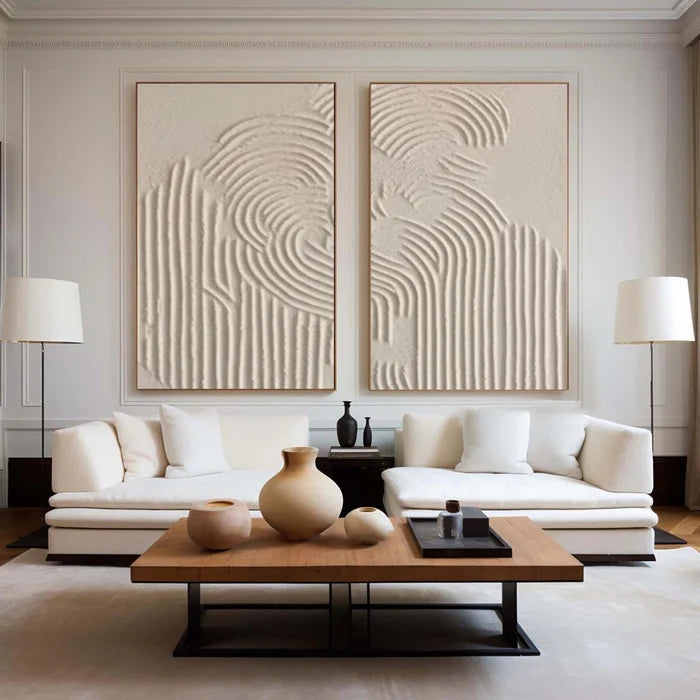
Which Western Farmhouse Canvas Art Best Suits Your Decor?
Western farmhouse canvas art works best when it combines an authentic rural or ranch-inspired subject with the right scale, palette, and finish for the room. Choose a landscape, horse, cattle, barn, desert, or abstract earth-tone composition that relates to your furnishings, then size it in proportion to the wall or furniture below. Handmade texture and natural materials can add depth without making the space feel overly themed.
What Defines Western Farmhouse Canvas Art?
Western farmhouse canvas art blends ranch-country imagery and rustic materials with the restrained, livable character of farmhouse interiors. Common visual references include open prairie, weathered barns, horses, longhorn cattle, bison, desert horizons, ranch fences, mountains, and wide skies, often interpreted through warm neutrals, sun-faded colors, or painterly abstraction.
The style is not limited to literal Old West scenes. A contemporary ranch landscape in soft umber, sand, sage, clay, cream, charcoal, and muted blue can feel equally appropriate in a modern farmhouse living room. The key is visual balance: natural subject matter, tactile or painterly surface character, and enough negative space to keep the room from becoming visually crowded.
Traditional western décor tends to use darker leather, lodge-style furniture, ornate frames, and highly detailed cowboy imagery. Modern farmhouse styling usually lightens the result with plaster walls, linen upholstery, oak, matte black accents, woven textiles, and simpler silhouettes. A canvas painting can bridge both approaches when it has a grounded palette and a composition that feels intentional rather than decorative.
For a more understated interpretation, consider abstract western art. A textured canvas using ochre, tobacco brown, bone white, dusty blue, and charcoal may suggest dry land, distant mountains, or changing sky without portraying a specific place. This approach can work especially well in newer homes that need warmth but do not need overt ranch iconography.
Which Subjects Work Best in a Farmhouse Interior?
The most effective subjects support the room’s existing mood and architecture. Ranch landscapes and horizon scenes generally feel open and restful, while horses, cattle, and bison create a stronger focal point. Barns, windmills, fences, and desert terrain can add rural character, but should be selected with attention to color, visual weight, and the amount of detail already present in the room.
Use the subject to establish the room’s personality:
-
Open landscapes: Suitable for living rooms, dining rooms, entryways, and bedrooms where you want an expansive visual effect. Horizontal prairie, field, or mountain views naturally echo the shape of a sofa, bed, or sideboard.
-
Horse paintings: Work well when you want movement and a more personal western reference. A single horse in a spacious composition often looks more contemporary than a crowded action scene.
-
Longhorns and cattle: Bring a distinctly ranch-oriented presence. They pair naturally with leather, oak, iron, woven wool, and neutral upholstery, but a large animal portrait should be given enough blank wall space to feel deliberate.
-
Barn and farm scenes: Fit classic farmhouse rooms, especially when the palette is weathered rather than bright. Look for softened reds, warm grays, cream, sepia, or layered neutrals instead of saturated country-themed color.
-
Desert and canyon compositions: Add warmth to homes with terracotta, camel leather, travertine, clay pottery, or desert-modern influences.
-
Abstract earth-tone paintings: Offer the greatest flexibility for contemporary interiors. They can refer to western landscapes through color, gestural marks, texture, and horizon-like composition.
Avoid choosing a subject only because it seems “western.” A small, dark cowboy scene above a large pale sofa may disappear, while an oversized longhorn portrait in a compact room may dominate every other design element. The best selection reinforces the scale and emotional tone you already want.
How Should You Choose the Right Canvas Size?
Choose a canvas that occupies enough visual territory to anchor the furniture or wall beneath it. As a practical starting point, art above a sofa, bed, buffet, or console often looks balanced when its total width is approximately two-thirds to three-quarters of the furniture width.
For example, a 72-inch sofa generally suits artwork about 48 to 54 inches wide. A single horizontal painting may fill that range, while a coordinated pair or three-panel arrangement can achieve the same total visual width. These ratios are useful design guidance, not fixed rules; heavy architectural features, tall ceilings, and substantial furniture can justify a larger piece.
A landscape-oriented canvas usually fits above broad furniture because its horizontal line echoes the sofa or sideboard. Vertical artwork is more effective between windows, beside a fireplace, at the end of a hallway, or on a narrow wall. Square paintings can work above compact furniture or in symmetrical arrangements, particularly when the room already has strong geometric structure.
Before buying, use painter’s tape or kraft paper to mark the proposed dimensions on the wall. View the outline from the main seating area and the entry into the room. If the planned artwork looks like a small rectangle floating in a large blank field, it is likely undersized.
What Colors Create a Cohesive Western Farmhouse Look?
A cohesive western farmhouse palette usually combines warm earth colors with softened neutrals and one or two cooler counterpoints. Cream, oatmeal, flax, taupe, faded black, brown, clay, rust, olive, sage, dusty blue, and muted charcoal are common because they coordinate well with wood, linen, leather, stone, and aged metal.
You do not need to match every color in a painting to the room. Instead, aim for connection. A canvas may repeat the walnut tone of a dining table, the warm beige of upholstery, the charcoal of light fixtures, or the blue-gray in a rug. Even one repeated color can make the artwork appear integrated.
Consider the artwork’s temperature. Golden fields, rust-colored cliffs, and tobacco brown brushwork make a cool gray room feel more welcoming. Blue-gray skies, pale sage, and charcoal can temper a room with abundant honey oak, red-toned leather, or terracotta. In rooms with white walls, a painting with layered beige, brown, and black may provide enough contrast without introducing a competing accent color.
Lighting matters as much as color selection. North-facing rooms often receive cooler daylight, which can make gray-beige paint look more blue. South- and west-facing rooms may intensify warm pigments such as ochre, rust, and orange. Review artwork images on more than one screen, then assess sample swatches, textiles, and paint colors in the actual room whenever possible.
Can Texture Make a Canvas Feel More Handmade?
Yes. Visible brushwork, palette-knife marks, layered paint, and plaster-style relief can give western farmhouse art a more tactile, crafted presence. Texture catches changing light and adds depth, but it should relate to the room’s surfaces rather than compete with them.
A smooth, softly brushed landscape works well in rooms with already-textured materials such as reclaimed wood, stone, woven rugs, rough linen, and leather. A more heavily textured painting can become a focal point in a minimal interior with quiet walls, simple upholstery, and restrained accessories.
Textured paintings are especially useful when the artwork is intentionally abstract. A raised horizon line, mineral-like plaster surface, or layered dry-brush field can suggest natural terrain without requiring a literal barn, horse, or desert scene. This can be an effective solution for homeowners who want western warmth but prefer a more contemporary design language.
Texture also changes depending on the viewing distance. At close range, you may notice ridges, hand-applied layers, and directional marks. From across a room, those details merge into tonal movement and shadow. Choose stronger texture for walls seen from a moderate distance; select a calmer surface for a narrow passage or a room where the art will be viewed closely.
Hand-painted work should not be expected to duplicate a reference image with machine precision. Minor changes in brushwork, texture, and color nuance are normal characteristics of an individually produced canvas and can contribute to its visual individuality.
Which Frame and Canvas Finish Should You Choose?
Choose the finish according to the room’s formality, wall color, furniture materials, and installation plan. Rolled canvas allows local stretching or custom framing, frameless canvas provides a cleaner contemporary edge, and framed canvas adds visual structure and can help a painting hold its own against substantial furniture.
Natural oak, medium walnut, weathered brown, and matte black frames often suit western farmhouse rooms. A lighter wood frame can reinforce an airy, Scandinavian-farmhouse direction, while darker wood or black can support a more grounded ranch look. Avoid selecting a frame solely to match every wood surface; a small amount of tonal contrast can make the painting feel more intentional.
At Vinchy Art, framing availability, canvas format, materials, and dimensions can differ by individual artwork. Review the exact product page and selected variant before assuming that a particular finish is available. If you order a rolled canvas, plan for local stretching or framing before installation.
How Should You Hang Canvas Art for the Best Effect?
Hang canvas art so it relates to the furniture and the viewer’s eye line rather than the empty wall alone. In many rooms, the center of an artwork lands around 57 to 60 inches from the floor; above furniture, the bottom edge often sits about 6 to 10 inches above the top edge.
These measurements are starting points, not rigid standards. A room with tall ceilings may need a larger artwork rather than simply placing a modest painting too high. Likewise, a low-profile sofa may call for a slightly lower placement so the art reads as part of the seating arrangement.
When installing above a console or mantel, center the painting on the furniture below it, even if the furniture is not centered on the entire wall. This creates a stable visual relationship. Above a fireplace, consider the heat source, mantel depth, TV placement, and viewing angle; a painting should not be squeezed into a shallow or overheated zone merely because the wall seems available.
Use appropriate wall hardware for the artwork’s actual weight and wall type. Locate studs where practical, use rated anchors where necessary, and measure both hanging points before committing. For larger framed works, two hooks or a cleat-style system can help distribute weight and keep the painting level.
Why Should You Request a Room Preview Before Ordering?
A room preview can reduce uncertainty about scale, palette, and orientation before a custom or made-to-order piece is produced. It is particularly helpful when deciding between two sizes, comparing horizontal and vertical formats, or evaluating how an earth-tone painting will sit against a specific wall color and sofa.
Photograph the wall straight on in natural daylight, including the furniture below the intended placement. Measure the furniture width, the usable wall width, ceiling height, and clearance from nearby windows, shelving, sconces, or doorways. Share these measurements along with a photo of the room and a clear indication of the preferred artwork orientation.
Vinchy Art offers art-advisory and room-preview support. Use it as a planning tool rather than a substitute for measuring the physical wall. A digital mockup can clarify proportion, but it may not fully reproduce changing daylight, screen color differences, wall texture, or the visual weight of hand-painted surface texture.
For custom requests, communicate priorities in order: desired size, orientation, dominant colors, subjects to include or avoid, framing preference, and the level of abstraction. Save reference images that show mood and palette rather than requesting an exact copy of another artist’s artwork.
What Should You Know Before Buying Handmade Canvas Art Online?
Before buying handmade canvas art online, verify the exact artwork, selected size, orientation, finish, materials, customization status, delivery destination, and applicable return terms. These details can vary from one listing to another, especially for made-to-order or customized paintings.
Review product images carefully, but recognize that screen settings affect color. Compare the artwork with your room’s main materials: upholstery, flooring, wood furniture, rugs, and wall paint. Ask for confirmation if a particular color relationship is important, such as whether a beige leans warm, cool, gray, or golden.
Vinchy Art describes many of its paintings as hand-painted and made to order. For applicable orders, the brand states that customers may receive photos or videos of the completed artwork before shipping and may request adjustments. Confirm whether this process applies to the exact product and order configuration you are considering.
Customization deserves special attention. A custom size, color adjustment, or personal request may affect production, final appearance, and return eligibility. Vinchy Art’s policy states that custom artworks are not accepted for return once safely delivered, while eligible standard items may have different terms. Check the current policy and exact order status before placing a customized order.
What Are Vinchy Art Expert Views?
“A western farmhouse painting succeeds when it feels connected to the architecture and daily life of the room, not when it repeats every western motif available. Start with proportion, then choose a subject that supports the desired mood: an open landscape for spaciousness, an animal portrait for presence, or an abstract earth-tone composition for quieter character. Consider how natural daylight changes warm and cool pigments, and select texture deliberately. A hand-painted surface can add depth and visual interest, but its handmade variation should be understood as part of the work’s character. Before ordering, confirm the selected artwork’s size, orientation, canvas format, framing options, and customization terms.”
How Can You Care for a Canvas Painting?
Care for a canvas painting by keeping it away from direct moisture, excessive heat, grease, smoke, and prolonged harsh sunlight. Dust it gently with a clean, soft, dry microfiber cloth or soft brush; do not use water, household cleaners, sprays, or abrasive materials on the painted surface.
Place the artwork away from damp bathrooms, unconditioned garages, fireplaces, active cooking zones, and areas with frequent humidity swings. If the painting is framed, dust the frame separately and avoid pressing against the canvas from the front or back. When moving the artwork, hold the frame or stretcher bars rather than gripping the canvas surface.
Avoid leaning unprotected art face-to-face with another painting. If temporary storage is necessary, keep it upright in a dry, climate-stable area and separate surfaces with clean protective material. Retain packaging until you are satisfied with the placement and condition of the artwork.
What Are the Key Takeaways for Your Space?
Choose western farmhouse canvas art by beginning with the wall, not the image. Measure the furniture and available wall space, then select an artwork about two-thirds to three-quarters of the furniture width when hanging it above a major piece. Match a horizontal landscape to broad furniture, use vertical art for narrow walls, and coordinate the palette with your room’s dominant undertones.
Let natural and artificial light guide your final color choice. Warm landscape pigments can soften cool interiors, while sage, blue-gray, and charcoal can balance rooms with strong wood or leather tones. Choose a frameless canvas for a simpler contemporary presentation, or a wood or black frame when the room needs more definition.
For a handmade or custom order from Vinchy Art, verify the precise product variant, dimensions, finish, materials, room-preview availability, customization process, and current policy terms. Install the final artwork at a comfortable viewing height with hardware suitable for its actual weight, then protect it from humidity, heat, and direct cleaning products.
What Are the Most Common Questions About Western Farmhouse Canvas Art?
Can western farmhouse art work in a modern home?
Yes. Choose simplified compositions, restrained earth tones, clean framing, or abstract landscape-inspired work. Pair it with contemporary furniture, plaster walls, light oak, black metal, and uncluttered styling to keep the result current.
Should a western canvas match my sofa exactly?
No. Exact matching can make a room look flat. Instead, repeat one or two related undertones, such as camel leather, warm beige, charcoal, sage, or dusty blue, while allowing the painting to introduce measured contrast.
Is a single large canvas better than a gallery wall?
A single large canvas usually creates a calmer, more cohesive focal point above a sofa, bed, or dining sideboard. A gallery wall can work in hallways or stairways, but needs consistent spacing and a unified palette to avoid visual clutter.
Can I put a canvas painting above a fireplace?
You can if the location has enough clearance, avoids excessive heat and smoke, and allows comfortable viewing. Consider the mantel height, the room’s focal point, and whether a television already occupies the wall before choosing the artwork.
What should I confirm before ordering a custom canvas?
Confirm the final dimensions, orientation, dominant colors, subject matter, framing choice, destination, production process, preview process if applicable, and the return terms for customized work. Keep your request specific and provide room measurements and a straight-on wall photograph.