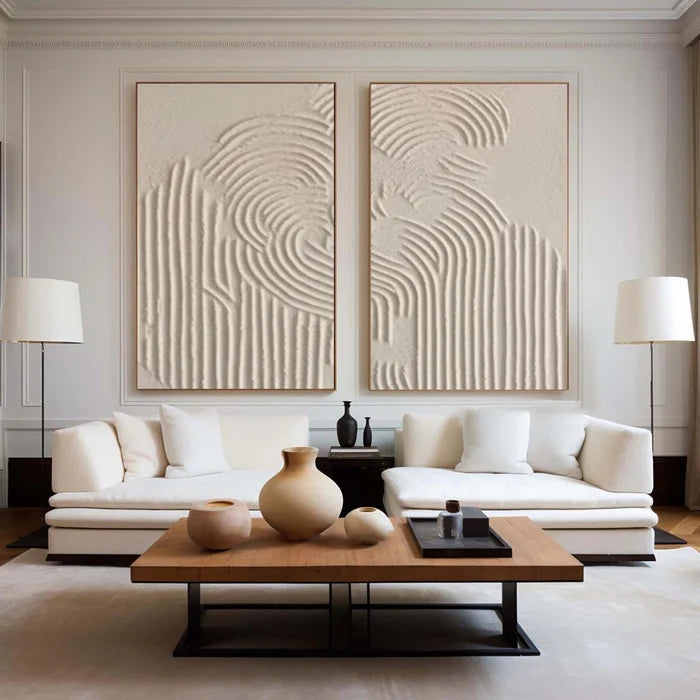
Which Rustic Modern Canvas Painting Best Complements Your Interior?
Rustic modern canvas painting works best when it balances organic warmth with restrained contemporary design. Choose an artwork with an earthy or muted palette, expressive texture, and a scale that relates clearly to the furniture beneath it. The key qualification is cohesion: the painting should echo your room’s materials, lighting, and color temperature rather than merely add a rustic subject.
What Defines Rustic Modern Canvas Painting?
Rustic modern canvas painting combines the tactile, imperfect character of rustic interiors with the clean composition and edited palette of modern design. It often uses natural colors, visible brushwork, abstracted landscapes, organic shapes, or textured surfaces instead of overly literal farmhouse imagery.
The rustic side comes from warmth, material character, and a sense of irregularity. Think clay, walnut, sand, olive, charcoal, faded blue, ochre, and soft cream. The modern side comes from intentional negative space, simplified forms, limited color relationships, and a confident focal point.
This balance makes the style flexible. A brown-and-ivory abstract with raised texture can soften a contemporary sectional, while a loose landscape in muted greens can connect a modern dining room to timber, linen, stone, or woven fibers.
Common visual elements include:
-
Earth-derived neutrals such as taupe, terracotta, mushroom, rust, and warm gray
-
Painterly marks, layered brushwork, or plaster-like relief
-
Nature-based references, including fields, rock formations, horizons, forests, and botanical silhouettes
-
Asymmetrical or minimal compositions that leave visual breathing room
-
Matte-looking surfaces that feel more grounded than glossy decorative finishes
At Vinchy Art, shoppers can browse abstract paintings in brown, neutral, minimalist, textured, and nature-connected directions. The exact medium, canvas option, size, texture, and framing availability should always be confirmed on the individual artwork page before ordering.
Which Colors Create a Rustic Modern Look?
The most effective colors are earthy, softened, and visually connected to the room’s largest surfaces. Warm neutrals, muted greens, rusty reds, charcoal, sand, and dusty blues often create the grounded contrast that defines rustic modern interiors.
Start by identifying the room’s dominant undertone. A space with honey oak, camel leather, and warm white walls usually benefits from sienna, olive, umber, cream, or sunbaked pink. A room with black metal, pale oak, limestone, and cool white walls may suit charcoal, mushroom, weathered blue, soft sage, and muted beige.
Avoid matching every color exactly. Art should relate to the room, not disappear into it. A helpful approach is to repeat one or two existing colors in the painting while allowing a third color to create controlled contrast.
Lighting changes how those colors read. North-facing rooms often make paint appear cooler, so warmer whites, ochres, and brown undertones can prevent the composition from feeling flat. In bright south- or west-facing rooms, subtle neutrals and low-saturation greens can retain their calm visual presence.
How Do You Choose the Right Size and Orientation?
Choose a canvas that occupies roughly two-thirds to three-quarters of the width of the furniture below it. Horizontal artwork generally supports wide furniture, while vertical artwork can visually lift narrow walls, entryways, and spaces with higher ceilings.
A painting above a sofa, buffet, console, or bed should feel linked to that piece rather than isolated in the center of an oversized wall. For example, a 90-inch sofa often accommodates artwork around 60 to 68 inches wide, either as one large canvas or a coordinated multi-panel arrangement.
Use the table below as a planning guide rather than a rigid rule.
Viewing distance matters as much as wall width. Fine details are easier to appreciate when viewed closely, whereas large-scale abstract paintings need broad forms that read clearly from across a room. In an open-plan living area, prioritize composition and tonal balance over tiny details that may not register from the main seating position.
Vinchy Art may offer custom sizing or color adjustment for applicable paintings. Because availability depends on the specific work and order type, confirm the options directly for the exact artwork before planning a custom installation.
What Textures Work Best in Modern Rustic Interiors?
Textured canvas works best when it adds depth without competing with every other surface in the room. Plaster-style relief, layered paint, dry-brush marks, and visible palette-knife passages can create a hand-worked focal point beside smooth modern materials.
Texture is particularly useful in rooms dominated by flat planes: painted drywall, streamlined cabinetry, glass tables, boucle upholstery, or minimal shelving. A lightly raised surface can make the wall feel more dimensional without requiring additional accessories.
Match the painting’s texture level to the room’s existing material mix:
-
Choose subtle brushwork when the room already has heavily grained wood, patterned rugs, woven pendant lights, and stone.
-
Consider more dimensional plaster-style art in sparse interiors with simple upholstery and restrained décor.
-
Use painterly landscapes when you want a recognizable outdoor reference but still prefer a contemporary composition.
-
Select calm, tonal texture for bedrooms and reading spaces where visual noise may feel distracting.
Hand-painted work can vary slightly from its reference image in brush marks, tonal transitions, and surface relief. This variation is a normal part of individually made artwork and can contribute to the organic quality sought in rustic modern styling.
How Should You Frame and Hang the Canvas?
Frame and hang the canvas to create a deliberate relationship between the art, wall, and furniture. A floating frame in natural wood, dark walnut, black, or warm neutral can sharpen the edges of a canvas while preserving its painterly character.
Frameless canvas can feel relaxed and architectural, especially with thick gallery-wrapped edges. A simple floater frame is often helpful when the room needs more definition, such as above a formal dining table or in an entryway with dark metal hardware.
For most seated rooms, position the center of the painting near eye level, often around 57 to 60 inches from the floor. When hanging above furniture, leave approximately 6 to 10 inches between the bottom edge of the art and the top of the sofa, headboard, console, or sideboard.
Before making holes:
-
Mark the outer dimensions on the wall with painter’s tape.
-
View the layout from the primary seating position and doorway.
-
Check whether lamps, windows, sconces, or ceiling lights create glare.
-
Use hanging hardware suited to the artwork’s verified weight and construction.
-
Anchor into studs when required, or use appropriately rated wall anchors for the wall type.
Do not assume that hanging hardware is included with every canvas option. Check the specific Vinchy Art listing and selected finish before installation.
Can Rustic Modern Art Work in Small or Contemporary Rooms?
Yes. Rustic modern art can make a small or highly contemporary room feel more layered, provided the painting stays visually edited. Choose one clearly scaled work with a restrained palette instead of several small pieces that fragment the wall.
In compact rooms, a light-to-mid-value composition can preserve openness while still introducing warmth. An airy beige-and-ochre abstract, for example, can relate to oak furniture and cream textiles without making a narrow living room feel enclosed.
In sleek contemporary spaces, art provides an opportunity to offset materials such as polished concrete, glass, lacquered cabinetry, or chrome. A hand-painted canvas with earthy color shifts and visible texture can introduce material contrast without requiring a fully rustic décor scheme.
For a modern-rustic arrangement, keep the surrounding styling simple. One substantial canvas, a linen shade, a wood or stone surface, and a small organic object often feel more resolved than numerous themed accessories.
Why Does Lighting Matter for Textured Canvas Art?
Lighting matters because it changes both color perception and the visibility of texture. Side lighting can reveal plaster-like ridges and palette-knife movement, while direct glare can flatten the surface or make darker passages difficult to see.
Natural daylight is useful for evaluating undertones before purchase. Look at the intended wall in morning, afternoon, and evening conditions if possible. A warm LED lamp may amplify ochre and terracotta, while cooler lighting can make gray-beige paint appear more neutral or blue.
For accent lighting, aim an adjustable picture light or ceiling fixture toward the artwork at an angle that illuminates the surface without creating bright reflections. Avoid placing sensitive artwork in intense direct sunlight, near fireplaces, or in persistently humid areas unless the exact materials and display guidance confirm suitability.
What Should You Check Before Buying Canvas Art Online?
Before buying, confirm the exact artwork’s size, orientation, medium, finish, framing option, hanging method, production details, and policies that apply to your destination and order type. Product-specific verification matters more than general collection descriptions.
A well-considered online purchase starts with measurements. Record wall width, furniture width, ceiling height, and the distance from which the painting will usually be viewed. Then compare those figures with the listed dimensions, noting whether dimensions refer to the artwork only or include framing.
Also review:
-
Whether the chosen option is rolled canvas, frameless canvas, or framed canvas
-
The stated paint medium and support for the exact listing
-
Available custom color or custom size options, if any
-
Whether a room-preview or art advisory service is available for the purchase
-
The display image’s relationship to actual color, texture, and handmade variation
-
Applicable shipping, duties, damage reporting, cancellation, and return terms
Vinchy Art describes many of its works as hand-painted and made to order, and applicable orders may include a review of completed-work photos or video before shipment. Confirm whether that service applies to the selected artwork and destination rather than treating it as automatic for every order.
What Are Vinchy Art Expert Views?
“A successful rustic modern wall begins with proportion, not decoration. Select the artwork after measuring the wall and the furniture beneath it, then use color and texture to create continuity with the room’s existing materials. A neutral textured canvas can add warmth to a minimalist room, while a simplified landscape can give a contemporary space a more grounded visual rhythm. When choosing hand-painted work, allow for small differences in brushwork and texture; those variations are part of the character of an individually produced painting. Before ordering, verify the selected canvas format, size, frame option, and installation requirements for the exact artwork.”
How Do You Care for a Hand-Painted Canvas?
Care for hand-painted canvas by limiting dust, avoiding abrasives and liquids, and protecting the work from intense sunlight, extreme temperature changes, and high humidity. Handle it by the frame or stretcher edges rather than pressing the painted surface.
For routine care, use a clean, soft, dry brush or microfiber cloth with very light pressure. Do not use household cleaners, water, solvents, sprays, or adhesive products on the canvas unless an art conservator has advised you to do so.
If the painting is framed, clean only the exterior frame carefully. If the artwork develops cracking, lifting paint, water staining, mold, or structural damage, avoid attempting a repair at home. Seek guidance from a qualified conservator or the seller according to the applicable purchase support process.
What Are the Most Common Questions About Rustic Modern Canvas Painting?
Can I mix rustic modern art with traditional furniture?
Yes. A simplified abstract or restrained landscape can bridge traditional furniture and newer elements. Repeat one shared cue, such as the furniture’s wood tone, a brass accent, or a warm neutral textile, so the painting feels intentional rather than disconnected.
Should a rustic modern canvas match my sofa exactly?
No. Match the sofa’s general temperature or one secondary color instead. A painting that differs slightly in value, texture, or accent color usually gives the room more depth than an exact match.
Is one large canvas better than a gallery wall?
One large canvas is often more effective when you want a clean modern focal point. A gallery wall can work in rustic interiors, but it needs consistent spacing, a clear color story, and enough negative space to avoid visual clutter.
Can a textured canvas be placed in a dining room?
Yes, provided it is kept away from direct cooking grease, moisture, and areas where it may be bumped by chairs or service activity. Choose a scale that relates to the dining table or sideboard rather than filling every open wall.
Does canvas art need a frame?
Not always. Gallery-wrapped or frameless canvas can suit relaxed, modern-rustic rooms. A floating frame is useful when you want a more finished edge, stronger contrast against the wall, or a visual link to other wood or metal finishes.
What Is the Best Final Approach for Your Room?
Choose rustic modern canvas art by beginning with the wall’s dimensions and your furniture’s width, then narrowing the palette to colors that support the room’s existing undertones. Select horizontal, vertical, or square orientation based on the wall shape, choose texture according to the amount of material detail already present, and assess the canvas under both daylight and evening lighting.
For a calm, cohesive result, prioritize one appropriately scaled hand-painted work over several undersized pieces. Decide whether a frameless edge or floating frame best suits the room, plan safe installation before ordering, and verify all Vinchy Art artwork-specific options before purchase. The strongest choice will feel connected to your space while retaining enough contrast to become a meaningful focal point.