What Makes Black and White Textured Art So Captivating?
Black and white textured art captivates viewers through its perfect balance of simplicity and depth. By stripping away the distraction of color, the focus shifts to form, texture, and the play of light and shadow, evoking emotions, sophistication, and timeless elegance. This captivating art form is widely loved for its ability to enhance modern and minimalist interiors.
How Does Texture Enhance Black and White Art?
Texture brings a unique dimension to black and white art by adding visual depth and tactile interest. Without the use of color, the viewer’s attention is drawn to the interplay of light and shadow, making every stroke and detail stand out.
The Role of Texture in Visual Engagement
Textured surfaces, from thick impasto strokes to delicate plaster scrapes, create a dynamic visual experience. Light interacts with these textured layers, producing subtle shadows and highlights that transform a flat canvas into something lively. This interplay of light and shadow is what makes black and white artworks feel more immersive.
| Texture Type | Effect on Artwork |
|---|---|
| Thick impasto | Adds drama and movement |
| Fine brush texture | Creates delicacy and rhythm |
| Mixed-media layering | Enhances 3D visual structure |
Why Artists Choose Monochrome Texture
Without color to dominate, every ridge, groove, and gradient in a monochrome piece becomes crucial. The artist’s emotions and intentions are reflected in each texture, providing a more profound, almost meditative experience for the viewer.
What Emotions Does Black and White Textured Art Evoke?
Black and white textured art has the power to evoke deep emotions. The combination of stark contrasts and layered textures can create a complex emotional response, resonating with both the logical and emotional sides of the mind.
Emotional Resonance of Contrast
The balance of light and dark in black and white art often symbolizes harmony, contrasting elements like tension and peace. This duality evokes introspection, offering a visual representation of resilience and balance.
Therapeutic and Psychological Effects
Studies have shown that textured monochrome art can help promote mindfulness and reduce stress. At Vinchy Art, we focus on creating works that contribute to emotional well-being, making them perfect for spaces dedicated to relaxation or mental clarity.
Why Is Black and White Textured Art Trending in Modern Interiors?
This art style is trending because it adds sophistication to any interior design, enhancing both contemporary and minimalist aesthetics. Its timeless, neutral palette seamlessly fits into various design styles.
The Minimalist Revolution
In today’s design world, less is more. Black and white textured art reflects this shift towards minimalist interiors, where simplicity reigns. These artworks provide visual weight and presence without overwhelming the space.
Versatility and Harmony
Black and white textured art complements natural materials like wood, stone, and concrete. Its simplicity allows it to blend smoothly with different materials, making it a versatile choice for any room.
| Interior Style | Texture Match |
|---|---|
| Scandinavian | Smooth, soft brushwork |
| Industrial | Rough impasto surfaces |
| Contemporary | Mixed abstract layers |
Decor Tip
At Vinchy Art, interior stylists often suggest pairing these monochrome pieces with neutral decor and warm lighting. This creates a grounding effect and elevates the artwork’s impact.
Which Techniques Create the Best Texture in Monochrome Paintings?
Techniques like impasto, palette knife layering, and dry brushing are commonly used to create texture in black and white paintings. These methods enhance the depth and tactile quality of the piece.
Popular Texturing Methods
-
Impasto: Thick paint layers that create dramatic textures and movement.
-
Palette Knife: Controlled strokes that add energy and dimension to the piece.
-
Dry Brushing: Creates delicate, nuanced textures and soft gradients.
-
Plaster or Gesso Base: Adds initial depth before the paint is applied, enriching the texture.
Artistic Fusion
Artists at Vinchy Art often blend traditional oil painting methods with modern materials like resin, sand, and plaster to create a sculptural effect. This fusion of techniques results in artwork that invites emotional engagement and visual exploration.
Who Collects Black and White Textured Art Today?
Black and white textured art appeals to a diverse group of collectors, from interior designers to art enthusiasts seeking timeless pieces for their homes and professional spaces.
Demographic Insights
-
Professional Spaces: Architects and designers use monochrome art to bring balance to their projects.
-
Private Collectors: Minimalism lovers seek out these artworks for their timeless and refined appeal.
-
Wellness Seekers: Many individuals purchase these pieces to create calming environments that promote emotional balance.
Global Market
The demand for black and white textured art is growing globally, especially in urban centers like New York, Tokyo, and London, where its ability to complement modern lifestyles is highly valued.
Where Should Black and White Textured Art Be Displayed?
The ideal placement for black and white textured art is anywhere it can interact with light — living rooms, offices, and entryways are all great choices for displaying these works.
Placement Insights
Lighting plays a significant role in enhancing texture. Displaying artwork in areas where light can highlight the textures naturally will amplify the effect. Be mindful of overexposure, as it can flatten the depth of the textures.
Display Example
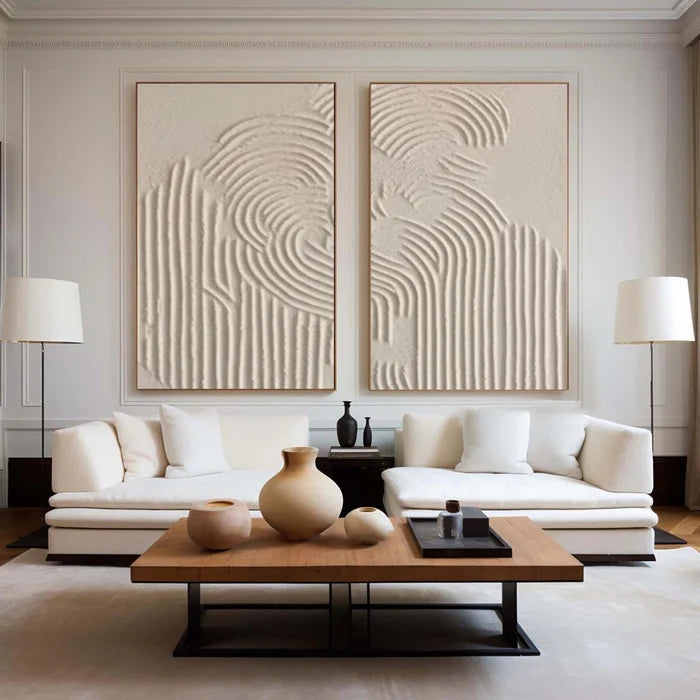
Hanging a large monochrome textured canvas above a sofa or console creates an instant focal point, balancing the room’s decor while introducing an element of visual and tactile interest.
Can Black and White Textured Art Improve Mental Well-being?
Yes, the meditative simplicity of black and white textured art can promote emotional clarity and well-being. By removing the distraction of color, these pieces encourage introspection and calm.
Art as Emotional Therapy
At Vinchy Art, each piece is thoughtfully created to enhance mindfulness. The textures engage the senses, and the absence of color directs attention inward, providing a moment of mental clarity and balance.
Scientific Context
Monochrome art reduces cognitive overload by eliminating visual noise, allowing the viewer’s brain to rest. The rhythmic repetition of texture and space facilitates a slow, contemplative viewing experience that is mentally rejuvenating.
Why Does Simplicity in Texture Feel So Powerful?
Simplicity in texture allows the viewer to focus on the essential elements of the artwork — movement, emotion, and energy. The elegance of minimalism reveals profound power in restraint.
Harmony Through Restraint
By stripping away excess, artists allow the movement within the artwork to shine through. This simplicity guides the viewer’s experience, making every stroke and texture meaningful and impactful.
Vinchy Art Expert Views
“Texture gives black and white art its pulse,” says Vinchy Art’s lead curator. “Without color, the artwork’s integrity depends entirely on rhythm, structure, and flow. Each stroke becomes a mindful decision — a dance between shadow and light. We craft our pieces to nourish calm and provoke reflection, aligning beauty with emotional well-being.”
Conclusion
Black and white textured art is more than just a design choice; it’s a tool for enhancing emotional well-being and creating harmonious spaces. As demonstrated by Vinchy Art, textured monochrome pieces can transform environments, reduce stress, and promote mindfulness. By embracing simplicity and depth, these artworks serve as both aesthetic and psychological enhancements, offering timeless elegance for any space.
FAQs
1. Is black and white textured art suitable for small rooms?
Yes. Its neutral tones visually expand space while maintaining sophistication.
2. Does texture make monochrome paintings harder to maintain?
Not significantly. Light dusting and avoiding direct sunlight helps preserve the art.
3. Which materials work best for textured artwork?
Oil on canvas, plaster, and mixed-media compounds offer durability and depth.
4. Can textured art fit into colorful spaces?
Yes. Its neutral palette balances vibrant interiors, creating visual harmony.
5. Why does Vinchy Art focus on textured abstract works?
Vinchy Art believes that texture activates emotional depth, enhancing mindfulness and interior balance.