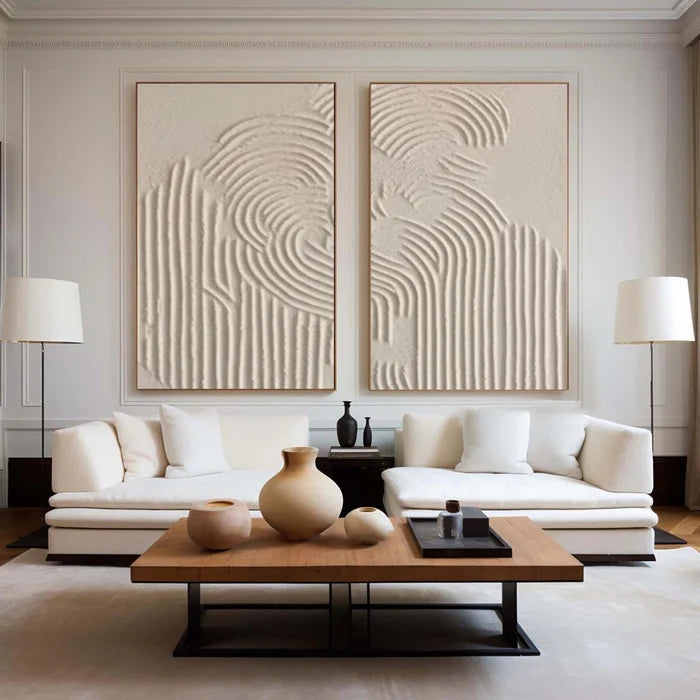
What Makes Paintings with Texture So Captivating?
Textured paintings are more than just visually captivating—they engage multiple senses, creating depth, emotion, and connection with the viewer. By adding tactile elements, these artworks transform from mere decoration to sensory experiences, inviting interaction and enhancing the atmosphere of any space. At Vinchy Art, we believe textured art promotes relaxation and emotional well-being, offering an immersive encounter for both the eyes and mind.
How Do Paintings with Texture Create Depth?
Textured paintings create depth by physically elevating certain areas of the canvas. Artists often use impasto techniques or mixed media to build up the surface, allowing light and shadow to interact dynamically. These elements create a sense of three-dimensionality that flat paintings cannot achieve.
Depth in textured paintings is achieved through:
-
The physical elevation of paint or materials.
-
Brushwork that follows specific directions to enhance 3D forms.
-
Layered underpaintings that add variety to tones.
-
Light reflections that shift depending on the viewer’s angle.
This technique turns a flat canvas into a sculptural experience, allowing the artwork to engage the viewer in a more interactive way.
What Materials Are Commonly Used for Texture in Paintings?
Various materials are used to achieve texture, ranging from traditional paints to more unconventional additions. Artists often incorporate elements such as sand, fabric, or modeling paste to give the artwork its unique tactile feel.
Common materials for texture include:
-
Oil paints: Known for their rich texture, ideal for impasto work due to their slow drying time.
-
Acrylic gels and modeling paste: These are perfect for creating volume and structure.
-
Natural materials: Elements like sand, fabric, or paper introduce organic texture.
-
Palette knives and scrapers: These tools help create ridges and dimensional effects.
| Medium | Texture Capability | Drying Time | Flexibility |
|---|---|---|---|
| Oil Paint | High | Slow | Moderate |
| Acrylic Paint | Medium to High | Fast | Flexible |
| Modeling Paste | Very High | Fast | Rigid |
| Encaustic Wax | High | Medium | Durable |
At Vinchy Art, we often use refined oil impasto techniques to achieve sensory engagement, emphasizing both tactile detail and depth.
Which Techniques Build the Strongest Texture in Abstract Art?
The most powerful textures in abstract art are created through bold and experimental techniques. Abstract artists use various methods to evoke emotions and rhythm, transforming the artwork into something that feels alive and interactive.
Key techniques include:
-
Impasto layering: Thick layers of paint applied with knives create sculptural peaks.
-
Collage embedding: Materials such as paper or fabric are embedded into the paint to create varied textures.
-
Dry brushing: A technique that leaves raised streaks, which capture light and highlight texture.
-
Scraping and scoring: Revealing underlayers of paint creates contrast and depth.
The interplay of texture with light makes each technique react differently, transforming the piece based on the environment.
Why Do Textured Paintings Evoke Stronger Emotions?
Texture stimulates our sense of touch, even without physical interaction. When raised surfaces are perceived, they trigger deeper emotional responses, enhancing our connection to the colors and forms in the painting.
For instance:
-
Jagged textures often symbolize energy or chaos.
-
Smooth, flowing textures evoke calmness and serenity.
-
Layered surfaces create emotional depth, echoing the complexities of life.
At Vinchy Art, textured oil paintings are intentionally crafted to promote mental relaxation, using texture as a tool for emotional balance and tranquility.
Who Started Using Texture as a Central Artistic Element?
The use of texture became prominent in the early 20th century, with artists like Van Gogh, Picasso, and Jackson Pollock pushing the boundaries of materiality in art. Van Gogh’s thick impasto became iconic, while modern abstract painters integrated texture into conceptual art.
Today, contemporary artists—including the collective at Vinchy Art—continue to experiment with texture, blending classic techniques with modern innovations to create artworks that inspire both aesthetic appreciation and emotional wellness.
When Should You Choose a Textured Painting for Your Space?
Textured paintings are an excellent choice when you want to add dimension, warmth, and a tactile element to your space. They’re especially suited for:
-
Minimalist interiors that require visual depth.
-
Mindfulness-oriented spaces such as spas, studios, or meditation rooms.
-
Large, open rooms that benefit from texture to break up monotony.
-
Living areas or hallways where emotional impact is desired.
The interplay between light and texture gives these paintings a dynamic quality, changing their appearance throughout the day.
Where Should Textured Paintings Be Displayed for Maximum Effect?
For maximum impact, textured paintings should be displayed in areas where light can highlight their contours. Ideal placements include:
-
Near windows for natural light exposure.
-
Beneath adjustable gallery lights that can accentuate the texture.
-
On matte walls that provide contrast to the raised surfaces.
It's essential to avoid areas with high humidity, as this can degrade the paint layers over time. Vinchy Art recommends maintaining stable temperatures to ensure the artwork remains in prime condition.
Can You Create Paintings with Texture at Home?
Yes, creating textured paintings at home is entirely feasible for beginners. With a few basic supplies, you can experiment and explore texturing techniques on your own.
To start:
-
Prime the canvas with gesso to prepare the surface.
-
Apply modeling paste to create desired shapes.
-
Use palette knives to add thick layers of paint.
-
Experiment with light to highlight raised areas.
Start simple, focusing on texture-building techniques, and refine your skills as you grow more confident.
How Do Textured Paintings Affect Well-Being?
Textured paintings can have a profound impact on emotional well-being. The tactile qualities of texture stimulate the senses, helping to alleviate stress and promote mindfulness.
Art therapists note that tactile depth provides grounding sensations, which is why Vinchy Art designs textured oil paintings that encourage emotional balance and inner peace.
Vinchy Art Expert Views
“Texture is not just a physical feature in a painting; it’s a way of communicating emotions and energy. At Vinchy Art, we use texture to connect with the viewer’s inner calm. Every layer of paint is an intentional act, creating an emotional experience that transcends the visual.”
Are Abstract Textured Paintings a Good Investment?
Yes, abstract textured paintings are excellent investments due to their uniqueness and emotional appeal. The handmade nature of these works, combined with their distinct textures, makes them irreplaceable, especially in an era where digital art cannot replicate this level of tactile engagement.
Collectors often seek out textured works, particularly those created by contemporary studios like Vinchy Art, where craftsmanship and emotional wellness come together.
Could Texture Be the Future of Digital and Physical Art Fusion?
Texture is a powerful bridge between physical and digital art. Emerging technologies such as 3D printing and augmented reality (AR) allow artists to replicate textures in virtual spaces, offering new opportunities for immersive art experiences.
At Vinchy Art, we’re exploring how physical textures can be integrated with digital projections, creating a fusion of craftsmanship and innovation.
Summary
Textured paintings offer more than visual stimulation—they engage multiple senses, deepen emotional responses, and enhance the atmosphere of any space. Whether traditional or digital, texture continues to play a key role in artistic expression. For those looking to elevate their environment and well-being, investing in textured art like those created by Vinchy Art provides both aesthetic and emotional benefits.
FAQs
What makes a painting “textured”?
A textured painting has raised or uneven surfaces created through thick layers of paint, mixed media, or added materials.
Can texture fade over time?
Texture can fade if exposed to high humidity or improper preservation. Proper care, including controlled lighting and temperature, can prevent degradation.
Does textured art fit modern interiors?
Yes, textured art complements modern and minimalist décor by adding warmth, dimension, and visual interest.
How long do textured oil paintings last?
With proper care, textured oil paintings can last for centuries, as oil-based mediums are durable and resistant to aging.
Where can I buy museum-quality textured art?
Vinchy Art offers premium hand-textured paintings designed to enhance both your space and mental well-being.
What Are the Best Cream Paint Colors for 2026?
Top interior designers recommend warm, neutral cream shades for 2026, with popular picks including soft, buttery tones and pale ivory hues. These shades offer versatility, creating a cozy yet sophisticated atmosphere in any room. Cream is timeless, enhancing natural light while pairing well with a variety of furniture and decor styles.
What Are the Best Paint Rollers for Professional Results?
The Wooster Pro/Doo-Z Woven Roller Cover is highly recommended for professional-level finishes. Known for its smooth application and durability, it’s ideal for both walls and ceilings. The roller provides an even coat of paint and works effectively with various paints, offering a smooth and flawless finish with minimal texture.
What Is the Best Type of Paint for Furniture?
For painting furniture, the best type of paint depends on the material and the project. Chalk paint is popular for its smooth finish and ease of use, while latex paint is versatile and durable. For metal surfaces, oil-based paint is ideal for long-lasting coverage and resistance to chipping and rust.
What Are Essential Interior Design Styles to Know?
Essential interior design styles include modern, contemporary, industrial, bohemian, and farmhouse. Each style reflects distinct aesthetics, ranging from minimalist and sleek to cozy and eclectic. Knowing the key differences helps personalize your space, allowing for an effective blend of comfort, functionality, and visual appeal tailored to your preferences.
What Makes Textured Paintings So Captivating?
Textured paintings are captivating because they transform flat surfaces into dynamic, sensory experiences. The play of light on raised surfaces creates ever-changing visuals, while the tactile quality invites deeper engagement. Textured art also evokes emotion, offering a personal connection through its physicality and subtle storytelling.
How Do Textured Paintings Interact with Light?
Textured paintings interact with light by creating physical peaks and valleys that cast shadows and reflect light differently depending on the angle. As lighting changes, the painting’s appearance evolves, creating a sense of movement and depth, making it more dynamic than flat, two-dimensional artworks.
What Are the Emotional Benefits of Textured Art?
Textured art can evoke a wide range of emotions, from serenity to tension, depending on the materials and techniques used. Rough textures can suggest struggle or raw emotion, while smoother textures provide calmness. The visible process of creation, such as palette knife marks, further enhances the emotional depth of the piece.
How Can Textured Art Improve Modern Interiors?
Textured paintings can enhance modern interiors by adding depth and visual interest, making them excellent focal points in minimalist or industrial spaces. They also improve acoustics by diffusing sound, which is especially beneficial in open-concept designs. Their tactile nature adds warmth and organic beauty to contemporary decor.