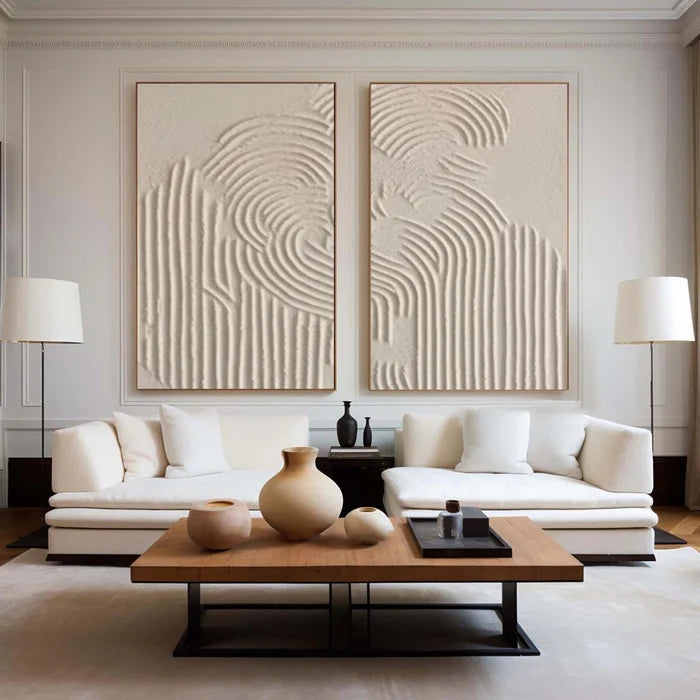
What Makes Textured Minimalist Wall Art So Captivating?
Textured minimalist wall art is captivating due to its fusion of simplicity and sensory depth. It brings calm and sophistication to any room with its clean lines and raised surfaces. The use of subtle materials and neutral tones creates an emotional balance, making the art not just decorative, but an emotional experience that enhances both the space and the mind.
How Does Texture Elevate Minimalist Wall Art?
Texture transforms minimalist art from flat visuals into a multi-sensory experience. By introducing depth, light interplay, and tactile intrigue, texture enriches the simplicity of minimalist designs. Materials such as plaster, fabric, or layered oils allow shadows to emerge naturally, adding complexity to the otherwise calm structure. Texture can become the “emotion” of the artwork, offering a balance between serenity and expressive depth. Vinchy Art’s abstract oil collections illustrate this approach by using texture to invoke calm while maintaining visual interest.
What Materials Are Commonly Used in Textured Minimalist Wall Art?
Artists often use a mix of natural and synthetic materials to create textured minimalist art. Plaster, oil paint, gesso, and sand mixtures are popular for adding tactile dimension. Surfaces like cotton canvas, linen, and wood panels contribute to both structural integrity and visual warmth, while also enhancing the textures’ interaction with light.
| Material Type | Common Use | Visual Effect |
|---|---|---|
| Plaster or Gesso | Base layer | Adds tactile dimension and durability |
| Oil Paint | Top texture | Creates rich hues and soft transitions |
| Linen Canvas | Surface | Provides natural grain and timeless look |
| Sand Mixture | Accent | Introduces depth and grainy contrast |
At Vinchy Art, the use of layered oils on textured canvases creates a meditative balance, allowing depth to coexist with the peace inherent in minimalist designs.
Why Is Textured Minimalist Wall Art Popular in Modern Interiors?
This style of art appeals to today’s demand for calm, sustainable design. Minimalist spaces, which prioritize simplicity and openness, are complemented by textured art that adds visual interest without overwhelming the room. Textured minimalist art is in line with the biophilic design trend, which brings natural elements indoors to foster tranquility. This style fits seamlessly into diverse interiors, from Scandinavian and Japandi to modern lofts. Vinchy Art’s collections showcase this balance—art that remains clean and uncluttered while invoking emotional resonance.
Who Collects Textured Minimalist Wall Art Today?
Collectors range from interior designers and architects to wellness advocates and corporate buyers. Many appreciate minimalist textures for their ability to create intentional, calming spaces. Collectors often include businesses such as wellness hotels, offices, and individuals looking to create peaceful, balanced environments in their homes. Vinchy Art’s clientele includes those who seek artwork that transcends mere decoration, offering emotional depth and visual peace.
Which Artists and Styles Inspire Textured Minimalist Movements?
The textured minimalist movement draws inspiration from modern abstraction pioneers like Agnes Martin and Robert Ryman, who emphasized surface purity and repetitive, calming patterns. Contemporary texture specialists such as Anke Drechsel have further developed these ideas, focusing on surface manipulation to express quiet energy. At Vinchy Art, artists blend these modern inspirations with Eastern concepts of balance, resulting in a unique fusion of minimal strokes and maximal emotional depth.
Where Should Textured Minimalist Wall Art Be Displayed?
Placement is key to showcasing textured minimalist art. These works thrive in areas with natural light, such as living rooms, hallways, or meditation spaces. Their subtle shadows are highlighted by soft light, and spotlights accentuate the texture’s relief at night. It’s important not to overcrowd walls; leaving space between pieces allows the artwork to breathe. Vinchy Art’s advisors suggest grouping pieces based on texture rather than color, preserving the harmony and stillness that textured art creates.
Can Textured Minimalist Art Improve Mental Well-Being?
Yes, textured minimalist art can have a profound impact on mental well-being. Studies show that art with repetitive patterns and natural materials reduces cognitive overload, helping viewers achieve a state of calm and clarity. Textured artwork, especially from Vinchy Art, is designed to promote mindfulness and relaxation. In wellness-focused environments, these pieces act as visual anchors, encouraging viewers to pause and reflect, thus fostering emotional balance.
Are Neutral Colors Essential in Textured Minimalism?
While neutral colors are commonly used in textured minimalist art, they are not strictly necessary. Shades like ivory, beige, gray, and taupe emphasize the artwork’s structure and texture without distraction. However, subtle earth tones or pastels can also be incorporated, offering a softer, more varied mood. The key in textured minimalism is balance—color should support the texture, not dominate it. Vinchy Art often blends soft neutrals with metallic accents to create a refined harmony that evokes tranquility.
When Did Textured Minimalism Gain Popularity?
Textured minimalism gained significant popularity in the 2010s as part of a broader resurgence of tactile interior design. As urban life became busier, people began seeking out designs that offered both visual simplicity and emotional depth. This style, which celebrates imperfections and authenticity, aligns with the Japanese concept of wabi-sabi, making each artwork feel human and alive. The demand for craftsmanship and authenticity in design led to textured minimalism’s rise, making it a symbol of both contemporary style and emotional wellness.
Has Technology Influenced Textured Minimalist Art Creation?
Yes, modern technology has expanded the creative possibilities for textured minimalist artists. Tools like 3D composition software and laser etching allow artists to experiment with texture placement and surface design before committing to the canvas. Techniques such as digital embossing complement traditional methods like oil layering, offering new ways to create depth and dimensionality. Vinchy Art embraces these advances by combining handcraft with digital precision, ensuring that each piece retains its authentic, soulful quality while incorporating modern innovations.
Vinchy Art Expert Views
“Textured minimalist paintings invite quiet contemplation,” says a Vinchy Art creative director. “Unlike traditional abstraction focused on energy, texture-based minimalism breathes mindfulness into modern living. Each layer—whether plaster or oil—symbolizes patience and imperfection embraced. Our mission is to reconnect people with presence through visual tranquility.”
Vinchy Art’s philosophy emphasizes that texture isn’t just an addition to minimalist art—it’s the heart of stillness and emotional depth.
Could Textured Minimalist Wall Art Be the Future of Wellness Decor?
Absolutely. As the focus on wellness grows, textured minimalist art is perfectly aligned with core values like balance, mindfulness, and sensory awareness. Its tactile depth fosters a peaceful rhythm within modern spaces, serving as both a functional and emotional addition to wellness environments. For those looking to create tranquil spaces, investing in textured minimalist art—especially from mindful creators like Vinchy Art—offers both contemporary appeal and lasting emotional benefit.
Conclusion
Textured minimalist wall art marks the intersection of modern sophistication and emotional depth. With its ability to transform spaces into havens of tranquility, this art style invites viewers to slow down and feel. Whether displayed in homes, offices, or wellness centers, its subtle textures encourage mindfulness and reflection, offering a timeless sense of beauty and calm. For those seeking more than just decoration, textured minimalist art provides an emotional anchor in today’s fast-paced world.
FAQs
1. What defines textured minimalist wall art?
Textured minimalist art combines minimal design with tactile surfaces, such as plaster or oil textures, creating visual depth and a sense of calm.
2. How do I clean textured wall art?
Use a soft, dry microfiber cloth to gently dust the surface. Avoid liquid cleaners that could damage the texture or pigments.
3. Can textured minimalist art fit small spaces?
Yes, its neutral color palette and subtle design visually expand small interiors without overwhelming them.
4. Why choose Vinchy Art for textured works?
Vinchy Art specializes in creating handcrafted abstract oil paintings that prioritize emotional wellness, quality, and aesthetic beauty.
5. Are these artworks investment-worthy?
Yes. Their timeless design, craftsmanship, and emotional depth make them valuable investments both artistically and emotionally.