Square or Tall? Choosing Between Art Formats
Square and tall wall art answer different questions about the same wall: a square piece claims a compact, stable block of space, while a tall piece draws the eye up a vertical line. The format is n...
Read moreHow to Arrange a Set of 3 Above a Sofa or Bed
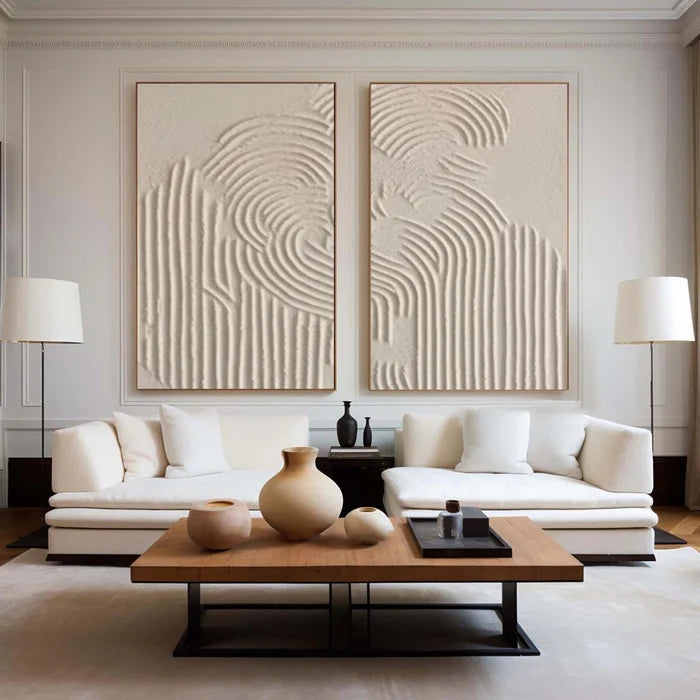
A set of three above a sofa or bed works when the furniture is the anchor: the group is sized at two-thirds of the furniture's width, the middle panel sits at eye level, and the side panels follow ...
Read moreHorizontal or Vertical Art? A Practical Orientation Guide
The orientation of wall art follows two signals: the wall's shape and the furniture's line. A horizontal piece stretches a long wall and echoes a wide sofa; a vertical piece claims a tall wall and ...
Read moreOversized Wall Art: Making a Statement Without Overwhelming
Oversized wall art makes a statement without overwhelming when the scale follows the wall: keep the piece at roughly half to two-thirds of the wall width, match the height to the viewing distance, ...
Read moreSet of 3 or One Statement Piece? How to Choose
The choice between a set of three and one statement piece comes down to the wall's personality: a set creates rhythm and fills a long wall with movement, while a single statement creates focus and ...
Read moreColor Psychology for Wall Art: A Practical Room-by-Room Guide
Color psychology for wall art is practical, not mystical: colors carry associations that shift with the room, the light, and the person. The same blue that calms a bedroom can focus a study, and th...
Read moreDopamine Decor Wall Art vs. Tactile Calm: Which Style Fits Your Home?
Dopamine decor wall art uses joyful color, playful pattern and personal references to make a room feel expressive. Tactile calm relies on plaster, impasto and palette-knife texture to create depth ...
Read moreTherapy Office Wall Art: A Room-by-Room Buying Guide
Therapy office wall art should make the space feel considered without competing with conversation. Reception areas need a welcoming focal point, session rooms need low-distraction art in the client...
Read moreFeng Shui Wall Art by Room: Colors, Elements and Placement
Feng shui wall art should support what a room is used for. Bedrooms usually benefit from quiet subjects and low-contrast colors, while living and dining areas can carry more movement and warmth. En...
Read moreWall Art Layouts for Compact Rooms: Grid, Salon, and Asymmetric Systems
Compact rooms do not need less art — they need a system. A small wall without a plan collects random frames and reads as clutter; the same wall with one of three layout systems reads as a deliberat...
Read more