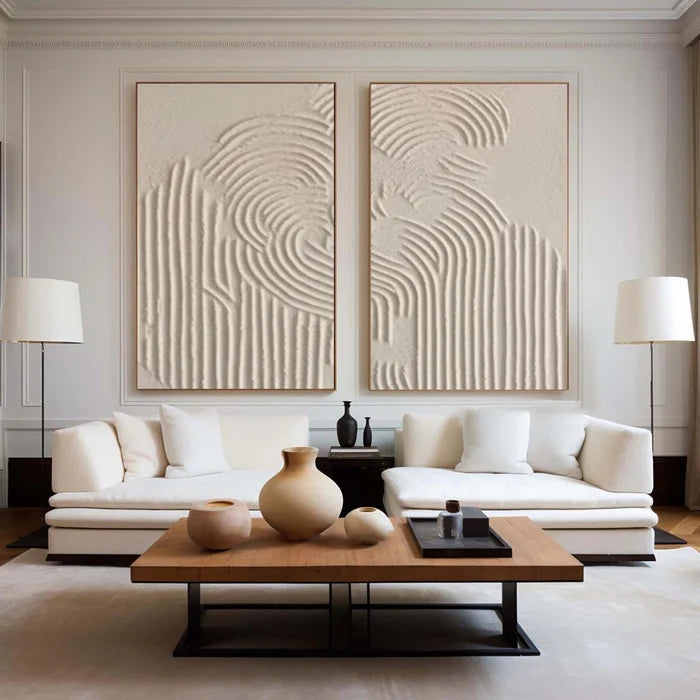
Bedroom Texture: How Textured Wall Art Adds Tactile Calm
Textured wall art calms a bedroom through two channels at once: sight and touch. The muted surface reads as soft from across the room and invites a closer look up close, which lowers the visual volume without adding objects. Choose bedroom-friendly texture — low relief, muted earthy tones, matte finish — and let the headboard wall carry the room's quiet.
Calm Through Touch and Sight
The starting decision for the bedroom is the wall itself: the headboard wall anchors, the opposite wall closes the day, and the window wall borrows the light. One wall leads the room, and the texture on it should be the quietest strong thing in the bedroom.
A bedroom works through atmosphere rather than statement, and texture contributes to both senses the room uses. Visually, a low-relief textured surface reads as soft depth — present but not demanding, unlike a bold pattern or a bright color. Tactilely, the surface suggests a gentle hand, which suits a room built for rest. The two channels reinforce each other, which is why textured art works in bedrooms that flat art can only decorate.
The same principle guides the choice: a piece that is low in contrast, muted in palette, and matte in finish belongs in a bedroom, while a deep sculptural statement belongs in a living room. The room's job is to settle, and the texture should settle with it.
The two channels also work in sequence: the eye registers the soft surface from across the room, and the closer the viewer gets, the more the handwork appears. That progression — calm from afar, detail up close — is exactly what a bedroom should offer at the end of the day, and it is why texture outperforms pattern in the room.
Choosing Bedroom-Friendly Texture
The filter also protects the budget: a piece that fails any of the three criteria is a piece that will eventually move out of the bedroom. Buying through the filter once saves a second purchase, and the filter costs nothing but a minute of honesty about the room.
Three criteria define bedroom-friendly texture: depth, palette, and finish. Depth should be low to mid-relief — enough to catch light, not enough to dominate. The palette should stay muted and earthy — clay, linen, stone, sand — with low contrast against the wall. The finish should be matte, because gloss competes with the calm.
The white textured wall art collection at Vinchy Art is a natural starting point for bedrooms, the textured wall art guide explains what makes the category different, and the quiet luxury styling article shows how plaster texture translates to a calm, soft room.
The criteria also exclude what does not belong: bright saturated color, glossy finish, and deep sculptural relief all work against the bedroom's job. The test is simple — if the piece would make a living room statement, it is probably too strong for the wall beside the bed.
Headboard Walls and Side Placement
The measurements come before the purchase: the bed width, the headboard height, and the gap that looks right from the pillow. A piece measured and marked with tape before ordering is a piece that fits; a piece bought by eye is a gamble the bedroom does not need.
The headboard wall is the bedroom's focal point, and it deserves the most care. Keep the piece at roughly two-thirds of the bed's width, center it above the headboard, and leave a clear gap between the frame and the headboard so the two read as one unit. A lamp on the nightstand, angled so the light grazes the surface, reveals the texture in the evening without glare.
The wall opposite the bed is the second option: a small piece seen last before sleep carries the palette without adding objects. A piece beside a window can borrow the daylight to reveal its texture in the afternoon, then take the lamp's light in the evening — two moods from one wall.
Each position has one job: the headboard wall anchors, the opposite wall closes the day, and the window wall borrows the light. The job determines the size and contrast — the anchor piece is the largest, the opposite piece is the quietest, and the window piece follows the daylight.
Matching Texture to Bedding
The material match also sets the care rhythm: linen and cotton bedding wash gently, and the art's dry dusting follows the same light routine. The room stays coherent because the materials behave alike, and the palette repeats instead of varying.
The texture should echo the bedding's material, the same way a living room texture echoes the sofa:
| Bedding | Texture direction |
|---|---|
| Linen | Low-relief ridges, sand or stone tones |
| Cotton | Fine lines, soft and quiet |
| Velvet or boucle | Rounded, soft texture in warm tones |
| Wool | Mid-relief with earthy color |
The rule keeps the room coherent: the texture and the textiles speak the same material language, so the art belongs from the first night. The same principle applies to the frame — a slim neutral frame belongs to the room, while a heavy or glossy frame competes with the calm.
The bedding match also extends to the layering: a wool throw and a linen pillowcase can echo the same earth tones as the art, so the palette repeats instead of varying. One or two repetitions is enough — the bedroom stays calm when the language is consistent.
Vinchy Art Studio Recommendation
The studio's final note is about the wall behind the piece: a neutral matte wall makes the texture visible, while a patterned or glossy wall competes with it. The wall is part of the bedroom texture decision, and it should be settled before the art is chosen.
In the Vinchy Art studio, bedroom pieces are chosen for their quiet, not their statement: low-relief texture, muted earthy palette, matte finish, and a size that fits the bed. The studio recommends one piece per room — the headboard wall — with a nightstand lamp angled at the surface, and the same material language carried through the bedding. A bedroom that subtracts is a bedroom that rests, and the preview step confirms the piece before it joins the room.
Conclusion
The bedroom texture decision also answers the wall question: the headboard wall is the default, and the opposite wall is the only honest second option. One piece per room keeps the subtraction intact.
The bedroom also gains from a simple evening test: with the lamp on and the room quiet, the headboard composition should read as calm from the bed. If the eye rests on the art, the texture is right; if it moves to another object, the room has one object too many.
Textured wall art calms a bedroom through sight and touch: the muted surface reads as soft and invites a closer look, lowering the visual volume without adding objects. Choose low-relief, muted, matte texture; place it above the headboard at two-thirds of the bed's width; match it to the bedding; and let a lamp reveal the surface. The bedroom gains tactile calm, and the wall does the work.
Bedroom Texture Checklist
- Low to mid-relief texture
- Muted earthy palette, low contrast
- Matte finish
- Piece at two-thirds of the bed's width above the headboard
- Texture matched to the bedding material
- Nightstand lamp angled at the surface
FAQ
Can textured art work in a compact bedroom?
Yes, when it is proportional. A compact low-relief piece above the bed adds depth without covering the wall, and the muted palette keeps the room calm — the texture does the work a larger piece would do.
What texture is best for a bedroom?
Low to mid-relief in muted earthy tones with a matte finish. It catches light softly without dominating the room, which is what a restful wall needs — and it pairs naturally with linen and cotton bedding.
Can textured art work above a bed headboard?
Yes. Keep it at roughly two-thirds of the bed's width, center it above the headboard, and leave a clear gap so the frame and headboard read as one unit — the tape test confirms it before hanging.
How should the bedroom be lit around textured art?
Use a nightstand lamp angled at the surface for soft evening light; avoid a bright overhead above the bed, which flattens the texture. The lamp reveals the depth without adding glare, from a height that matches the art, and the evening light stays low.
Is textured art hard to clean in a bedroom?
No. A weekly dry dust with a soft brush keeps the ridges fresh, and no wet cleaning is needed — the routine is quick and simple.
Shop Calm Textured Art
The shopping filter is the same as the styling filter: low relief, muted palette, matte finish, and a size that fits the bed. A piece that passes all four belongs in the bedroom, and the preview confirms it before it ships.
Browse the white textured wall art collection at Vinchy Art for hand-painted, made-to-order pieces that quiet a bedroom — with custom sizes and preview before shipping.