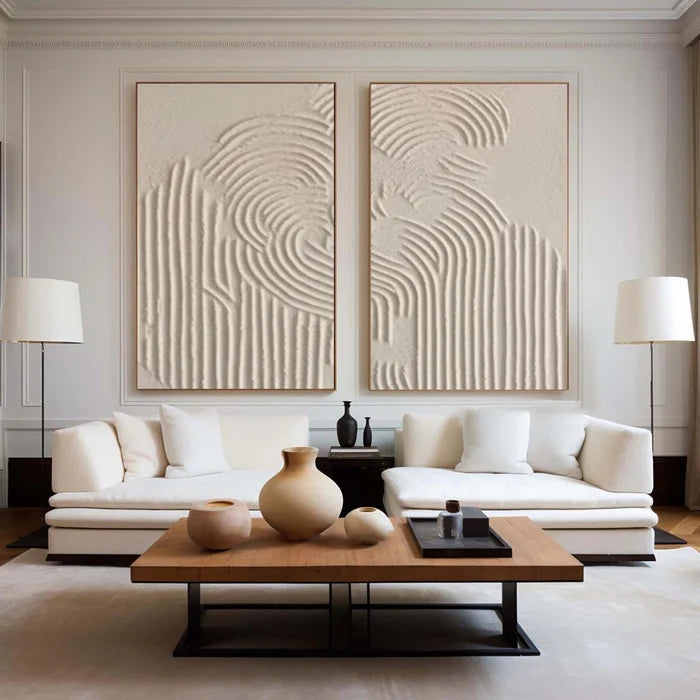
Textured Wall Art for Modern Living Rooms: A Styling Guide
Modern living rooms need tactile warmth to balance their clean lines, and textured wall art provides exactly that: a hand-built surface that softens the geometry without breaking it. The styling rule is simple — match the texture to the sofa and flooring, choose one statement or one composed set, and let a lamp bring the surface alive. The room stays modern; the wall becomes warm.
Why Modern Rooms Need Tactile Warmth
The starting point for the modern room is deciding which wall the texture should claim: the sofa wall for the main statement, the console wall for a quieter piece, or the entry wall for the first impression. One wall leads, and the others stay quiet — the same discipline that keeps the architecture clean is what keeps the texture effective.
A modern living room is often a composition of smooth surfaces: flat paint, glass, polished wood, and clean upholstery. The room can end up feeling precise but cold, and the missing element is tactility. Textured wall art supplies it — the surface carries the hand's evidence, catches light, and gives the eye something physical to rest on.
The contrast is the point. The textured wall does not fight the modern lines; it softens them, the way a wool throw softens a leather sofa. One textured piece brings the warmth without adding clutter, which is exactly what the modern room needs.
The modern room also tends to be open — kitchen, dining, and living share one sight line — so a single textured anchor helps the eye settle instead of traveling across many surfaces. One piece gives the open plan its focal point without adding walls, which is the most efficient form of warmth the style offers.
Matching Texture to Sofa and Flooring
The material match also sets the ceiling of the room's warmth: a room that stops at the sofa and the rug can rise to the texture on the wall, and the three materials together make the composition feel complete. The texture is the last layer, and it works best when the first two layers are already in place.
The texture should agree with the room's materials in temperature and depth:
| Sofa or flooring | Texture direction |
|---|---|
| Neutral linen sofa, light wood floor | Low-relief ridges or fine lines in muted tones |
| Leather sofa, dark floor | Mid-relief texture with warm earthy color |
| Velvet or boucle sofa | Soft, rounded texture that echoes the fabric |
| Concrete or stone floor | Deep sculptural relief as the architectural anchor |
The rule is simple: let the texture echo the softest material in the room, and let the palette follow the largest one. A linen room wants quiet ridges; a leather-and-stone room can carry deep relief. The sofa and bed placement guide covers the height and proportions, and the abstract collection shows flat options for comparison.
The palette follows the largest surface: a light wood floor and white walls want muted tones, while a dark floor can carry a deeper piece. The texture and the palette should both agree with the room's existing materials rather than introduce a new language — the piece belongs from the first day or it does not belong at all.
One Statement or a Composed Set
The scale of the statement follows the wall, and the count follows the scale: a wall under eight feet wants one piece, a longer wall can take a set, and a very long open-plan wall may take a large single piece rather than a group. The honest check is the tape test from the farthest point the room is seen from.
The modern living room is usually a one-statement room: a single textured piece above the sofa, sized to the furniture, with everything else quiet. One strong piece reads as intentional, and it gives the room its anchor without competing with the architecture.
A composed set works on a long wall or an open plan where a single piece would feel small. A set of three with even spacing and a consistent palette reads as one composition — the same discipline as the single statement, scaled up. The textured wall art guide explains the category, and the 3D textured plaster collection covers both the statement pieces and the sets.
The set discipline also applies to the statement piece: one textured painting, one lamp, and one low object beneath it make a complete composition. Adding a fourth element usually dilutes the statement, so the modern room stays strong by keeping the count low.
Lighting That Brings Texture Alive
The direction of the light is set once and kept: a lamp aimed from the left becomes the piece's morning character, and the same angle at night gives the wall its evening depth. Consistency is what makes the texture read as a feature rather than a surprise.
Texture is invisible in flat light, so the lamp is part of the design. A floor lamp beside the piece, a picture light above it, or daylight from a side window reveals the ridges; overhead-only light flattens them. The modern room usually has clean lighting already — the trick is aiming one source at the surface.
Evening light matters most, because that is when living rooms are lived in. One warm lamp grazing the textured surface turns the wall into the room's quiet center, and the texture reads as depth rather than pattern.
The light direction matters as much as the source: a lamp from the left shows different ridges than one from the right, so aim the light and step back to check the shadows. The texture reads best under consistent light, and once the angle is set, it can stay set for years.
Vinchy Art Studio Recommendation
The studio's modern-room formula is deliberately short: one wall, one piece, one lamp, one palette. Every additional element must justify itself against those four, and most fail the test — which is exactly how the modern room stays modern while the wall becomes warm.
In the Vinchy Art studio, modern rooms are treated as the perfect canvas for texture: the clean lines make the hand-built surface visible, and the contrast carries the warmth. The studio recommends one statement piece matched to the sofa's material temperature, a lamp aimed at the surface, and a palette that follows the room's largest surface. A set of three suits open plans and long walls, and the preview step confirms the surface before it joins the room.
Conclusion
The final test is the evening: with the lamp on and the room quiet, the textured wall should be the first thing the eye lands on from the sofa. If it is, the pairing worked; if the eye travels past it, the staging needs one more edit.
Textured wall art gives modern living rooms the tactile warmth they lack: a hand-built surface that softens the clean lines and catches the light. Match the texture to the sofa and flooring, choose one statement or one composed set, and let a lamp reveal the depth. The room stays modern; the wall becomes warm — which is the whole point of the pairing.
Modern Living Room Checklist
- One statement piece or one composed set
- Texture matched to the sofa's material
- Palette following the largest surface in the room
- Lamp aimed at the surface for evening light
- Height and proportions set with the sofa guide
- Surrounding surfaces kept quiet
FAQ
Does textured art work in a minimalist modern room?
Yes — the contrast is the point. One textured piece brings warmth to clean lines, and the muted palette keeps the room minimal while the surface adds the depth.
How do I match texture to a leather sofa?
Choose mid-relief texture with warm earthy color. The depth echoes the sofa's presence, and the warmth softens the leather's cool surface — the texture and the sofa read as one material family.
Should I hang one piece or a set in a modern room?
One statement piece above the sofa is the default; a composed set of three suits long walls and open plans. Both work when the palette stays consistent in scale and palette.
What lighting shows texture best?
Side light: a lamp at an angle or a window beside the piece. Overhead-only light flattens the surface, so aim one source at the art and check the shadows from the sofa.
Can textured art work above a TV wall?
Yes, as a balance to the screen. Place it beside or above the media console, away from the TV's glare, and keep the composition calm, with the texture giving the eye a second destination.
Shop Modern Textured Art
The shopping rule is the styling rule: one piece, one lamp, one palette, and a preview of the finished surface before it ships. The preview matters for texture because the photo cannot carry the depth.
Browse the 3D textured plaster collection at Vinchy Art for hand-painted, made-to-order pieces that warm a modern room — with custom sizes and preview before shipping.