Texture Painting Techniques: Palette Knife, Plaster, and Layering Explained
Texture painting techniques fall into three families: palette knife work, modeling with plaster, and layering with impasto. Each leaves a different fingerprint on the surface — knife work leaves clean directional marks, plaster builds sculpted relief, and impasto stacks paint into visible thickness. Matching the technique to the mood is the skill; the tools are simple.
Three Techniques, Three Textural Fingerprints
The techniques are also how you read a piece: a surface that reads as structured ridges was knife-worked, one with real depth was plaster-modeled, and one with visible paint thickness was impasto-layered. The technique is the story of the surface, and reading it tells you both the craft and the care the piece will need.
| Technique | Main tool | Fingerprint | Mood |
|---|---|---|---|
| Palette knife | Palette knife | Clean ridges and sweeps | Structured, confident |
| Plaster modeling | Knife, comb, hands | Sculpted depth and relief | Dimensional, tactile |
| Impasto layering | Brush, palette knife | Thick painted stacks | Expressive, painterly |
The three are often combined — a plaster surface may carry knife-drawn lines, and an impasto painting may finish with palette-knife accents. Knowing the families helps you read a piece and choose the technique a room needs.
The families also differ in speed: knife work is immediate, impasto is a painting-session technique, and plaster modeling spans drying breaks. Knowing the pace helps you read the craft and understand why deep textured pieces take longer to make — the drying time is part of the making, not a delay around it.
Palette Knife Work
The knife is also the tool that bridges the other two families: it shapes plaster in modeling, and it drags paint in impasto. Learning the knife teaches the shared language of textured painting, which is why most technique guides start there.
The palette knife is the most direct texturing tool: a flat, flexible blade that drags, sweeps, and stipples the medium across the surface. A firm flat drag makes clean ridges; a light curved sweep makes soft waves; a stipple with the tip makes fine grain. The knife leaves a record of pressure and angle, which is why knife-worked surfaces look deliberate even when they are irregular.
Knife work appears in both paint and texture medium. In paint, it is often used for impasto accents; in plaster or texture paste, it is the primary shaping tool. The result reads as structured and confident — the marks are directional and clear, which suits modern and minimalist rooms.
The knife also works over dry layers: dragging paint over a cured surface creates a different mark than dragging through wet medium. That layering of dry and wet passes is where knife work gets its depth, and it is why a knife-worked surface rewards close inspection even when the overall composition is simple.
Modeling With Plaster
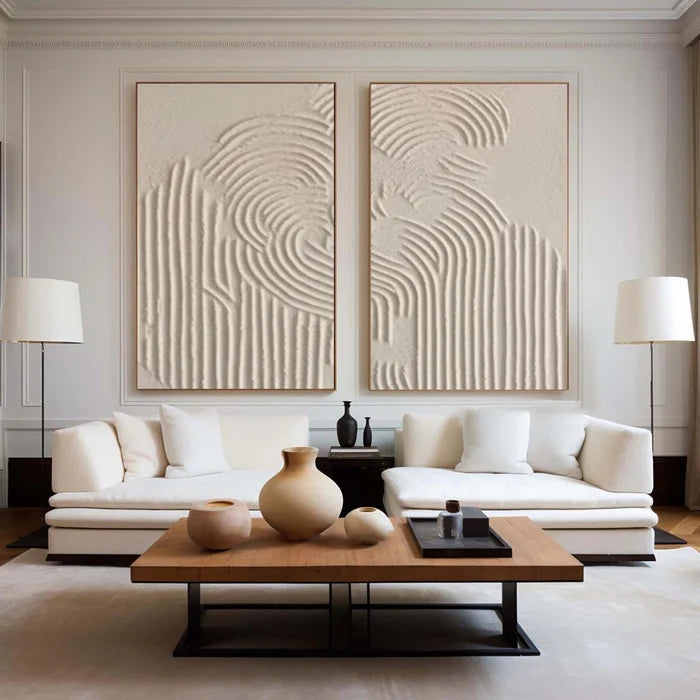
Modeling with plaster or texture paste builds actual relief: the material is applied in layers and shaped with knives, combs, brushes, or bare hands before it dries. Each layer is left to dry before the next, which is why deep texture takes time. The result is a sculpted surface with real depth — not painted thickness, but built-up form.
This is the technique behind plaster art and 3D textured painting. The surface catches side light differently from paint, casting real shadows and changing through the day. The plaster art review explains the materials and the buying side, while the tactile decor article shows why built relief is the direction of current wall art.
Plaster modeling also asks for patience in drying: each layer needs to cure before the next, and deep relief can stretch across days. The drying time is part of the craft, and it is why sculpted pieces carry a different weight and presence than painted texture — the depth is built, not applied.
Layering and Impasto
Impasto is the painter's texture: paint applied thickly enough to hold visible brush or knife marks, often built in layers that let each pass show through the next. The technique has a long history in public art — thick, expressive paint has been used for centuries to make the hand visible. The tool can be a brush loaded with paint or a palette knife dragging it across the canvas.
Impasto differs from plaster modeling in scale: it builds with paint rather than with a sculpting medium, so the relief is shallower and the color is part of the structure. It suits expressive, painterly rooms, while plaster modeling suits dimensional, architectural ones.
Impasto also affects the paint's aging: thick paint takes longer to cure and responds to light differently from thin washes. The thickness is a decision about the surface's future as well as its look, which is why experienced makers control the layering rather than simply adding paint.
Matching Technique to Mood
The mood also depends on the palette: the same knife work reads differently in white than in black, and the same plaster relief reads differently in sand than in grey. The technique sets the structure, and the color sets the temperature — the two together decide the room's feeling.
The technique should follow the mood the room wants. Structured knife work suits modern and minimalist rooms where clean lines matter. Plaster modeling suits rooms that need physical presence — entryways, focal walls, spaces where the wall itself should feel built. Impasto suits expressive and bohemian rooms where the hand of the painter should be visible.
The depth also matters: shallow relief reads as quiet, deep relief reads as bold. A low-relief plaster or impasto piece belongs in a calm bedroom; a deep sculpted piece belongs in a living room or entry that can carry a statement.
The technique also guides care: knife-worked and sculpted surfaces need dry dusting with a soft brush, and impasto can be dusted the same way. The fingerprint tells you the routine as much as the mood, so reading the surface is also reading the maintenance.
Vinchy Art Studio Recommendation
The studio also reads technique before color when judging a finished piece: the fingerprint tells the story, and the palette confirms the mood. A buyer who can name the technique can ask better questions about the materials and the care.
In the Vinchy Art studio, the technique is chosen before the palette: the surface is shaped first, and the color follows what the relief needs. The studio recommends reading a piece by its fingerprint — knife marks, sculpted depth, or painted thickness — and choosing the technique that matches the room's mood and light. The preview step lets buyers see the surface in motion before it ships, and the product pages document the technique alongside the materials.
Conclusion
The technique families also map to care: knife-worked and sculpted surfaces need dry dusting, and impasto responds to a soft brush. The fingerprint you choose is the routine you keep, so read the surface before you commit to it.
Texture painting techniques divide into three families with three fingerprints: palette knife work leaves structured marks, plaster modeling builds sculpted relief, and impasto stacks paint into expressive thickness. They are often combined, and the skill is matching the technique to the mood. Read the surface, choose the depth, and let the room decide which fingerprint it wants.
Technique-to-Mood Cheat Sheet
- Structured marks → palette knife → modern and minimalist rooms
- Built relief → plaster modeling → focal walls and entries
- Painted thickness → impasto → expressive and painterly rooms
- Shallow relief reads quiet; deep relief reads bold
- The technique is chosen before the palette
FAQ
What is the easiest texture technique for a beginner?
Palette knife work is the most accessible — one blade, three movements (drag, sweep, stipple), and immediate results. Plaster modeling adds drying time, and impasto adds paint control, so the knife is the natural first technique. Practice on a spare canvas before committing to the final piece.
Can the three techniques be combined in one piece?
Yes, and they often are: a plaster surface with knife-drawn lines, or an impasto painting with palette-knife accents. The families are vocabulary, not rules, and combining them is part of the craft.
Does plaster modeling take longer than impasto?
Usually, because each plaster layer must dry before the next. Impasto can be built in one painting session, while deep plaster relief stretches across several drying breaks — the time is part of the depth.
Which technique suits a calm bedroom?
Low-relief work — shallow knife marks or a thin impasto — reads as quiet and tactile without demanding attention. Deep sculpted relief belongs in rooms that can carry a statement, like a living room or entry.
Where can I see these techniques in finished art?
The 3D textured plaster collection at Vinchy Art shows plaster modeling and knife work in finished, hand-painted pieces — with the materials documented on each product page.
See These Techniques in Finished Art
Browse the 3D textured plaster collection at Vinchy Art to see the techniques in finished pieces — hand-painted, made to order, with custom sizes and preview before shipping.